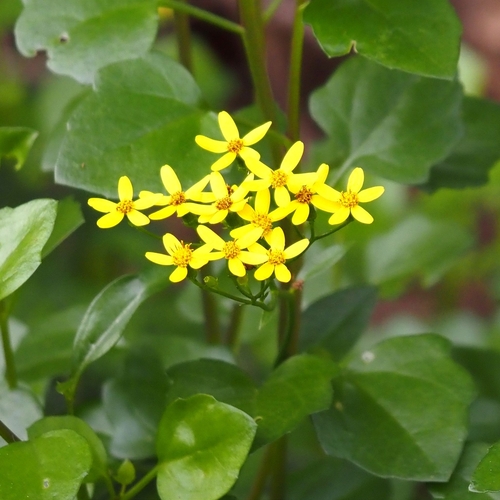
Helianthus tuberosus
L.
Jerusalem artichoke
iNaturalist· cc-by-nc
(c) Eduard Garin, some rights reserved (CC BY-NC), uploaded by Eduard Garin
iNaturalist· cc-by-nc
(c) cgbb2004, some rights reserved (CC BY-NC), uploaded by cgbb2004
iNaturalist· cc-by-nc
(c) Grant Fessler, some rights reserved (CC BY-NC), uploaded by Grant Fessler
Summary
Source: WikipediaA fast-growing perennial reaching 2.4 m (7ft) tall and 0.6 m (2ft) wide, hardy to UK zone 4 and frost-hardy. Flowers in October with seeds ripening in November. Hermaphroditic flowers pollinated by bees and flies. Tolerates light sandy, medium loamy, or heavy clay soils; grows in nutritionally poor soil with good drainage. Tolerates mildly acid to mildly alkaline pH. Requires full sun, adapts to dry or moist conditions, and tolerates strong winds but not coastal exposure.
Description
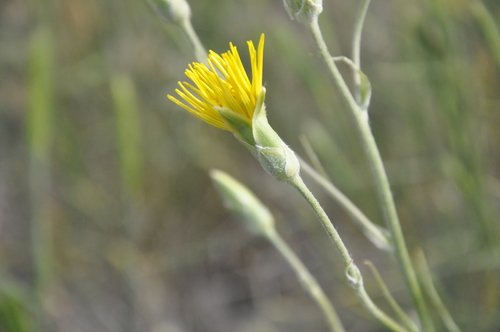
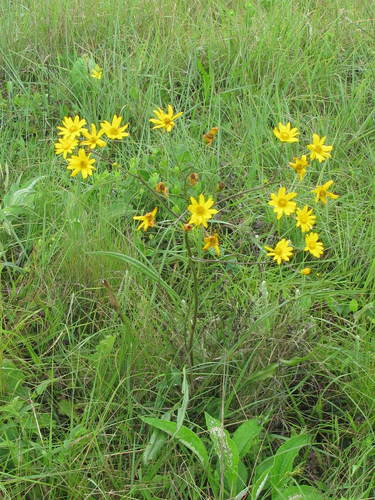
An upright perennial plant up to 1-2 m high and a spread of 1 m. The stem is erect and unbranched. The leaves are dull green and sword shaped. The flowers are yellow and daisy like. It produces fleshy underground stem tubers of irregular shape. The skin of these tubers is very thin and often coloured yellow or red. The flesh is white. Tubers can be 10 cm long and 6 cm wide. There are several cultivated varieties.
Edible Uses
The tubers can be eaten raw or cooked and develop a pleasant sweetness over winter, particularly after frosts, making them reasonably acceptable raw at that stage. Otherwise they are generally best cooked and can be used in all the ways potatoes are used. The tubers are rich in inulin, a starch the body cannot digest, so they provide bulk without many calories. Some people tolerate inulin poorly — it can ferment in the gut and cause quite severe wind. Tubers can grow up to 10cm long and 6cm in diameter. They bruise easily and lose moisture rapidly, so are best left in the ground and harvested as needed. The inulin can be converted into fructose, a sweetener safe for diabetics. Roasted tubers also serve as a coffee substitute.
Traditional Uses
The tubers are eaten boiled or baked. They can be steamed, fried, pickled, pureed, or used in soups and casseroles. They can be eaten raw in salads. (They are suitable for people with diabetes) Roasted tubers are used as a coffee substitute.
Medicinal Uses
Jerusalem artichoke is reported to be aperient, aphrodisiac, cholagogue, diuretic, spermatogenetic, stomachic, and tonic. It is a folk remedy for diabetes and rheumatism.
Distribution
A temperate plant. Plants grow best when the temperature is 18°-26°C and frost free. They do best between 300 and 750 m altitude in the tropics. It needs light to medium well drained soils. Plants should be grown in an open sunny position. It is drought and frost resistant. It suits hardiness zones 7-9. In Sichuan.
Where It Grows
Africa, Albania, Argentina, Armenia, Asia, Australia, Balkans, Bosnia, Britain, Bulgaria, Burundi, Canada, Caucasus, Chile, China, Croatia, Cuba, Egypt, Europe, Fiji, France, Georgia, Germany, Hungary, India, Indochina, Iraq, Italy, Japan, Korea, Laos, Latvia, Libya, Luxembourg, Macedonia, Malaysia, Mediterranean, Middle East, Myanmar, Netherlands, New Zealand, Niue, North Africa, North America, Pacific, Papua New Guinea, PNG, Philippines, Romania, SE Asia, Serbia, Sicily, Slovenia, South Africa, Southern Africa, South America, Spain, Switzerland, Tasmania, Turkey, Türkiye, Uruguay, USA*, West Indies,
Cultivation
A very easily grown plant, it grows best in a loose circumneutral loam but succeeds in most soils and conditions in a sunny position. Plants are more productive when grown in a rich soil. Heavy soils produce the highest yields, but the tubers are easily damaged at harvest-time so lighter well-drained sandy loams are more suitable. Dislikes shade. Likes some lime in the soil. Jerusalem artichoke is reported to tolerate an annual precipitation of 31 to 282cm, an average annual temperature of 6.3 to 26.6°C and a pH in the range of 4.5 to 8.2. Jerusalem artichokes were cultivated as a food plant by the N. American Indians and they are today often grown in temperate areas for their edible tubers. There are some named varieties. The plant is a suitable crop in any soil and climate where corn (Zea mays) will grow. It survives in poor soil and in areas as cold as Alaska. It also tolerates hot to sub-zero temperatures. The first frost kills the stems and leaves, but the tubers can withstand freezing for months. The plants are particularly suited to dry regions and poor soils where they will out-yield potatoes. Tuber production occurs in response to decreasing day-length in late summer. Yields range from 1 - 2kg per square metre. The tubers are very cold-tolerant and can be safely left in the ground in the winter to be harvested as required. They can be attacked by slugs, however, and in sites prone to slug damage it is probably best to harvest the tubers in late autumn and store them over the winter. It is almost impossible to find all the tubers at harvest time, any left in the soil will grow away vigorously in the spring. Plants do not flower in northern Europe. They are sensitive to day-length hours, requiring longer periods of light from seedling to maturation of plant, and shorter periods for tuber formation. They do not grow where day-lengths vary little. The plant is good weed eradicator, it makes so dense a shade that few other plants can compete. The young growth is extremely attractive to slugs, plants can be totally destroyed by them. Members of this genus are rarely if ever troubled by browsing deer or rabbits. Plants only produce flowers in Britain after a long hot summer and seed is rarely formed. Grows well with corn. Plants can be invasive.
Propagation
Sow seed in spring in a cold frame. When seedlings are large enough to handle, prick them out into individual pots and grow on in the greenhouse through their first winter, then plant out in late spring or early summer after the last expected frosts. Propagation is most commonly done by tubers: harvest in late autumn or winter and either replant immediately or store in a cool but frost-free place and plant out in early spring. Tubers should be planted as early as possible once the soil can be worked, as late planting seriously reduces yield and tuber size. Plant whole tubers or pieces of about 50g, covered to a depth of 10cm. Pieces larger than 50g do not increase yield, while pieces smaller than 50g will reduce it. Planting too deep can delay emergence, weaken sprouts, and cause tubers to develop deeper, making harvest more difficult. For basal cuttings in spring, harvest shoots when about 10–15cm long with plenty of underground stem, pot into individual pots, and keep in light shade in a cold frame or greenhouse until rooting well before planting out in summer.
Other Uses
The plants are a good source of biomass, and the tubers are used industrially to produce alcohol; the alcohol fermented from the tubers is said to be of better quality than that from sugar beets. Jerusalem artichokes can be grown as a temporary summer screen, though they are a very temporary solution — they do not reach a reasonable height until July and begin dying down by October.
Production
Harvesting can start after 3 months.
Other Information
It is a commercially cultivated vegetable. Not commonly seen in Papua New Guinea.
Notes
Tubers contain inulin which can cause stomach wind in some people but is also tolerated by diabetics. Almost all Helianthus (60 species) in N and S America are edible.
Nutrition
| Part | Moisture | kJ | kcal | Protein | Vit A | Vit C | Iron | Zinc |
|---|---|---|---|---|---|---|---|---|
| Tubers | 79 | 281 | 67 | 2 | — | 4 | 0.4 | — |
Synonyms
Also Known As
Aardpeer, Aguaturma, Brahmokha, Cicoka, Cotufa, Csicsoka, Gerasole, Getnakhendzor, Girasole, Girsole, Gulia, Hartichuk, Hathipich, Hatichuk, Ju yu, Kiku-imo, Krtolest sonchogled, Laška repa, Nyameres, Pataca, Patatas de cana, Pe-po-di, Ramons, Sari khendzor, Say erd, Setembres, Sevibanaghd, Sevik, Sunchoke, Topinambo, Topinambour, Totrepa, Yabani yerelmasi, Yer elmasi, Zemjeno jabolko, Zemna yabalka
References (79)
- Altschul, S.V.R., 1973, Drugs and Foods from Little-known Plants. Notes in Harvard University Herbaria. Harvard Univ. Press. Massachusetts. no. 4828
- Ambasta, S.P. (Ed.), 2000, The Useful Plants of India. CSIR India. p 260
- Ari, S., et al, 2015, Ethnobotanical survey of plants used in Afyonkarahisar-Turkey. Journal of Ethnobiology and Ethnomedicine 11:84
- Beckstrom-Sternberg, Stephen M., and James A. Duke. "The Foodplant Database." http://probe.nalusda.gov:8300/cgi-bin/browse/foodplantdb.(ACEDB version 4.0 - data version July 1994)
- Bianchini, F., Corbetta, F., and Pistoia, M., 1975, Fruits of the Earth. Cassell. p 226
Show all 79 references Hide references
- Bodkin, F., 1991, Encyclopedia Botanica. Cornstalk publishing, p 544
- Bonet, M. A. & Valles, J., 2002, Use of non-crop food vascular plants in Montseny biosphere reserve (Catalonia, Iberian Peninsula). International Journal of Food Sciences and Nutrition (2002) 53, 225–248
- Brouk, B., 1975, Plants Consumed by Man. Academic Press, London. p 69
- Burkill, I.H., 1966, A Dictionary of the Economic Products of the Malay Peninsula. Ministry of Agriculture and Cooperatives, Kuala Lumpur, Malaysia. Vol 1 (A-H) p 1150
- Bussman, R. W., et al, 2016, A comparative ethnobotany of Khevsureti, Samtskhe-Javakheti, Tusheti, Svaneti, and Racha-Lechkhumi, Republic of Georgia (Sakartvelo), Caucasus. Journal of Ethnobiology and Ethnomedicine (2016) 12:4
- Bussman, R. W. et al, 2017, Ethnobotany of Samtskhe-Javakheti, Sakartvelo (Republic of Georgia), Caucasus. Indian Journal of Traditional Knowledge Vol. 16(1) pp 7-24
- Bussman, R. W., et al, 2021, Unity in diversity—food plants and fungi of Sakartvelo (Republic of Georgia), Caucasus. Journal of Ethnobiology and Ethnomedicine (2021) 17:72 p 6
- Cheifetz, A., (ed), 1999, 500 popular vegetables, herbs, fruits and nuts for Australian Gardeners. Random House p 69
- Chen, B. & Qiu, Z., Consumer's Attitudes towards Edible Wild Plants, Ishikawa Prefecture, Japan. p 23 www.hindawi.com/journals/ijfr/aip/872413.pdf
- Cordero, S. E., Abello, L. A., & Galvez, F. L., 2017, Plantas silvestres comestibles y medicinales de Chile y otras partes del mundo. CORMA p 180
- Crawford, M., 2012, How to grow Perennial Vegetables. Green Books. p 123
- Cundall, P., (ed.), 2004, Gardening Australia: flora: the gardener's bible. ABC Books. p 685
- Denes, A., et al, 2012, Wild plants used for food by Hungarian ethnic groups living in the Carpathian Basin. Acta Societatis Botanicorum Poloniae 81 (4): 381-396
- Dolina, K. & Luczaj, L., 2014, Wild food plants used on the Dubrovnik coast (south-eastern Croatia) Acta Soc Bot Pol 83(3):175–181
- Duke, J.A., 1992, Handbook of Edible Weeds. CRC Press. p 108
- Elias, T.S. & Dykeman P.A., 1990, Edible Wild Plants. A North American Field guide. Sterling, New York p 210
- Esperanca, M. J., 1988. Surviving in the wild. A glance at the wild plants and their uses. Vol. 2. p 33
- Facciola, S., 1998, Cornucopia 2: a Source Book of Edible Plants. Kampong Publications, p 39
- French, B.R., 1986, Food Plants of Papua New Guinea, A Compendium. Asia Pacific Science Foundation p 21
- Gouldstone, S., 1983, Growing your own Food-bearing Plants in Australia. Macmillan p 170
- Gunes, S. et al, 2018, Survey of wild food plants for human consumption in Karaisali (Adana-Turkey). Indian Journal of Traditional Knowledge. Vol. 17(2), April 2018, pp 290-298 (As Helichrysum ?)
- Hadfield, J., 2001, The A-Z of Vegetable Gardening in South Africa. Struik p 74
- Hedrick, U.P., 1919, (Ed.), Sturtevant's edible plants of the world. p 339
- Hermandez Bermejo, J.E., and Leon, J. (Eds.), 1994, Neglected Crops. 1492 from a different perspective. FAO Plant Production and Protection Series No 26. FAO, Rome. p18
- Hussey, B.M.J., Keighery, G.J., Cousens, R.D., Dodd, J., Lloyd, S.G., 1997, Western Weeds. A guide to the weeds of Western Australia. Plant Protection Society of Western Australia. p 100
- Hu, Shiu-ying, 2005, Food Plants of China. The Chinese University Press. p 735
- Jackes, D. A., Edible Forest Gardens
- Jardin, C., 1970, List of Foods Used In Africa, FAO Nutrition Information Document Series No 2.p 79
- Kay, D.E., 1973, Root Crops, Digest 2, Tropical Products Institute, London, p 81
- Kargioglu, M., et al, 2008, An Ethnobotanical Survey of Inner-West Anatolia, Turkey. Human Ecology 36:763-777
- Kays, S. J., and Dias, J. C. S., 1995, Common Names of Commercially Cultivated Vegetables of the World in 15 languages. Economic Botany, Vol. 49, No. 2, pp. 115-152
- Kiple, K.F. & Ornelas, K.C., (eds), 2000, The Cambridge World History of Food. CUP p 1793
- Lazarides, M. & Hince, B., 1993, Handbook of Economic Plants of Australia, CSIRO. p 129
- Licata, M., et al, 2016, A survey of wild plant species for food use in Sicily (Italy) – results of a 3-year study in four Regional Parks. Journal of Ethnobiology and Ethnomedicine 12:12
- Lim, T. K., Edible Medicinal and Non-Medicinal Plants Volume 7 Flowers
- Lim, T. K., 2015, Edible Medicinal and Non Medicinal Plants. Volume 9, Modified Stems, Roots, Bulbs. Springer p 45
- MacKinnon, A., et al, 2009, Edible & Medicinal Plants of Canada. Lone Pine. p 352
- Macmillan, H.F. (Revised Barlow, H.S., et al), 1991, Tropical Planting and Gardening. Sixth edition. Malayan Nature Society. Kuala Lumpur. p 359
- Miskoska-Milevska, E. et al, 2020, Traditional uses of wild edible plants in the Republic of North Macedonia. PHYTOLOGIA BALCANICA 26(1): 155–162, Sofia, 2020 p 158
- Moerman, D. F., 2010, Native American Ethnobotany. Timber Press. p 259
- Mukemre, M., et al, 2016, Survey of wild food plants for human consumption in villages of Catak, (Van-Turkey), Indian Journal of Traditional Knowledge. Vol. 15(2) pp. 183-191
- Nedelcheva A., 2013, An ethnobotanical study of wild edible plants in Bulgaria. EurAsian Journal of BioSciences 7, 77-94
- Norrington, L., & Campbell, C., 2001, Tropical Food Gardens. Bloomings Books. p 30
- Nzigidahera, B., 2006, Assessment of Socio-cultural, Economic Characteristics and Livelihood of Riparian Population of the Kibira National Park. (Rukoma-Mutana locality). UNDP p 30
- Paczkowska, G. & Chapman, A.R., 2000, The Western Australian Flora. A Descriptive Catalogue. Western Australian Herbarium. p 164
- Petrova, I., et al, 2016, Five Edible Flowers – Valuable Source of Antioxidants in Human Nutrition. International Journal of Pharmacognosy and Phytochemical Research 2016; 8(4); 604-610
- Pieroni, A., et al, 2005, Food for two seasons: Culinary uses of non-cultivated local vegetables and mushrooms in a south Italian village. International Journal of Food Sciences and Nutrition, 56(4): 245-272
- Pieroni, A., et al, 2020, Wild food plants traditionally gathered in central Armenia: archaic ingredients or future sustainable foods? Environment, Development and Sustainability. Springer p 8
- Plants for a Future database, The Field, Penpol, Lostwithiel, Cornwall, PL22 0NG, UK. http://www.scs.leeds.ac.uk/pfaf/
- Polat, R., et al, 2015, Survey of wild food plants for human consumption in Elazig (Turkey). Indian Journal of Traditional Knowledge. Vol. 1(1): 69-75
- Polat, R., et al, 2017, Survey of wild food plants for human consumption in Bingol, (Turkey). Indian Journal of Traditional Knowledge. Vol. 16(3) July 2017, pp. 378-384
- Pruse, B., et al, 2021, Active Wild Food Practices among Culturally Diverse Groups in the 21st Century across Latgale, Latvia. Biology 2021, 10, 551.
- Purseglove, J. W., 1968, Tropical Crops Dicotyledons, Longmans. p 68
- Recher, P, 2001, Fruit Spirit Botanical Gardens Plant Index. www.nrg.com.au/~recher/ seedlist.html p 2
- Redzic, S. J., 2006, Wild Edible Plants and their Traditional Use in the Human Nutrition in Bosnia-Herzegovina. Ecology of Food and Nutrition, 45:189-232
- Redzic, S., 2010, Use of Wild and Semi-Wild Edible Plants in Nutrition and Survival of People in 1430 Days of Siege of Sarajevo during the War in Bosnia and Herzegovina (1992–1995). Coll. Antropol 34 (2010) 2:551-570
- Rigat, M et al, 2009, Ethnobotany of Food Plants in the High River Ter Valley (Pyrenees, catalonia, Iberian Peninsula): Non-Crop Food Vascular Plants and Crop Food Plants with medicinal Properties. Ecology of Food and Nutrition, 48:303-327
- Ruiters-Welcome, A. K., 2019, Food plants of southern Africa. Ph.D. thesis. Univ. of Johannesburg p 34
- Saunders, C.F., 1948, Edible and Useful Wild Plants. Dover. New York. p 4
- Schneider, E., 2001, Vegetables from Amaranth to Zucchini: The essential reference. HarperCollins. p 631
- Smith, K., 1998. Growing Uncommon Fruits and Vegetables. New Holland. p 37
- Sp. pl. 2:905. 1753
- Tardio, J., et al, Ethnobotanical review of wild edible plants in Spain. Botanical J. Linnean Soc. 152 (2006), 27-71
- Terra, G. J. A., 1973, Tropical Vegetables. Communication 54e Royal Tropical Institute, Amsterdam, p 50
- Tindall, H.D., 1983, Vegetables in the tropics. Macmillan p. 86
- Turner, N. J. et al, 2011, Edible and Tended Wild Plants, Traditional Ecological Knowledge and Agroecology. Critical Reviews in Plant Sciences, 30:198-225
- USDA, ARS, National Genetic Resources Program. Germplasm Resources Information Network - (GRIN). [Online Database] National Germplasm Resources Laboratory, Beltsville, Maryland. Available: www.ars-grin.gov/cgi-bin/npgs/html/econ.pl (10 April 2000)
- van Wyk, B., 2005, Food Plants of the World. An illustrated guide. Timber press. p 207
- Vorstenbosch, T., et al, 2017, Famine food of vegetal origin consumed in the Netherlands during World War II. Journal of Ethnobiology and Ethnomedicine (2017) 13:63
- Wang, J. et al, 2013, A Study on the Utilization of Wild Plants for Food in Liangshan Yi Autonomous Prefecture. Plant Diversity and Resources. 35(4): 416-471
- Welcome, A. K. & Van Wyk, B.-E., 2019, An inventory and analysis of the food plants of southern Africa. South African Journal of Botany 122 (2019) 136–179
- Wiersema, J. H. & Leon, B., 2013, World Economic Plants. A Standard Reference CRC Press. 2nd Ed. p 342
- World Checklist of Useful Plant Species 2020. Royal Botanic Gardens, Kew
- Yuncker, T. G., 1943, The Flora of Niue Island. Bernice P. Bishop Museum Bulletin 178 p 117