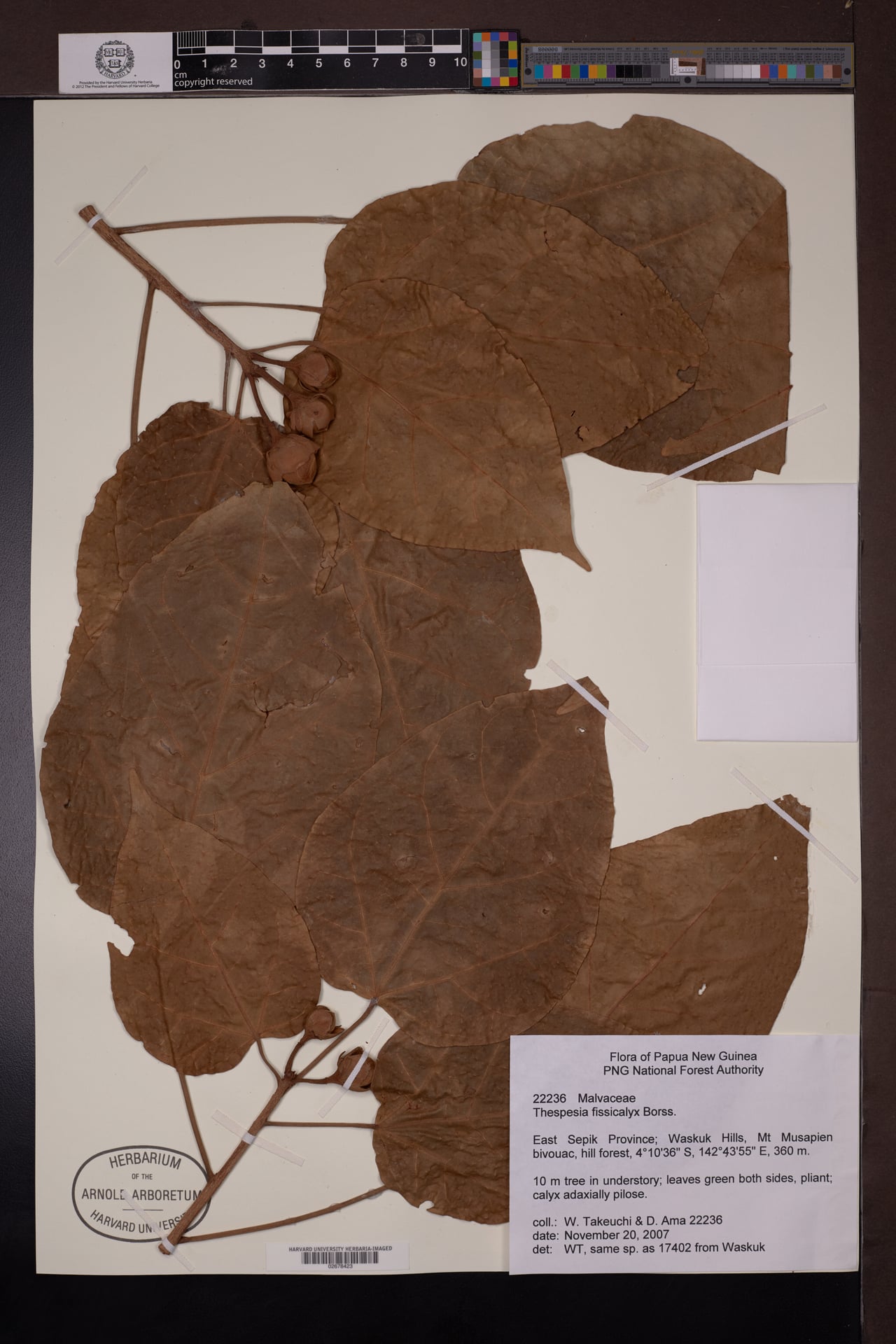
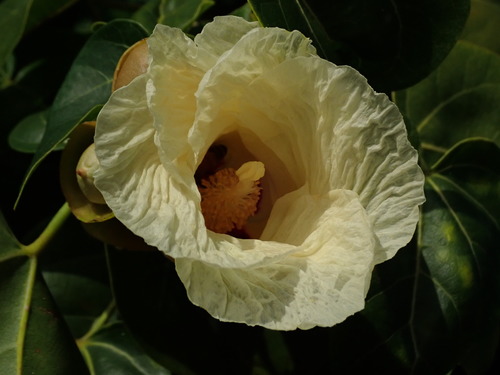
Tilia tuan
Szysz.
wikimedia· cc-by-sa
Wikimedia Commons - Ptelea
wikimedia· cc-by-sa
Wikimedia Commons - Ptelea
Summary
Source: WikipediaTilia tuan is a species of flowering plant found in forests at elevations of 1200–2400 m in the central Chinese provinces of Guangxi, Guizhou, Hubei, Hunan, Jiangsu, Jiangsu, Jiangxi, Sichuan, Yunnan, and Zhejiang. The species has long been regarded as the most variable lime within China, acquiring numerous synonyms; three varieties are currently recognized. The tree was first described by Henry who discovered it in 1888.
Description
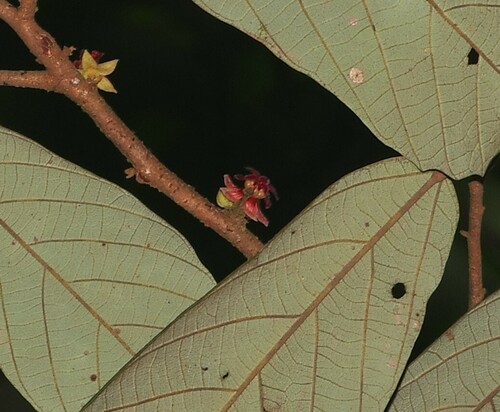
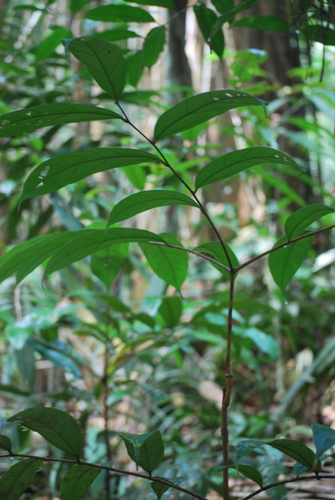
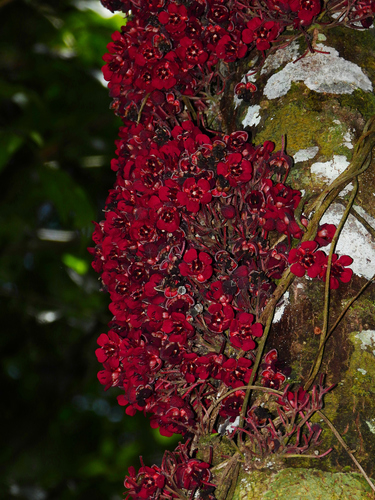
A tree. It grows 15 m high and spreads 8 m wide. The leaves are broadly oval. They are 12 cm long. They taper to the tips. There are teeth along the edges. There is grey down underneath the leaves. The flowers are yellow and in heads of 20 flowers.
Edible Uses
Young leaves can be eaten raw. The dried flowers make a refreshing herb tea. A paste of ground fruits and flowers produces a very good chocolate substitute, though attempts to market it commercially failed because the paste decomposes readily.
Medicinal Uses
A tea made from the flowers is antispasmodic, diaphoretic, and sedative.
Distribution
It is a temperate plant. It suits hardiness zones 6-9. In Sichuan and Yunnan.
Where It Grows
Asia, Australia, China, Japan,
Cultivation
Prefers a good moist loamy alkaline to neutral soil but succeeds on slightly acid soils. Grows poorly on any very dry or very wet soil. Dislikes exposed positions. Succeeds in sun or semi-shade. Prefers a continental climate, growing more slowly and not producing fertile seed in areas with cool summers. Lime trees tend to hybridise freely if other members of the genus are growing nearby. If growing plants from seed it is important to ensure the seed came from a wild source or from an isolated clump of the single species. Grows best in a woodland situation, young plants tolerate a reasonable level of side shade. A good bee plant. Unlike most other members of this genus, this species does not usually become infested with aphis. Quite tolerant of root disturbance, semi-mature trees up to 5 metres tall have been transplanted successfully. Plants in this genus are notably resistant to honey fungus.
Propagation
Much of the seed produced in Britain is not viable — cut a few seedcases open to check for a seed inside. Where possible, obtain fresh seed that is ripe but has not yet developed a hard seed coat and sow it immediately in a cold frame. It may germinate the following spring, though it could take 18 months. Stored seed can be very slow to germinate due to a hard seed coat, embryo dormancy, and a hard coat on the pericarp — together these factors can mean the seed takes up to 8 years to germinate. One way to shorten this time is to stratify the seed for 5 months at high temperatures (10°c at night, up to 30°c by day) followed by 5 months of cold stratification. When seedlings are large enough to handle, prick them out into individual pots and grow them on in the greenhouse through their first winter. Plant out into permanent positions in late spring or early summer, after the last expected frosts. Layering in spring just before the leaves unfurl takes 1–3 years. Suckers, when formed, can be removed with as much root as possible during the dormant season and replanted immediately.
Other Uses
A fibre obtained from the inner bark is used in making sandals and cordage. The wood is also used, though no further details are recorded.
Notes
These have also been in the Tiliaceae.
References (2)
- Cundall, P., (ed.), 2004, Gardening Australia: flora: the gardener's bible. ABC Books. p 1420
- Plants for a Future database, The Field, Penpol, Lostwithiel, Cornwall, PL22 0NG, UK. http://www.scs.leeds.ac.uk/pfaf/