Thysanotus tuberosus
R. Br.
Common fringe-lily, Fringed violet, Violet lily
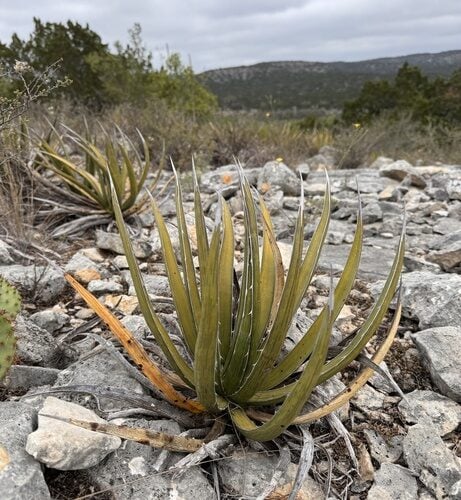
iNaturalist· cc-by-nc-sa
(c) Reiner Richter, some rights reserved (CC BY-NC-SA), uploaded by Reiner Richter
iNaturalist· cc-by-nc
(c) ron_willemsen, some rights reserved (CC BY-NC)
iNaturalist· cc-by-nc
(c) ron_willemsen, some rights reserved (CC BY-NC)
Summary
Source: WikipediaThysanotus tuberosus, known as the common fringe-lily is a perennial herb which is endemic to Australia. The species name tuberosus refers to the crisp tasting edible root. The leaves are linear in shape, and round at cross section towards the top. The plant grows from 20 cm to 60 cm tall. It grows in a wide variety of situations, from semi-arid parts of south eastern Australia to coastal areas receiving more than 1300 mm of rain per year. They are often found in open country, heathlands or in dry sclerophyll woodland. Flowers form from September to April. The three petaled flowers are purple, with frilly edges, and only last for one day. They are among the more colorful wildflowers in south eastern Australia.
Description
An erect herb. It grows 40 cm high. The plant has a ring of narrow leaves. The leaves are 30-40 cm long and 2-3 mm wide. The leaf bases are a dark maroon colour. There is a ring of tubers under the ground. There can be 12 tubers. They are 2-3 cm long and 8-9 mm wide. They are up to 10 cm deep. The flowers are delicate and lilac-mauve. The 3 petals have fringes along the edge. The flowers are 2.5-3 cm across. They are on a central stem 40 cm high. The fruit is a capsule with 3 compartments that contain small black seeds.
Edible Uses
The roots can be eaten raw or cooked. They have a crisp, juicy texture but very little flavour.
Traditional Uses
The tubers can be eaten raw or cooked. The leaves and flowers are cooked and eaten.
This uses section is brief — help expand it
Medicinal Uses
None known.
Distribution
A tropical plant. It grows in wet grasslands of tropical Queensland.
Where It Grows
Australia*, Papua New Guinea, PNG, Tasmania,
Cultivation
Plants can be grown from the tubers. They can probably also be grown from the seeds. The seeds are best grown in a greenhouse and transplanted once well established after 1 or 2 years.
Propagation
Sow seed thinly in spring in a sandy compost in a greenhouse. Keep the seedlings in their pots through the first growing season, then move them into individual pots in early spring of the following year. Grow them on in the greenhouse for at least another year before attempting to plant them outdoors. Can also be propagated by division.
Other Uses
None known.
Notes
There are about 50 Thysanotus species mostly in Australia. Also put in the family Laxmanniaceae and Asphodelaceae.
Also Known As
Milaan, Tjunguri, Warrat, Yamu
References (26)
- Beasley, J., 2011, Plants of Tropical North Queensland - the compact guide. Footloose publications. p 165
- Blomberry, A.M., 1979, Australian Native Plants. Angus and Robertson p 128
- Brittan, N. H., 1971, Australian Journal Biological Science 24:1341-5.
- Bodkin, F., 1991, Encyclopedia Botanica. Cornstalk publishing, p 984
- Caton, J.M. & Hardwick, R. J., 2016, Field Guide to Useful Native Plants from Temperate Australia. Harbour Publishing House. p 308
Show all 26 references Hide references
- Cherikoff V. & Isaacs, J., The Bush Food Handbook. How to gather, grow, process and cook Australian Wild Foods. Ti Tree Press, Australia p 197
- Crawford, I. M., 1982, Traditional Aboriginal Plant Resources in the Kalumburu Area: Aspects in Ethno-economics. Records of the Western Australian Museum Supplement No. 15
- Cribb, A.B. & J.W., 1976, Wild Food in Australia, Fontana. p 155
- Cronin, L., 1989, The Concise Australian Flora. Reed. p 98
- Ferns, Useful Tropical Plants
- Gott, B & Conran, J., 1991, Victorian Koorie Plants. PO Box 666 Hamilton, Victoria 3300, Australia. p 16
- Hardwick, R.J., 2000, Nature's Larder. A Field Guide to the Native Food Plants of the NSW South Coast. Homosapien Books. p 48
- Hastings Advance Community College, 2017, Uses for Native Plants of the Mornington Peninsula. 86pp. p 77
- Hibbert, M., 2002, The Aussie Plant Finder 2002, Florilegium. p 300
- Hinton, B & B., 1982, A Wilderness in Bloom. Wildflowers of tropical Australia. p 44
- Lavelle, M., 2008, Wild Flowers of Australia and Oceania. Southwater. p 117
- Lazarides, M. & Hince, B., 1993, Handbook of Economic Plants of Australia, CSIRO. p 237
- Lim, T. K., 2015, Edible Medicinal and Non Medicinal Plants. Volume 9, Modified Stems, Roots, Bulbs. Springer p 82
- Low, T., 1991, Wild Food Plants of Australia. Australian Nature FieldGuide, Angus & Robertson. p 106
- Low, T., 1992, Bush Tucker. Australia’s Wild Food Harvest. Angus & Robertson. p 112
- McKerney, M. & White, H., 2011, Bush Tucker, Boomerangs & Bandages. Border River-Gwyder Catchment Management Authority p 169
- Melzer, R. & Plumb, J., 2011, Plants of Capricornia. Belgamba, Rockhampton. p 490
- Plants for a Future database, The Field, Penpol, Lostwithiel, Cornwall, PL22 0NG, UK. http://www.scs.leeds.ac.uk/pfaf/
- Prodr. 282. 1810
- Ryan, M. (Ed.), 2003, Wild Plants of Greater Brisbane. Queensland Museum. p 107
- Williams, K.A.W., 1999, Native Plants of Queensland Volume 4. Keith A.W. Williams North Ipswich, Australia. p 370