Thermopsis lanceolata
R. Br.
Siberian Lupin, Golden banner
iNaturalist· cc-by-nc
(c) Nazarov Yan, some rights reserved (CC BY-NC)
iNaturalist· cc-by-nc
(c) Nazarov Yan, some rights reserved (CC BY-NC)
iNaturalist· cc-by-nc
(c) Nazarov Yan, some rights reserved (CC BY-NC)
Summary
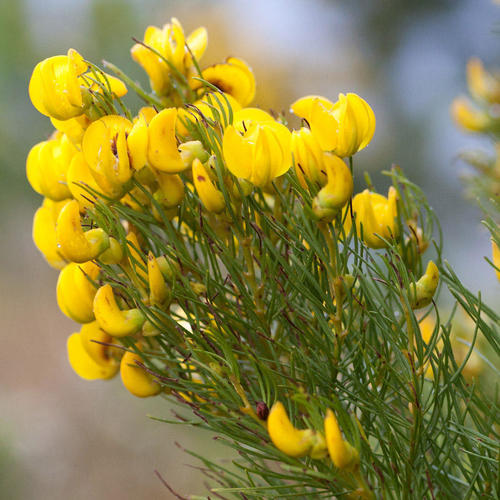
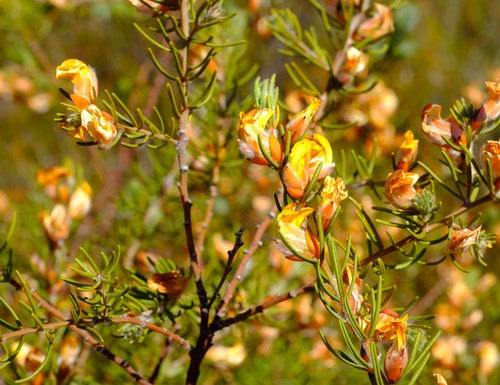
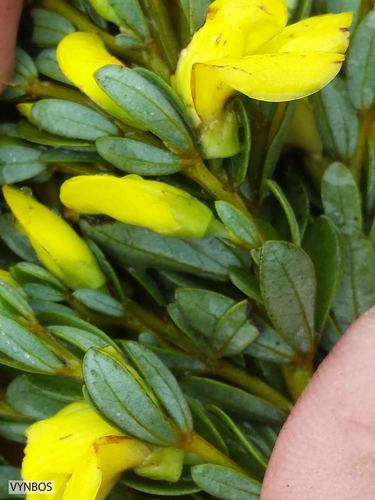
Source: WikipediaThermopsis lanceolata, the tapered false lupin (or lupine), is a species of flowering plant in the legume family Fabaceae, native to Russia (Siberia), Kazakhstan, Mongolia, Nepal and China (Hebei Sheng, Gansu Sheng, Shanxi Sheng, Shaanxi Sheng, Qinghai Sheng, Nei Mongol Zizhiqu (s.)). Growing to 1 m (3.3 ft) tall and broad, this herbaceous perennial has grey-green leaves and erect tapering panicles of pale yellow, pea-like flowers in spring. It is closely related to the familiar lupins of gardens, but with a more bushy appearance. The plant is tough and resilient, tolerating a wide range of growing conditions, but resents disturbance. The Latin specific epithet lanceolata means 'spear-shaped', in reference to the leaves. An alkaloid that is present in Thermopsis lanceolata is called Thermopsine [486-90-8].
Description
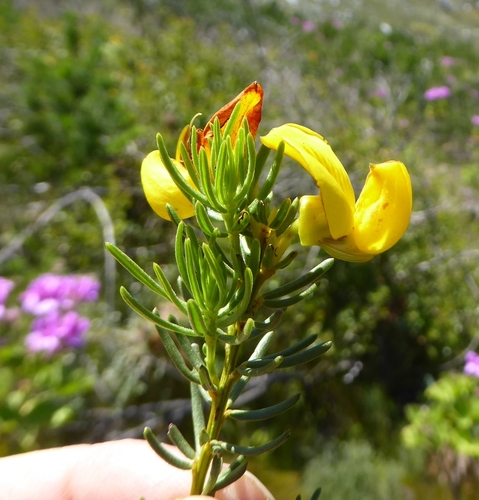
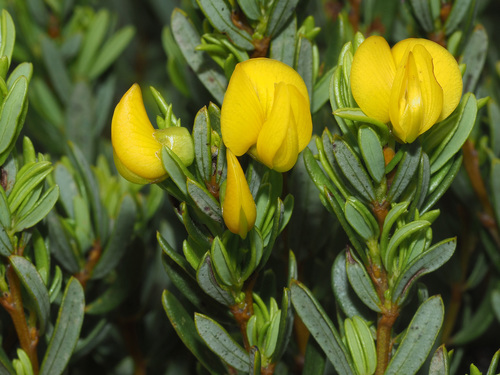
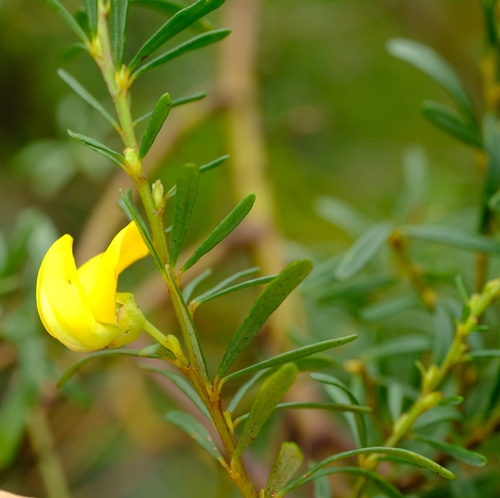
A herb. It keeps growing from year to year. The stems are erect and 12-40 cm tall. It has ridges and yellow hairs. The leaflets are oblong and 3-8 cm long by 1-2 cm wide. The flowers are yellow. The pods are 5-9 cm long by 1 cm wide. They are hairy and have a beak at the end. There are 6-14 seeds.
Edible Uses
The leaves are eaten.
Distribution
It is a temperate plant. It grows in grasslands and ravines.
Where It Grows
Asia, Australia, Central Asia, China, Japan, Kazakhstan, Kyrgyzstan, Mongolia, Russia, Siberia, Tajikistan,
References (4)
- W. T. Aiton, Hortus kew. ed. 2, 3:3. 1811
- Hibbert, M., 2002, The Aussie Plant Finder 2002, Florilegium. p 298
- Plants for a Future database, The Field, Penpol, Lostwithiel, Cornwall, PL22 0NG, UK. http://www.scs.leeds.ac.uk/pfaf/
- Urgamal, M., Oyuntsetseg, B., Nyambayar, D. & Dulamsuren, Ch. 2014. Conspectus of the vascular plants of Mongolia. (Editors: Sanchir, Ch. & Jamsran, Ts.). Ulaanbaatar, Mongolia. “Admon“ Press. 334pp. (p. 121-143).