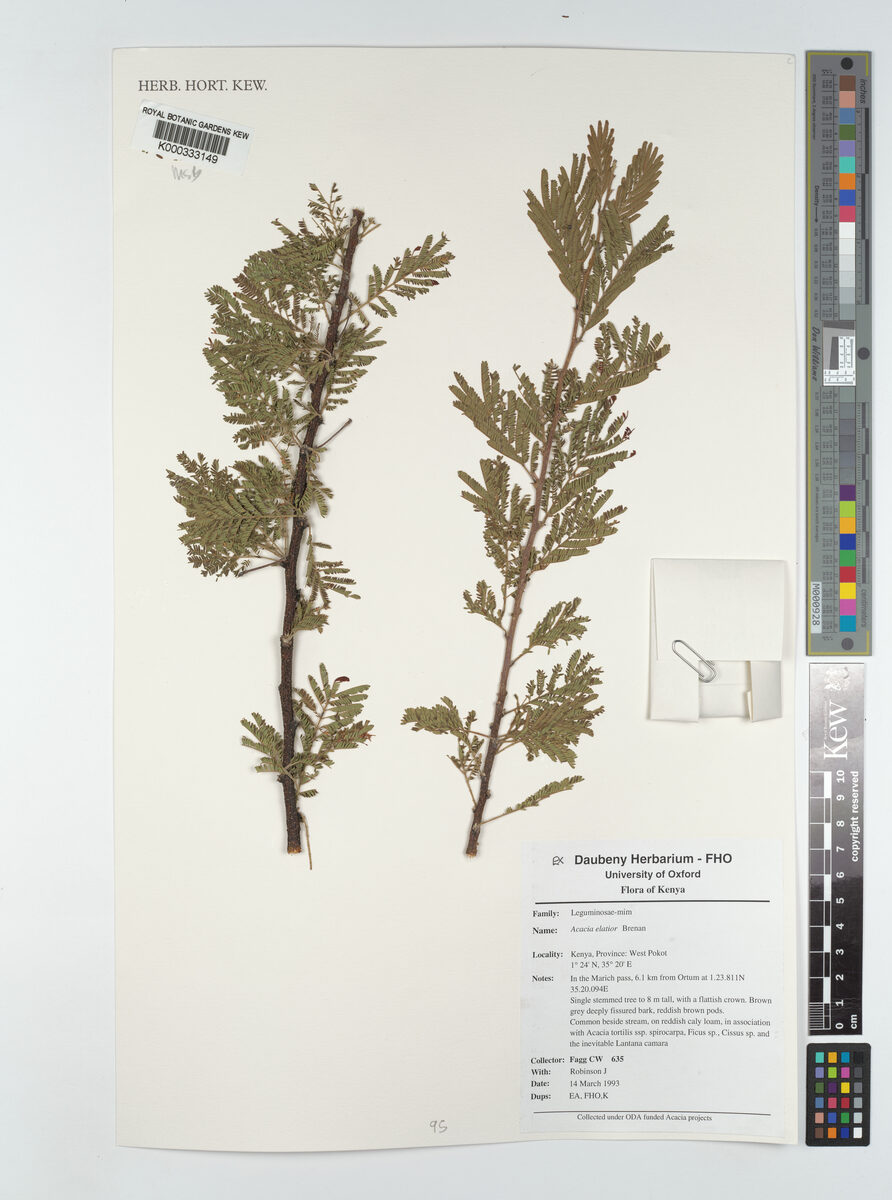
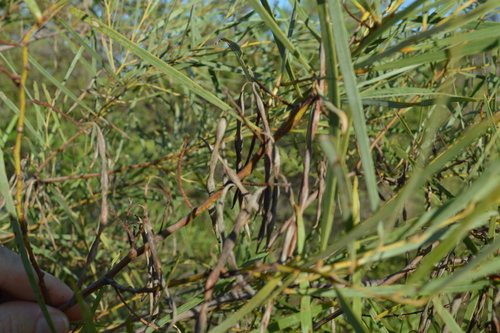
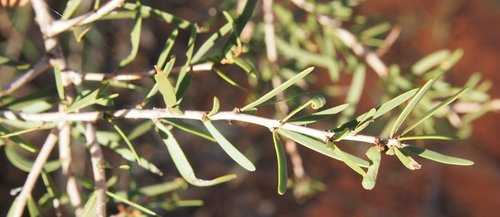
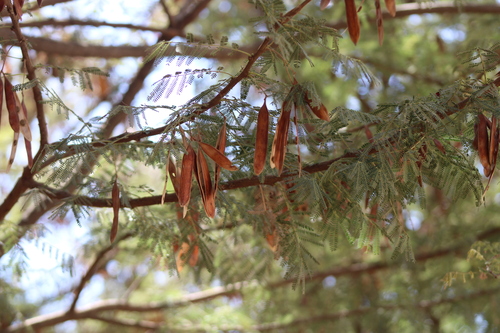
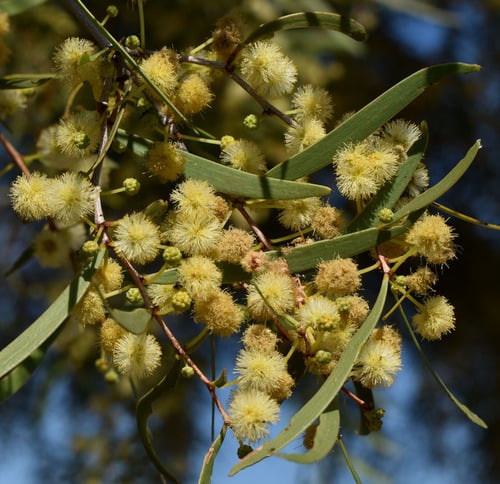
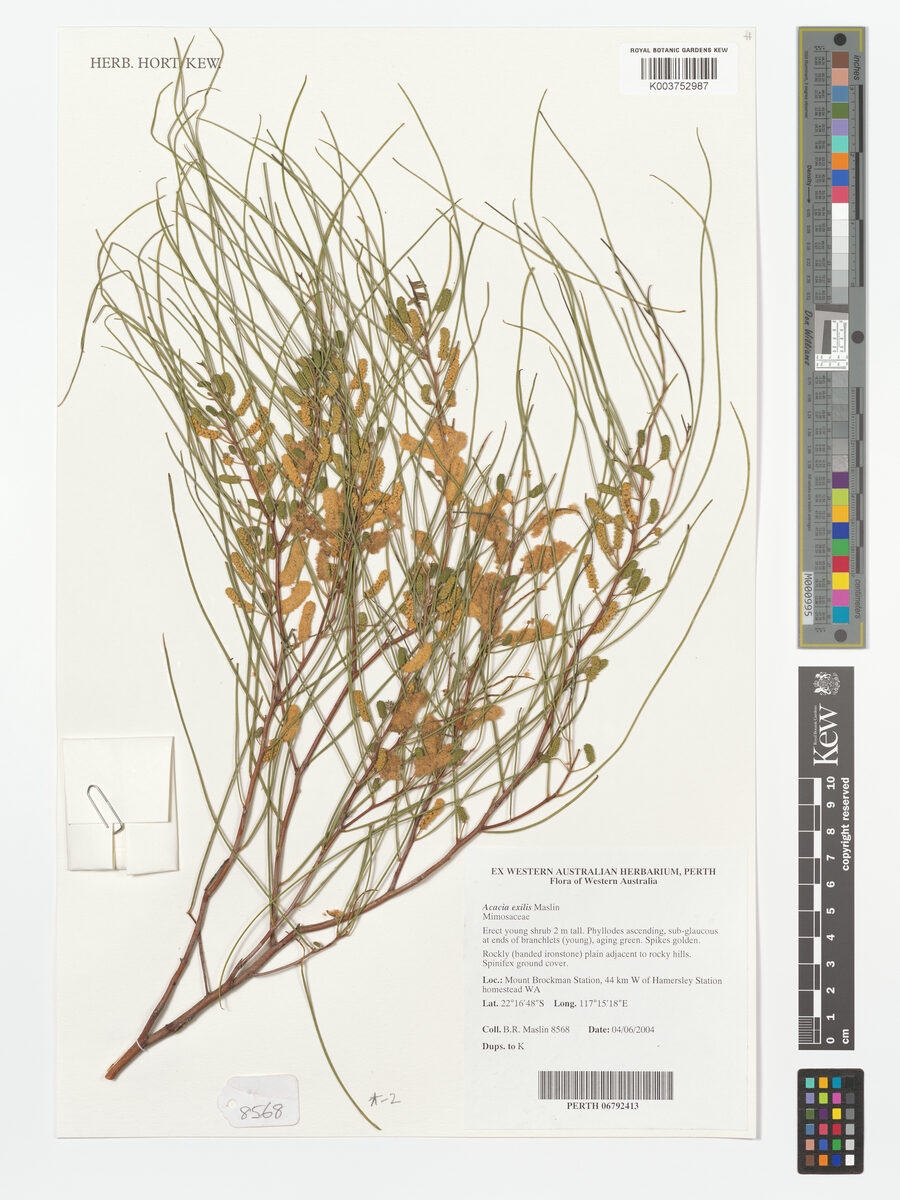
Sesbania rostrata
Brem. & Obermeyer
Rostrate sesbania
iNaturalist· cc-by-nc
(c) Guy Eric Onjalalaina, some rights reserved (CC BY-NC), uploaded by Guy Eric Onjalalaina
wikimedia· cc0
Wikimedia Commons - NMNH
Summary
Source: WikipediaSesbania rostrata is a small semi-aquatic leguminous tree, in the genus Sesbania. It forms a symbiotic relationship with Gram-negative rhizobia which leads to the formation of nitrogen fixing nodules on both stem and roots. It is mainly used as green manure to improve soil fertility due to its fast growth, high biomass production and ability to convert large amounts of atmospheric nitrogen into a usable form for plants. Other applications include production of high quality forage for livestock and it is a source of fuel-wood.
Description
An annual herb. It grows 1.5 m high. It is softly woody. It can live for a few years. The stems are 15 mm thick. The leaves have 12-22 pairs of leaflets along the stalk. These are 3 cm long and 6 mm wide. There are 3-15 flowers in a group. They are yellow. The fruit is a curved pod 15-22 cm long. It has a slender beak. The seeds are oval and 4 mm long by 3 mm wide. They are brown with small purple dots.
Edible Uses
The flowers are eaten raw, the leaves are consumed as a vegetable, and the seeds are used as a flavouring.
Traditional Uses
The flower is eaten raw.
This uses section is brief — help expand it
Medicinal Uses
The plant is used medicinally. No more information.
Distribution
It is a tropical plant. It appears in the rainy season along roadsides in West Africa. It grows in wet and muddy places along flood plains. It can grow in water up to 1 m deep for a time. It grows between 500-1,200 m above sea level. It can grow in soils with a pH between 5.5 to slightly alkaline. It grows best with temperatures above 25°C.
Where It Grows
Africa, Angola, Asia, Bangladesh, Botswana, Burkina Faso, Cameroon, Central Africa, Central Africa Republic, Chad, Congo, Congo DR, East Africa, Ethiopia, India, Madagascar, Malawi, Mali, Mauritania, Mozambique, Namibia, Niger, Nigeria, Philippines, SE Asia, Senegal, Southern Africa, Sri Lanka, Sudan, Tanzania, West Africa, Zambia, Zimbabwe,
Cultivation
Plants can be grown from seeds or cuttings. Cuttings grow most quickly and cuttings 30 cm long are suitable. The seeds can have a hard seed coat so need to be put in hot water (80°C) for 5 minutes. Alternatively the seed coat can be scratched. Plants can be cut back and allowed to re-grow. It can be grown amongst corn. Seeds are produced when the daylength is less than 11 hours. The bacteria to form nodules is Azorhizobium caulinodans. When these are present it fixes large amounts of nitrogen. They could be collected from old plants with nodules that are red inside.
Propagation
Seed - pre-treatment to soften the hard seed coat reduces germination time and increases germination rate. Treatment of the seed with concentrated sulphuric acid for 30 minutes improves the germination rate to more than 90%. Subsequently, the treated seed should be washed with ample water to avoid overheating. Abrading the seed, or a hot water treatment, also improve germination, but are much less effective. The seed is sown in situ, usually broadcast. Vegetative propagation by stem cuttings is possible, as the nodulation sites on the stems consist of adventive root primordia. The use of cuttings instead of seed results in a quick establishment of the crop and may double the N accumulation in a 6-week growth period, or reduce the growth period by 2 weeks.
Other Uses
A fibre is obtained from the stems. The dry stems are used as a fuel. The plant is able to fix atmospheric nitrogen even under waterlogged soil conditions and is used as a green manure in wet rice cultivation. If established as an intercrop in rice at the same time as the rice, it out-competes the crop, but is suppressed by the rice if sown 30 - 60 days after the crop. When grown as a green manure crop, it is allowed to grow for 45 - 65 days depending on its growth rate. When it is left to grow longer than about 55 days, the lignin content increases which decreases the decomposition rate of plant biomass. During the short-day season, it may be left to grow longer as it starts flowering early, resulting in a lower growth rate. The green manure crop is ploughed in just before the rice crop is sown or transplanted. Initial decomposition is rapid, with 30 - 45% of the leaf material decomposing in 10 days after incorporation. Decomposition then slows down considerably, reaching 50% after 35 days, while the half-life of stems and root-stubble is about 110 days. It has shown potential for incorporation in alley-cropping system.
Notes
It is used as a green cover crop in rice paddies. It is a trap crop for insects in soybean crops.
Synonyms
Also Known As
Jantar, Ngapay, Sano african, Sindin, Tamechmarit
References (6)
- Burkill, H. M., 1985, The useful plants of west tropical Africa, Vol. 3. Kew.
- Busson, 1965, (As Sesbania pachycarpa)
- Peters, C. R., O'Brien, E. M., and Drummond, R.B., 1992, Edible Wild plants of Sub-saharan Africa. Kew. p 137 (As Sesbania pachycarpa)
- Rodin, 1985, (As Sesbania pachycarpa)
- World Checklist of Useful Plant Species 2020. Royal Botanic Gardens, Kew
Show all 6 references Hide references
- www.worldagroforestrycentre.org/treedb/