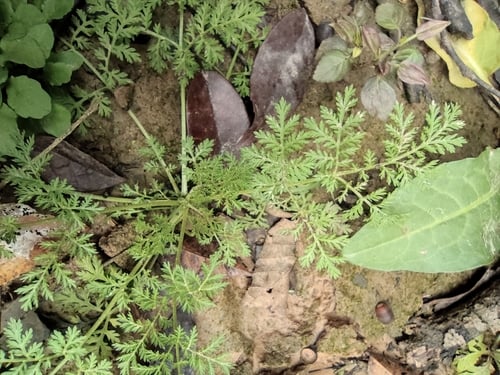
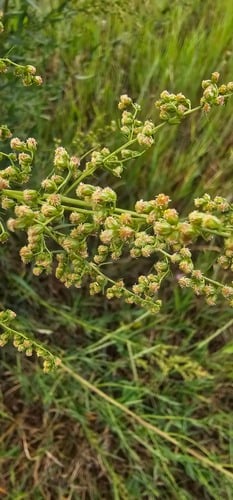
Ambrosia trifida
L.
Giant Ragweed, Great ragweed, Texan great ragweed, Bitterweed, Bloodweed, Buffalo Weed, Horse Cane
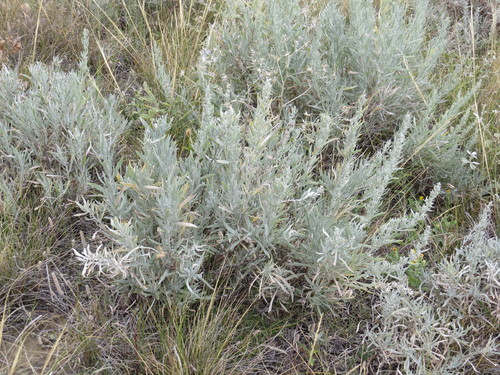
iNaturalist· cc-by-nc
(c) thaven, some rights reserved (CC BY-NC)
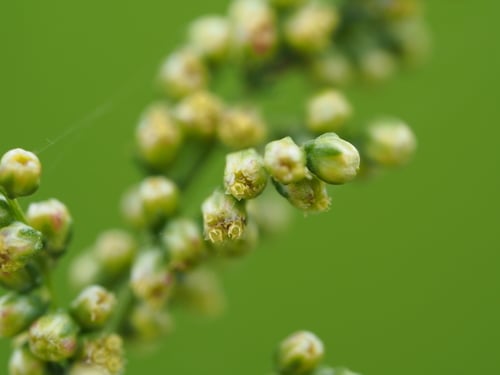
iNaturalist· cc-by-nc
(c) David Jeffrey Ringer, some rights reserved (CC BY-NC), uploaded by David Jeffrey Ringer
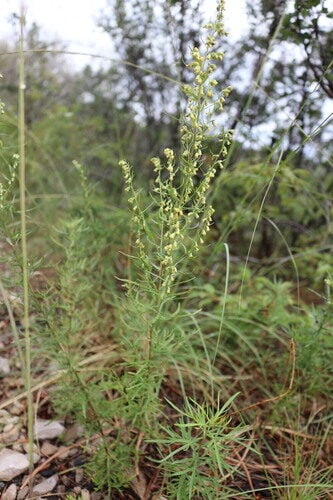
iNaturalist· cc-by-sa
(c) Douglas Goldman, some rights reserved (CC BY-SA), uploaded by Douglas Goldman
Description
Ambrosia trifida is a ANNUAL growing to 2 m (6ft 7in) at a medium rate. It is in flower from August to October. The species is monoecious (individual flowers are either male or female, but both sexes can be found on the same plant) and is pollinated by Wind. Suitable for: light (sandy), medium (loamy) and heavy (clay) soils. Suitable pH: mildly acid, neutral and basic (mildly alkaline) soils. It can grow in semi-shade (light woodland) or no shade. It prefers moist soil.
Edible Uses
Oil. This plant was cultivated by the pre-Columbian N. American Indians, seeds found in pre-historic sites are 4 - 5 times larger than those of the present-day wild plant, which seems to indicate selective breeding by the Indians. The following report is for A. artemesifolia, it quite possibly also applies to this species. An oil is obtained from the seed. It has been suggested for edible purposes because it contains little linolenic acid. The seed contains up to 19% oil, it has slightly better drying properties than soya bean oil.
Medicinal Uses
Antidote Astringent Emetic Poultice Skin Women's complaints. The leaves are very astringent, emetic and febrifuge. They are applied externally to insect bites and various skin complaints, internally they are used as a tea in the treatment of pneumonia, fevers, nausea, intestinal cramps, diarrhoea and mucous discharges. The juice of wilted leaves is disinfectant and is applied to infected toes. A tea made from the roots is used in the treatment of menstrual disorders and stroke. The pollen is harvested commercially and manufactured into pharmaceutical preparations for the treatment of allergies to the plant.
Known Hazards
The pollen of this plant is a major cause of hayfever in N. America. Ingesting or touching the plant can cause allergic reactions in some people.
Distribution
Eastern N. America - Quebec to Florida, west to Manitoba, Colorado and Mexico.
Where It Grows
NORTHERN AMERICA: Canada (Québec, Nova Scotia, Ontario, Prince Edward Island, New Brunswick, Saskatchewan, Alberta, Manitoba, British Columbia (south)), United States (Indiana, Michigan, Ohio, Pennsylvania, West Virginia, Illinois, Iowa, Kansas, Minnesota, Missouri, Nebraska, North Dakota, Oklahoma, South Dakota, Wisconsin, Colorado, Montana, Wyoming, Alabama, Arkansas, Georgia, Kentucky, Louisiana, Maryland, Mississippi, North Carolina, South Carolina, Tennessee, Virginia, Texas), Mexico (Chihuahua, Coahuila de Zaragoza, Sonora) EUROPE: Ireland, Austria, Belgium, Switzerland, Czech Republic, Poland, Russian Federation (European part), Belarus, Estonia, Latvia, Moldova, Ukraine, Serbia, Slovenia
Cultivation
We have very little information on this species but suggest growing it in a sunny position in a well-drained soil. This plant is sometimes cultivated by the N. American Indians for food and medicine.
Propagation
Seed - we have no details for this species but suggest sowing the seed in situ in April.
Other Uses
Dye OilA red colour is obtained from the crushed heads. (This probably refers to the seed heads.) The sap of the plant can stain the skin red. A positive impact may be seen with a noted decrease in the numbers of plant-parasitic nematodes found in soyabean fields where A. trifida is present (Wang et al., 1998).