Ambrosia confertiflora
DC.
Slimleaf Bursage
iNaturalist· cc-by-nc
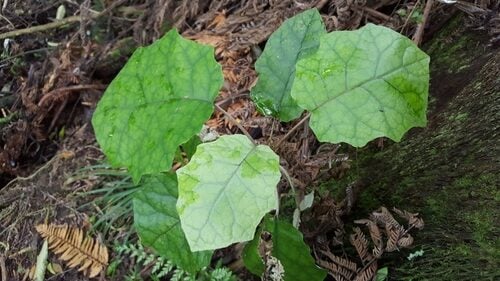
(c) Steve Jones, some rights reserved (CC BY-NC), uploaded by Steve Jones
iNaturalist· cc-by-nc
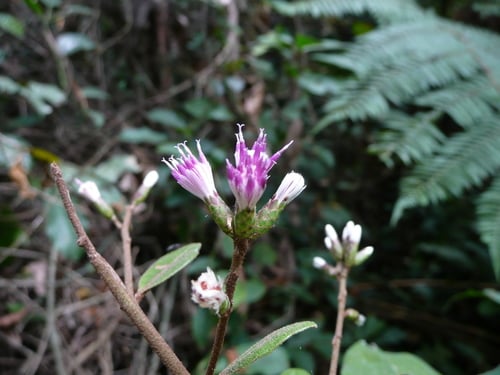
(c) Nathan Taylor, some rights reserved (CC BY-NC), uploaded by Nathan Taylor
iNaturalist· cc-by-nc
(c) jrebman, some rights reserved (CC BY-NC), uploaded by jrebman
Description
Ambrosia confertiflora is a PERENNIAL growing to 1.5 m (5ft) by 1 m (3ft 3in) at a medium rate. See above for USDA hardiness. It is hardy to UK zone 9 and is not frost tender. The flowers are pollinated by Wind. Suitable for: light (sandy) and medium (loamy) soils, prefers well-drained soil and can grow in nutritionally poor soil. Suitable pH: mildly acid, neutral and basic (mildly alkaline) soils. It cannot grow in the shade. It prefers dry or moist soil and can tolerate drought.
Edible Uses
Reports indicate that the roots of slimleaf bursage were once used as food by Native Americans, particularly the Tohono O’odham, who gathered them in bulk during autumn rains. The roots have a starchy, somewhat resinous flavor, reminiscent of potatoes and sunflower seeds with a faint cardboard-like accent. Boiling does not soften the tough inner cores, but the thin, chewable outer layers provide nourishment. Cooking water takes on the same starchy–resinous flavor and can be used for broths. However, serious caution is advised. The plant contains compounds such as confertiflorin, reynosin, and parthenolide, which can cause contact dermatitis, mouth ulcers, and loss of taste. Very little modern research confirms the safety of consuming these roots, and their near disappearance as a food source may indicate either health risks or impracticality..
Known Hazards
Reported traditional food use but likely unsafe.
Distribution
Native to southern Arizona, New Mexico, Texas, and northern Mexico.
Where It Grows
Arizona, California, Colorado, Kansas, Mexico Central, Mexico Gulf, Mexico Northeast, Mexico Northwest, Mexico Southwest, New Mexico, Oklahoma, Texas, Utah
Cultivation
Ambrosia confertiflora (weakleaf / denseflower ragweed) is a coarse perennial to subshrub, commonly 0.5–1.5 m tall and in good sites up to about 2 m, often forming broad clumps 0.5–1 m across or more in dense stands. Like other ragweeds, it is a classic anemophilous (wind-pollinated): separate male heads release copious pollen into the air; the small, hidden female flowers are adapted to catch airborne pollen rather than attract insects. A perennial that grows primarily in the subtropical biome. An Annual to short-lived perennial, adapted to zones 8–11. Thrives in desert and semi-arid climates. Sun: Requires full sun. Soil: Tolerates poor, sandy, rocky, or disturbed soils. Moisture: Drought-tolerant; responds to seasonal rainfall, especially late summer–autumn rains. Growth Habit: Upright to sprawling herb/shrub, often forming dense colonies. Habitat: Native to southern Arizona, New Mexico, Texas, and northern Mexico. Found on floodplains, desert washes, roadsides, pastures, and disturbed ground. Often occurs in large stands, resulting in abundant roots that are considered usable.
Propagation
Seed.
Synonyms
Also Known As
Ambrosia confertiflora (Slimleaf Bursage / Weakleaf Bur Ragweed)