Terminalia impediens
Coode
gbif· cc0
President and Fellows of Harvard College
Description
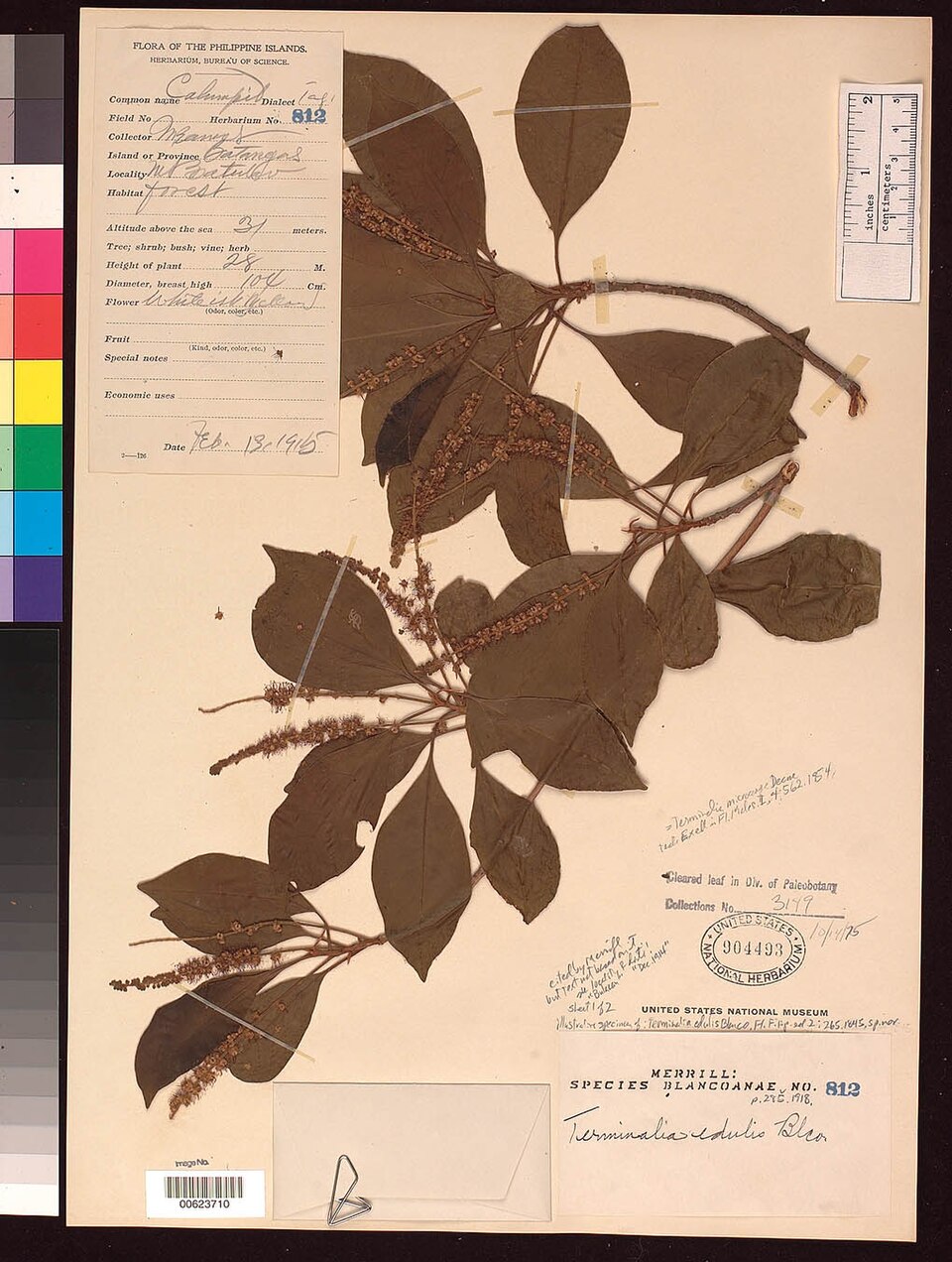
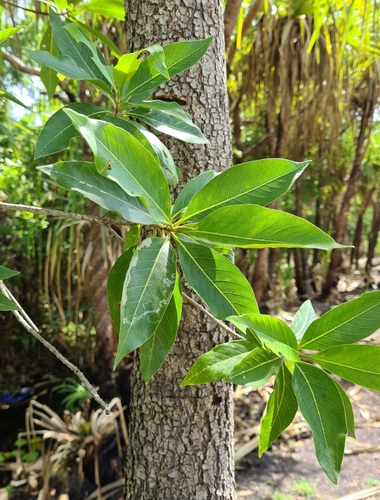
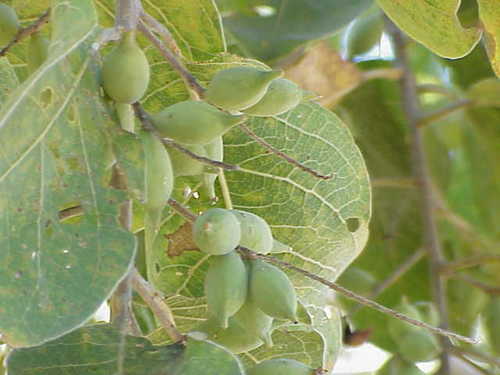
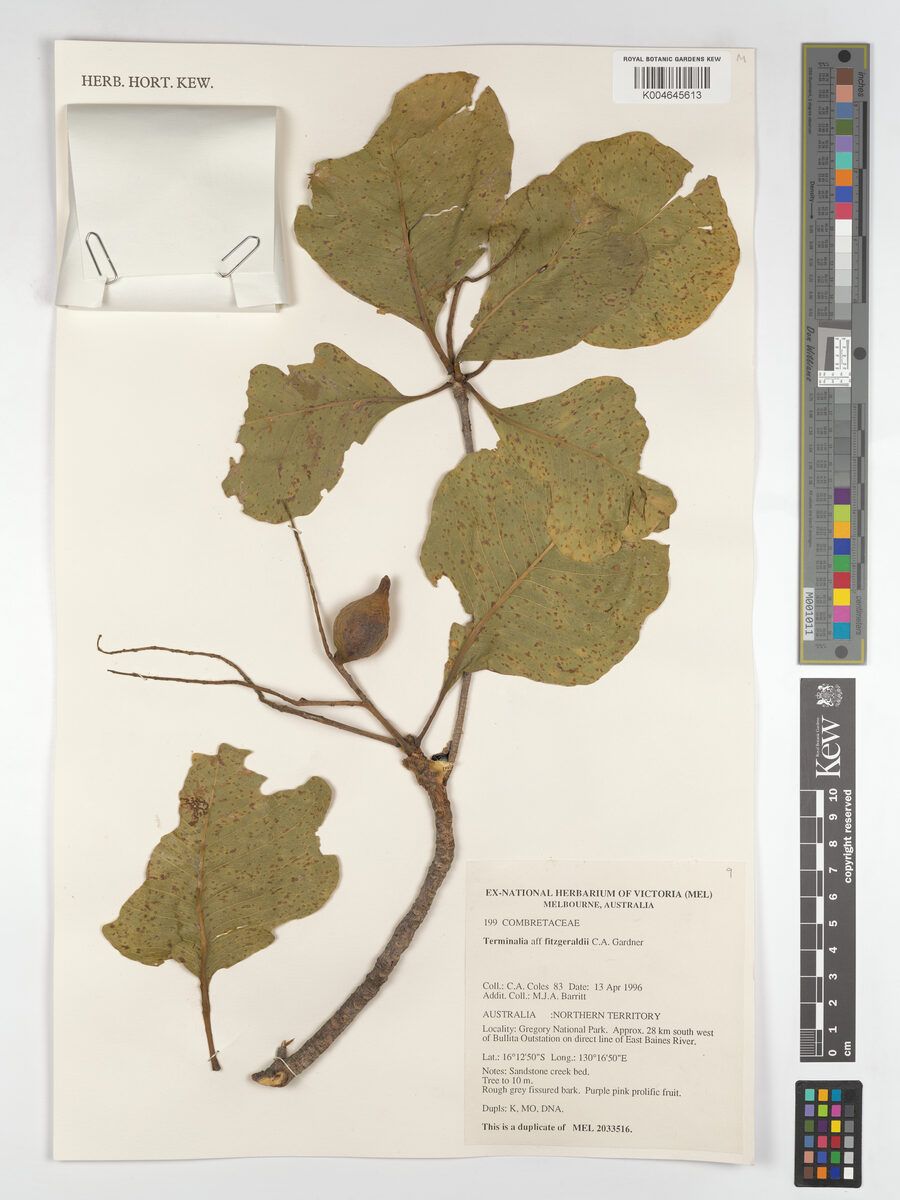
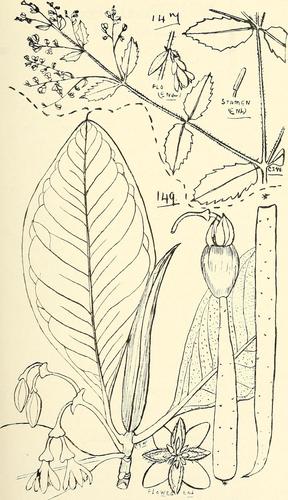
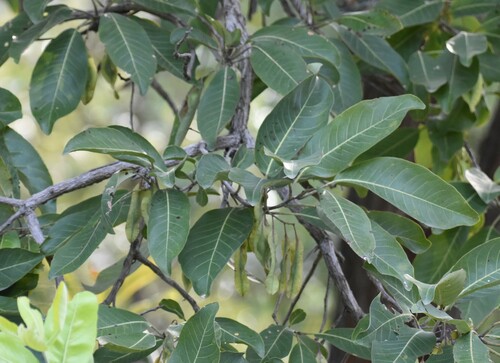
A tree up to 42 m tall. Often the tree has buttresses. The twigs are usually fairly large. The young parts of the tree are sometimes hairy. The young leaves are purple underneath. It has leaves that are clustered at the ends of thick twigs. Leaves can be 25 cm x 12 cm or larger and they taper towards the stalk. The leaves are often blunt at the tip. The leaves often have a purplish colour underneath. The flowers occur on spikes 10-30 cm long. The flowers are small. The flower spikes are longer than okari nut (Terminalia kaernbachii) and less hairy looking. The fruit are 7-9 cm long by 3.5-6 cm wide. They are red and have fibrous flesh. They usually do not have a wings or flanges. Inside there is a large woody stone. The stone inside the fruit splits into 2 unequal parts. The 2 kernels inside are edible.
Edible Uses
The kernels inside the hard stone of the fruit are edible.
Traditional Uses
The kernel inside the hard shell of the fruit is edible.
This uses section is brief — help expand it
Distribution
A tropical plant. It occurs in the lowland forest in Papua New Guinea. It grows from sea level to 1,000 m above sea level.
Where It Grows
Pacific, Papua New Guinea, PNG, Solomon Islands,
Cultivation
Trees grow wild and are preserved in gardens. They grow from seed.
Other Uses
A major exportable timber in New Guinea.
Notes
There are about 200-250 Terminalia species. They are tropical.
References (5)
- Bourke, M., 1995, Edible Indigenous Nuts in Papua New Guinea. In South Pacific Indigenous Nuts. ACIAR Proceedings No 69, Canberra. p 46
- Coode, M.J.E., in Womersley, J.S., (Ed), 1978, Handbooks of the Flora of Papua New Guinea. Melbourne University Press. Vol 1. p 80
- French, B.R., 1986, Food Plants of Papua New Guinea, A Compendium. Asia Pacific Science Foundation p 170
- Walter, A. & Sam C., 2002, Fruits of Oceania. ACIAR Monograph No. 85. Canberra. p 254. 281
- Wickens, G.E., 1995, Edible Nuts. FAO Non-wood forest products. FAO, Rome. p 116