Combretum album
Pers.
Combretaceae Edible: Nuts - masticatory, Bark, Leaves, Flower bracts, Seeds
wikimedia· cc-by-sa
Wikimedia Commons - TopTropicals.com
Description
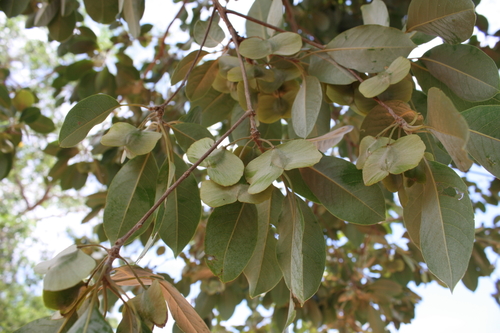
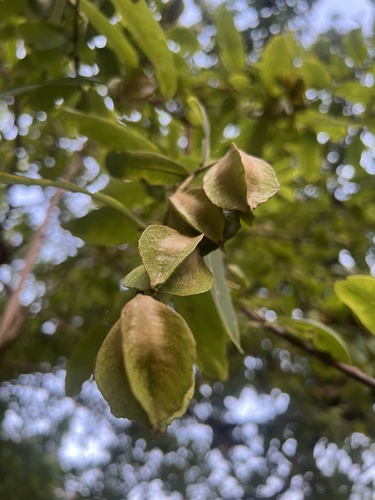
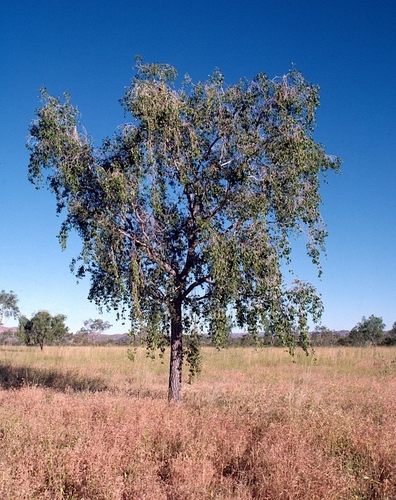
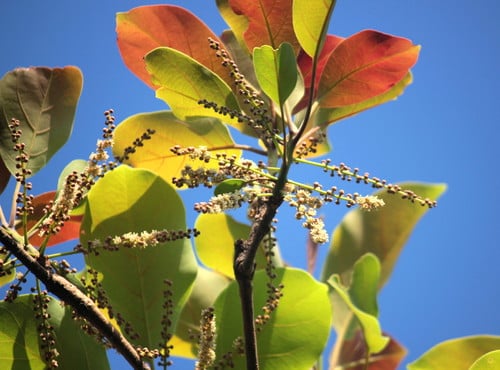
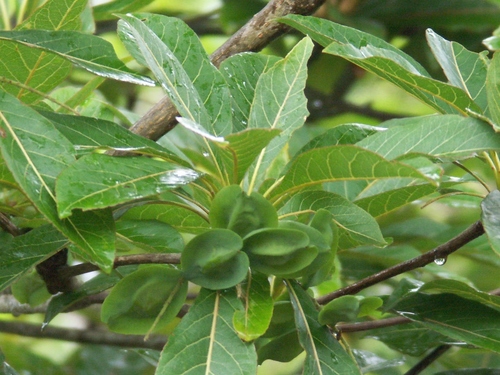
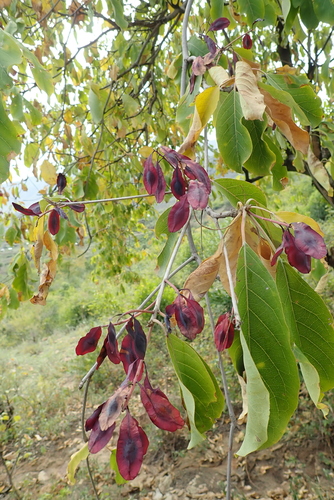
A large woody climber. It keeps its leaves from year to year. The bark is reddish brown and peels off in thin flakes. The leaves are opposite. The flowers are greenish white. The fruit have papery wings.
Edible Uses
The seeds are roasted and eaten. The bark is chewed as a substitute for betel nut.
Traditional Uses
The bark is chewed as a substitute for betel nut. The seeds are roasted and eaten.
This uses section is brief — help expand it
Distribution
It is a subtropical plant. It is common near river banks.
Where It Grows
Asia, India, Northeastern India,
Production
In India fruit are produced November to June.
Synonyms
Combretum decandrum Roxb. [Illegitimate]Combretum roxburghii Spreng.Pentaptera roxburghii Tul.Poivrea roxburghii DC.Poivrea roxburghii Spr.NB Combretum decandrum Roxb. is a illegitimate name.
Combretum decandrum Jacq. is an accepted name.
Also Known As
Arkeng, Atundi, Dhuna chali, Droa chali, Gorunda, Jangta, Jonari lewa, Koralkundia, Latachali, Mei-long-kha-saw, Phalando, Tuta chali
References (10)
- Dey, A. & Mukhererjee, A., 2015, Living and Survival Amidst Hunger: Wild Edible Botanicals as a Prime Forest Productivity in the Rural Purulia District, West Bengal, India from Colonial to Present. Research Journal of Forestry 9(3): 71-86 (As Combretum roxburghii)
- Misra S. & Misra M., 2016, Ethnobotanical and Nutritional Evaluation of Some Edible Fruit Plants of Southern Odisha, India. International Journal of Advances in Agricultural Science and Technology, Vol.3 Issue.1, March- 2016, pg. 1-30
- Misra, S., 2020, Survey of edible plants for human consumption in south Odisha, India. Journal of Emerging Technologies and Innovative Research (JETIR) Vol. 7, Issue 12 p 278
- Patiri, B. & Borah, A., 2007, Wild Edible Plants of Assam. Geethaki Publishers. p 52 (As Combretum decandrum)
- Pegu, R., et al, 2013, Ethnobotanical study of Wild Edible Plants in Poba Reserved Forest, Assam, India. Research Journal of Agriculture and Forestry Sciences 1(3):1-10 (As Combretum roxburghii)
Show all 10 references Hide references
- Phangchopi, U., et al, 2015, Diversity of wild edible plants in Marat Longri Wildlife Sanctuary, Assam. Indian Journal of Natural Products and Resources Vol. 6(4), December 2015 pp. 305-313
- Sarma, H., et al, 2010, Updated Estimates of Wild Edible and Threatened Plants of Assam: A Meta-analysis. International Journal of Botany 6(4): 414-423 (As Combretum decandrum)
- Sawian, J. T., et al, 2007, Wild edible plants of Meghalaya, North-east India. Natural Product Radiance Vol. 6(5): p 415 (As Combretum decandrum)
- Sawian, J. T., et al, 2007, Wild edible plants of Meghalaya, North-east India. Natural Product Radiance Vol. 6(5): p 415 (As Combretum roxburghii)
- Teron, R. & Borthakur, S. K., 2016, Edible Medicines: An Exploration of Medicinal Plants in Dietary Practices of Karbi Tribal Population of Assam, Northeast India. In Mondal, N. & Sen, J.(Ed.) Nutrition and Health among tribal populations of India. p 150 (As Combretum roxburghii)