Combretum bracteosum
(Hochst.) Brandis
Hiccough nut, Hiccup nut
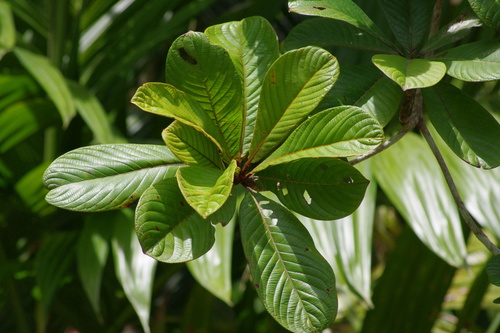
iNaturalist· cc-by-nc
(c) graham_g, some rights reserved (CC BY-NC)
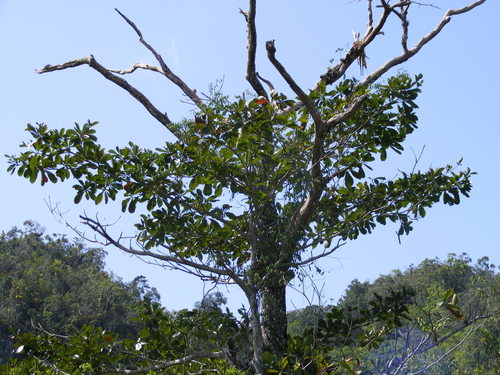
iNaturalist· cc-by-nc
(c) Troos van der Merwe, some rights reserved (CC BY-NC)
Description
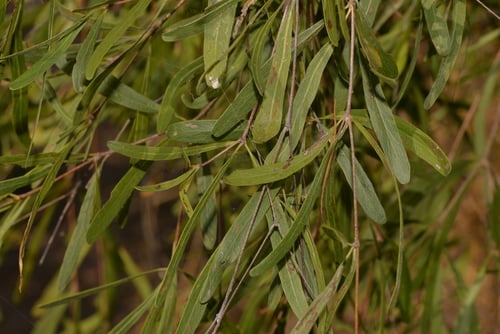
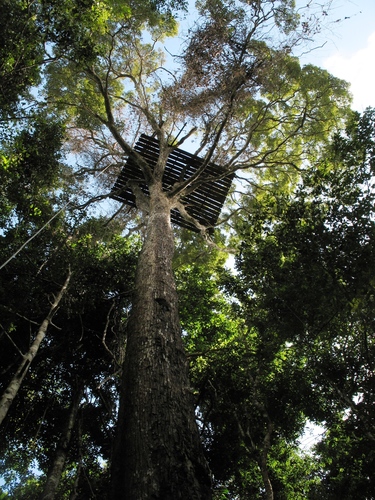
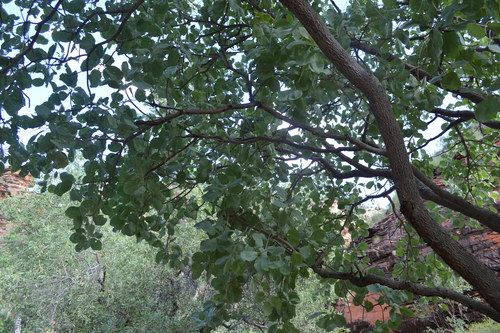
It is a sturdy shrub, a rambler or a small tree up to 8 m tall. The leaves are simple and opposite. They are dull green above and lighter below. They are 3.5-10 cm long and oval. They have a point at the end. The flowers are bright red. They are in short dense clusters in the axils of leaves and at the ends of branches. They are small with leaf like bracts. The fruit is round or egg shaped. It is often slightly five angled. It is smooth and with one seed.
Edible Uses
The fruit can be eaten, and the nuts can be cooked and eaten.
Traditional Uses
The fruit can be eaten but may produce hiccoughs. (Others claim they are a cure for hiccoughs.) The nuts can be cooked and eaten.
This uses section is brief — help expand it
Known Hazards
The fruit may produce hiccoughs when eaten, though some sources claim they are a cure for hiccoughs.
Distribution
It is a subtropical plant. It grows near the sea and often on dunes. It is best in a fertile, well-drained soil. It suits hardiness zones 9-11. In Brisbane Botanical Gardens.
Where It Grows
Africa, Australia, Eswatini, South Africa, Southern Africa, Swaziland,
Cultivation
Plants can be grown from seeds or cuttings. Pieces of the stem lower on the plant often have roots and can be removed and planted.
Notes
There are about 255 Combretum species. The fruit are a local hiccup remedy.
Synonyms
References (7)
- Cundall, P., (ed.), 2004, Gardening Australia: flora: the gardener's bible. ABC Books. p 404
- H. G. A. Engler & K. A. E. Prantl, Nat. Pflanzenfam. 3(7):125. 1893
- Etherington, K., & Imwold, D., (Eds), 2001, Botanica's Trees & Shrubs. The illustrated A-Z of over 8500 trees and shrubs. Random House, Australia. p 222
- Fox, F. W. & Young, M. E. N., 1982, Food from the Veld. Delta Books. p 157
- Joffe, P., 2007, Creative Gardening with Indigenous Plants. A South African Guide. Briza. p 352
Show all 7 references Hide references
- Palgrave, K.C., 1996, Trees of Southern Africa. Struik Publishers. p 663
- Palmer, E and Pitman, N., 1972, Trees of Southern Africa. Vol. 3. A.A. Balkema, Cape Town p 1625