Tephrosia pumila
(Lam.) Pers.
iNaturalist· cc-by-nc
(c) Kate Braun, some rights reserved (CC BY-NC), uploaded by Kate Braun
iNaturalist· cc-by
(c) scallions, some rights reserved (CC BY)
iNaturalist· cc-by
(c) scallions, some rights reserved (CC BY)
Description
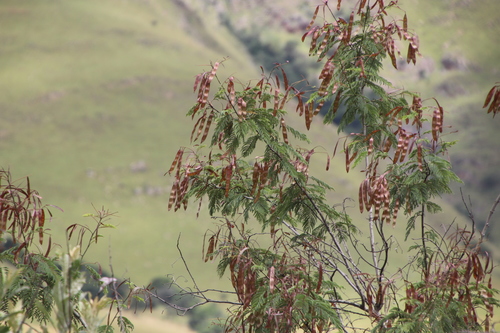
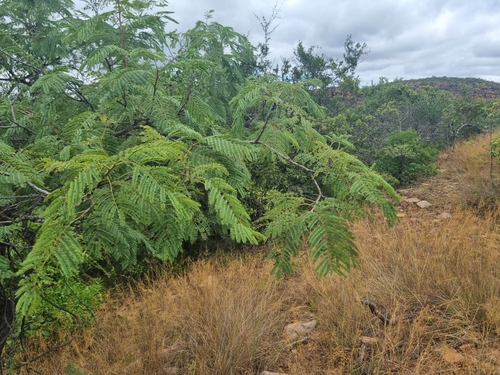
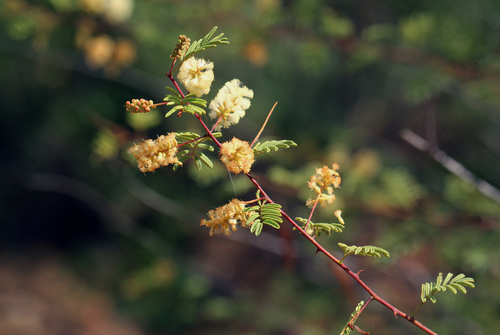
A scrambling herb. It is mostly about 1 m long. Mostly it grows each year from seed but it can live for a few years. It has spreading hairs on the stems. There are 7-13 leaflets which are oblong or wedge shaped. They are 0.5-2 cm long by 2-6 mm wide. There is a point at the tip. The flowers are about 1 cm long in short clusters at the ends of stems or opposite the leaves. These stalks of flowers are 1-6 cm long. The flowers are white and pink or purple. The fruit are thin curved pods. which curve upwards towards the tip. Pods are 3.5-4 cm long and 3.3-4 mm wide. They are covered with short hairs. There are 8-14 seeds in the pods. The seeds are close together.
Edible Uses
The leaves are eaten as a vegetable.
Distribution
A tropical plant. Plants mostly grow naturally near beaches and in coastal scrub on coral. In Papua New Guinea they grow from sea level to 75 m altitude. In Africa it grows from sea level to 1,500 m above sea level.
Where It Grows
Africa, Angola, Arabia, Asia, Botswana, Cameroon, Central Africa, Central America, Comoros, Congo, East Africa, Ethiopia, Ghana, India, Indonesia, Kenya, Madagascar, Malawi, Mauritius, Middle East, Pacific, Pakistan, Papua New Guinea, PNG, Rwanda, SE Asia, Somalia, Southern Africa, Sri Lanka, Sudan, Tanzania, Uganda, West Africa, West Indies, Zambia, Zimbabwe,
Cultivation
A plant of the lowland tropics, where it is found at elevations up to 100 metres. Grows in the wild on limestone, coral and stony soils. This species has a symbiotic relationship with certain soil bacteria, these bacteria form nodules on the roots and fix atmospheric nitrogen. Some of this nitrogen is utilized by the growing plant but some can also be used by other plants growing nearby.
Other Uses
Grown as a green manure crop.
Synonyms
Also Known As
Umukiingabagabo
References (5)
- Fowler, D. G., 2007, Zambian Plants: Their Vernacular Names and Uses. Kew. p 81
- Johns, T., and Kokwaro, J.O., 1991, Food Plants of the Luo of Siayo District, Kenya. Economic Botany 45(1), pp 103-113
- Mutie, F. M., et al, 2023, Important Medicinal and Food Taxa (Orders and Families) in Kenya, Based on Three Quantitative Approaches. Plants 2023, 12, 1145
- Syn. pl. 2(2):330. 1807
- Verdcourt, B., 1979, Manual of New Guinea Legumes. Botany Bulletin No 11, Division of Botany, Lae, Papua New Guinea. p 344