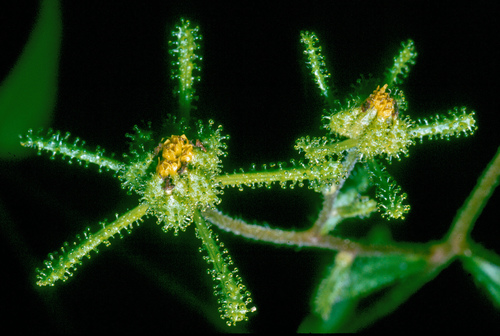
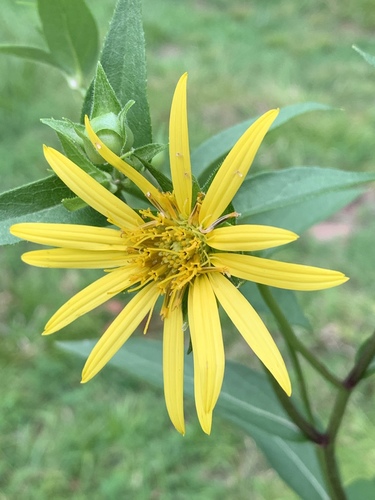
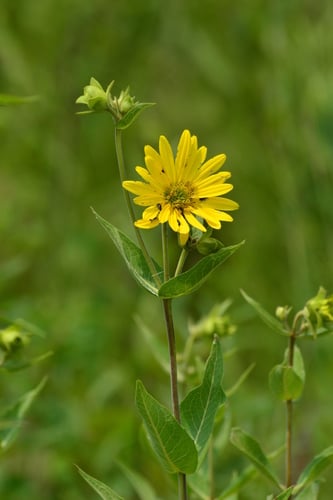
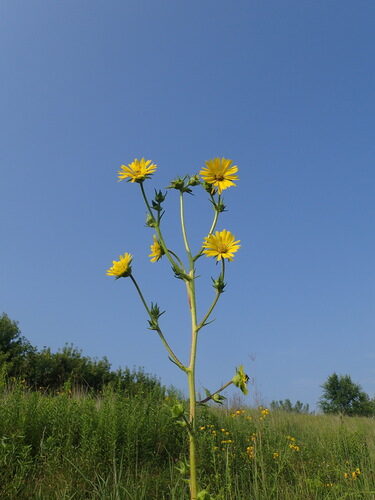
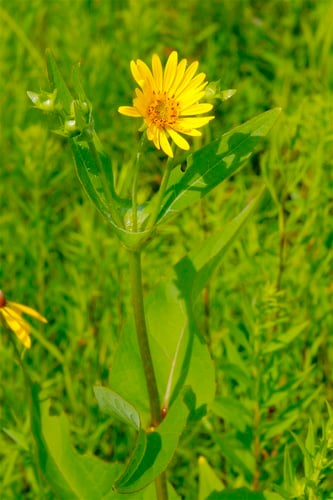
Taraxacum bessarabicum
(Hornem.) Hand-Mazz.
iNaturalist· cc-by-nc
(c) Michal Ducháček, some rights reserved (CC BY-NC)
iNaturalist· cc-by-nc
(c) Michal Ducháček, some rights reserved (CC BY-NC)
iNaturalist· cc-by-nc
(c) Michal Ducháček, some rights reserved (CC BY-NC)
Summary
A perennial plant with a deep taproot, reaching modest heights. Hermaphroditic and self-fertile, pollinated by insects. Grows in sandy, loamy, or clay soils with good drainage. Tolerates mildly acidic to mildly alkaline pH. Thrives in moist soil and adapts to semi-shaded conditions or full sun.
Description
A herb. It grows 8-17 cm tall. The leaves tend to lie along the ground. The leaves are narrowly sword shaped and 8-18 cm long by 2-3 cm wide. There can be teeth or lobes along the edge. The flower heads are 1-2 cm wide.
Edible Uses
Leaves can be eaten raw or cooked. The following uses are also likely applicable to this species, though no specific records confirm them: roots can be cooked; flowers can be eaten raw or cooked, with unopened buds suitable for fritters; the whole dried plant makes a tea, as do the flowers, leaves, and roots individually. The root is dried and roasted to make a coffee substitute.
Traditional Uses
The flowers are eaten raw or cooked. The flowers are used to make a tea. The young leaves are fried.
This uses section is brief — help expand it
Medicinal Uses
None known.
Distribution
It is a temperate plant. It grows in wet, salty meadows and pastures between 400-2,000 m above sea level in north China.
Where It Grows
Armenia, Asia, Caucasus, Central Asia, China, Europe, Kazakhstan, Mongolia, Russia, Tajikistan,
Propagation
Sow seed in spring in a cold frame, either surface-sowing or covering only very lightly, and keep the compost moist. Germination should occur within two weeks. Prick seedlings into individual pots — using relatively deep pots to accommodate the taproot — when large enough to handle, and plant out in early summer. Division can be done in early spring as the plant comes into growth.
Other Uses
None known.
Other Information
It is sold in local markets.
Notes
There are 50-60 Taraxacum species.
Synonyms
Also Known As
Khatutik, Radika
References (4)
- Lim, T. K., Edible Medicinal and Non-Medicinal Plants Volume 7 Flowers
- Nanagulyan, S., et al, 2020, Wild plants and fungi sold in the markets of Yerevan (Armenia). Journal of Ethnobiology and Ethnomedicine 16:26
- Plants for a Future database, The Field, Penpol, Lostwithiel, Cornwall, PL22 0NG, UK. http://www.scs.leeds.ac.uk/pfaf/
- Urgamal, M., Oyuntsetseg, B., Nyambayar, D. & Dulamsuren, Ch. 2014. Conspectus of the vascular plants of Mongolia. (Editors: Sanchir, Ch. & Jamsran, Ts.). Ulaanbaatar, Mongolia. “Admon“ Press. 334pp. (p. 199-230).