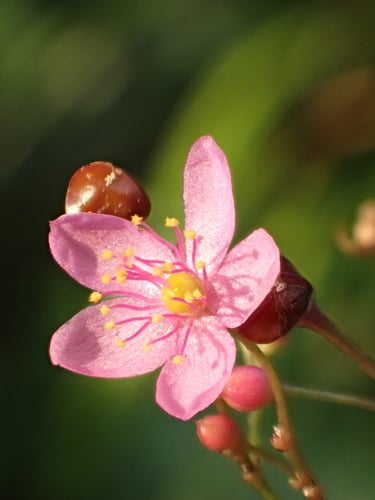
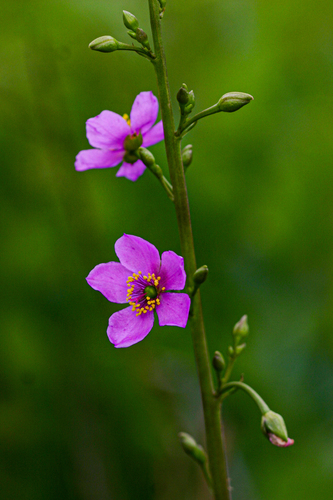
Talinum arnotii
Hook. f.
Porcupine root, Kalahari butterweed
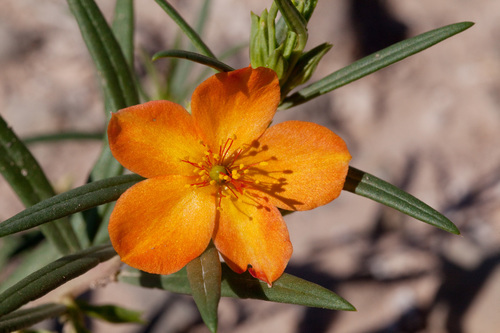
iNaturalist· cc-by-nc
(c) Richard Johnstone, some rights reserved (CC BY-NC), uploaded by Richard Johnstone
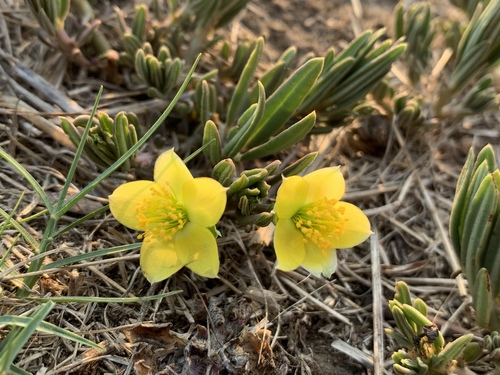
iNaturalist· cc-by-sa
(c) Tony Rebelo, some rights reserved (CC BY-SA), uploaded by Tony Rebelo
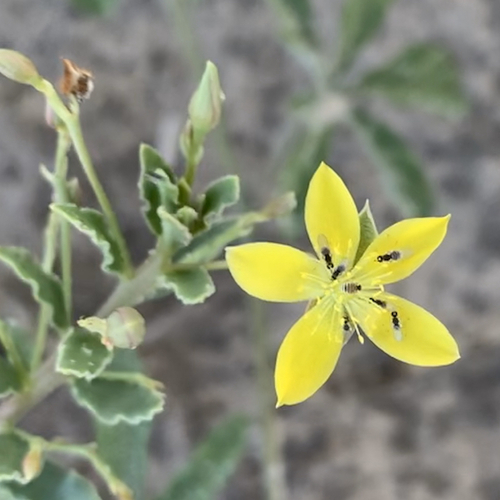
iNaturalist· cc-by-nd
(c) Kyle Campbell, some rights reserved (CC BY-ND), uploaded by Kyle Campbell
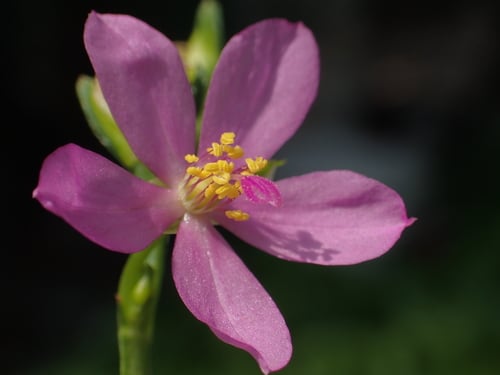
gbif· cc-by-sa
Susan Brown
gbif· cc-by-sa
Susan Brown
gbif· cc-by-sa
Susan Brown
Description
A herb or small shrub. It can be an annual plant or grow for a few years. It grows 40 cm high. The roots are thick and succulent. They can be 38 cm long.
Edible Uses
The leaves and stems are used as a green vegetable in savoury dishes, pounded into a mash, or eaten raw as a salad.
Traditional Uses
The leaves and stem are used as a green vegetable and in savoury preparations. They are pounded into a mash. They are also used as a salad.
This uses section is brief — help expand it
Distribution
A tropical plant. It can grow in sandy and clay soils. It grows in areas with an annual rainfall between 50-700 mm. It can grow in arid places.
Where It Grows
Africa, Botswana, East Africa, Eswatini, Namibia, South Africa, Southern Africa, South America, Swaziland, Zambia, Zimbabwe,
Notes
There are about 50 Talinum species. They grow in warm places. Also put in the family Portulacaceae.
Nutrition
| Part | Moisture | kJ | kcal | Protein | Vit A | Vit C | Iron | Zinc |
|---|---|---|---|---|---|---|---|---|
| Leaves | 93.1 | 105 | 25 | 1.6 | — | 4.9 | 1.5 | 0.5 |
Synonyms
Also Known As
Kgalahete, Mphunyuka, Muloho, Umpunyu
References (19)
- Fox, F. W. & Young, M. E. N., 1982, Food from the Veld. Delta Books. p 311
- Grubben, G. J. H. and Denton, O. A. (eds), 2004, Plant Resources of Tropical Africa 2. Vegetables. PROTA, Wageningen, Netherlands. p 518
- Jardin, C., 1970, List of Foods Used In Africa, FAO Nutrition Information Document Series No 2.p 105
- Long, C., 2005, Swaziland's Flora - siSwati names and Uses http://www.sntc.org.sz/flora/
- Lu De-Quan, Portulacaceae, Flora of China.
Show all 19 references Hide references
- Maguire, 1978,
- Marshall, 1976,
- Martin, F.W. & Ruberte, R.M., 1979, Edible Leaves of the Tropics. Antillian College Press, Mayaguez, Puerto Rico. p 215
- Matlhare, T., et al, Vegetables in Botswana. p 21 Bioversity website.
- Peters, C. R., O'Brien, E. M., and Drummond, R.B., 1992, Edible Wild plants of Sub-saharan Africa. Kew. p 163
- Royal Botanic Gardens, Kew (1999). Survey of Economic Plants for Arid and Semi-Arid Lands (SEPASAL) database. Published on the Internet; http://www.rbgkew.org.uk/ceb/sepasal/internet [Accessed 6th June 2011]
- Ruiters-Welcome, A. K., 2019, Food plants of southern Africa. Ph.D. thesis. Univ. of Johannesburg p 91
- Silberbauer, 1965, 1981,
- Story, 1958,
- Swaziland's Flora Database http://www.sntc.org.sz/flora
- Terra, G.J.A., 1973, Tropical Vegetables. Communication 54e Royal Tropical Institute, Amsterdam, p 77
- van Wyk, Be., & Gericke, N., 2007, People's plants. A Guide to Useful Plants of Southern Africa. Briza. p 76
- Wehmeyer, A. S, 1986, Edible Wild Plants of Southern Africa. Data on the Nutrient Contents of over 300 species
- Welcome, A. K. & Van Wyk, B.-E., 2019, An inventory and analysis of the food plants of southern Africa. South African Journal of Botany 122 (2019) 136–179