Talinum fruticosum
(L.) Juss.
Waterleaf
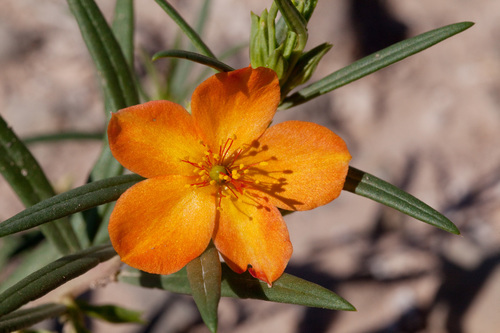
iNaturalist· cc0
no rights reserved, uploaded by 葉子
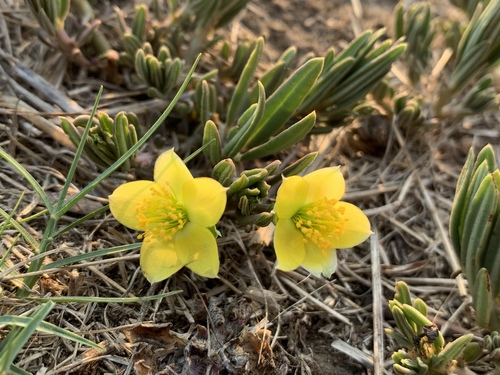
iNaturalist· cc0
no rights reserved, uploaded by 葉子
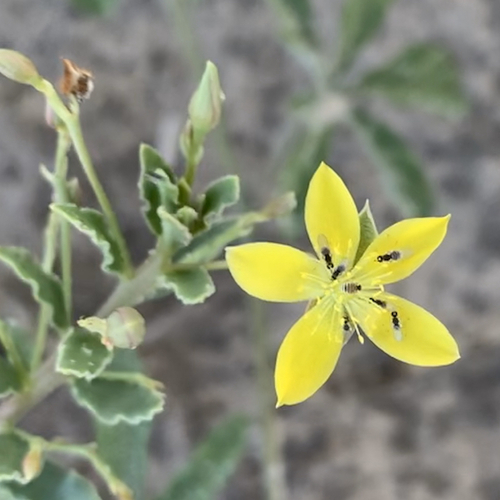
iNaturalist· cc-by-nc
(c) Adithya Suresh, some rights reserved (CC BY-NC), uploaded by Adithya Suresh
Summary
Source: WikipediaTalinum fruticosum is a herbaceous perennial plant that is native to Mexico, the Caribbean, West Africa, Central America, and much of South America. Common names include Ceylon spinach, waterleaf, cariru, Gbure, Surinam purslane, Philippine spinach, Florida spinach, potherb fameflower, sweetheart, and Kutu bataw in Ghana from the Akan language It is widely grown in tropical regions as a leaf vegetable.
Description
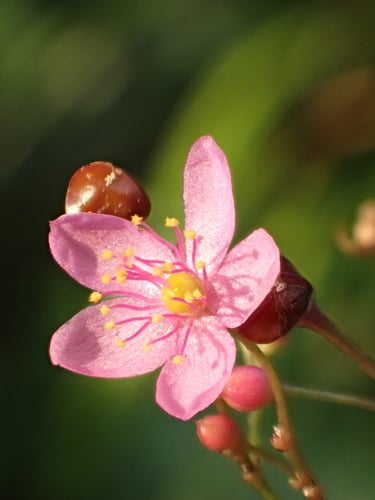
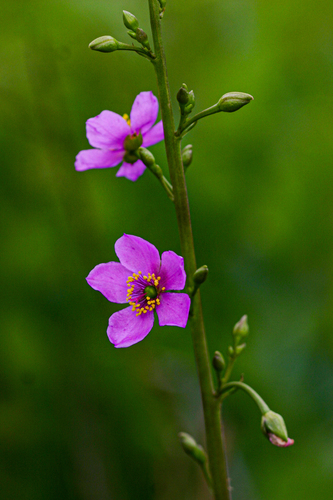
A small leafy branching herb. It grows up to 35-60 cm high. It can be erect or lie over. The roots are swollen and fleshy. The stems are succulent. The leaves are alternate and have very short stalks and are fairly soft and light green in colour. The leaves can be 7.5 cm long. In the shade they grow larger. The flowers are on a 3 sided stalk at the top of the plant. There is a clump of pale pink flowers with 5 petals. Seeds are very small and black.
Edible Uses
Leaves and flowers can be eaten raw in salads or cooked. Young shoots, 15–20cm long, are used in soups, stews, and similar dishes. Combined with eru leaves (Gnetum species) and fufu (a starchy dish), the tender young shoots are considered a delicacy, as they help to soften the tough eru leaves. The leaves and shoots are best lightly steamed — overcooking makes them excessively soft and mucilaginous. Leaves are also used as a colouring agent in okra soup and have a slightly sour taste that works well finely chopped in salads. Many forms of this plant have a high concentration of calcium oxalate, though this is easily destroyed by cooking. The plant is rich in vitamins A and C, as well as minerals including iron and calcium. It is cultivated in West Africa, South Asia, Southeast Asia, and the warmer parts of North and South America, and is one of the most important leaf vegetables in Nigeria, alongside Celosia species.
Traditional Uses
The leaves and tender stems are eaten raw or cooked. They are slightly sour. Steaming the leaves produces less brown discolouration and they are less slimy. They can also be dried and stored. They are used in soup. Caution: Due to oxalates in the leaves, large amounts should not be eaten. They can be removed by cooking and leaching. Also fermentation, steaming and baking. It is good to use in soups.
Medicinal Uses
The plant is used as a treatment for measles and diabetes. A tonic is made from the fleshy root.
Known Hazards
Waterleaf is a mucilaginous vegetable with high calcium oxalate content. The presence of oxalate is a drawback since more than 90% of it is present in a soluble form and it can induce kidney stones if taken in excess. Blanching or cooking removes nearly half of the soluble oxalate. Waterleaf also contains hydrocyanic acid (which is also destroyed in the cooking process), which is a further reason why this vegetable should be consumed raw in small quantities only and why it is not recommended for livestock. Caution should also be exercised in the use of this vegetable in infant foods, the more so since it contains nitrates and nitrites, which are not removed by cooking. Waterleaf is rich in saponins, which are poorly absorbed and removed in the cooking process.
Distribution
A tropical plant. It occurs in coastal tropical areas and up to about 1,600 m altitude. Due to the C4 pathway optimum growth is achieved with high temperatures, high soil fertility, plenty of sunlight and sufficient moisture. The plant will also grow adequately in poorer conditions including some drought and a little shade. It can grow in arid places.
Where It Grows
Africa, Amazon, Anguilla, Argentina, Asia, Australia, Benin, Bolivia, Brazil, Burkina Faso, Burundi, Cameroon, Central Africa, Central African Republic, CAR, Central America, Congo DR, Côte d'Ivoire, East Africa, East Timor, Ecuador, Fiji, Ghana, Guianas, Guinea, Guinée, Hawaii, India, Indochina, Indonesia, Ivory Coast, Malaysia, Mexico, Niger, Nigeria, North America, Pacific, Papua New Guinea, PNG, Paraguay, Philippines, Sao Tome and Principe, SE Asia, Senegal, Sierra Leone, Solomon Islands, South America, Sri Lanka, Suriname, Thailand, Timor-Leste, Trinidad-Tobago, USA, Venezuela, Vietnam, West Africa, West Indies,
Cultivation
It can be grown from seeds or stem cuttings. There are about 4000 seeds per gram. Seed collection is not easy because the seed capsules split open very easily and the seeds drop out. Also plants don't always produce seeds readily. Growing from seed is easiest by sowing seeds in a small nursery then transplanting the small plants when they are about 5-8 cm high. With very small seeds like these, it is best to mix the seeds with dry sand before sowing. Then a small amount of the seed/sand mixture can be sown and the seeds will not be too close together. Seeds will grow in about 6 days. Often plants once established become self sown from natural seed falling. Alternatively cuttings about 15 cm long of the more mature but not woody stems can be used. The excess leaves should be removed from the cuttings. A spacing of 20 cm is suitable. Plants grow better in fertile soil, but will grow in fairly low fertility soils. They need plenty of moisture.
Propagation
Sow seed in situ or in a nursery seedbed, mixing the small seeds with fine sand before sowing. Seed collection can be tricky as the capsules split open easily and the seeds drop out. Germination takes around 5 days, and growth is rapid with adequate water. Seedlings can be transplanted to their permanent positions at 3 weeks old. Cuttings of young shoots 15–20cm long root readily.
Other Uses
Suitable as a ground cover and is sometimes used in intercropping systems, as it can thrive in less fertile soils. The showy pink flowers and interesting leaf arrangement also make it ornamental enough for a flower garden. When grown in pots, it requires excellent drainage. The small star-shaped flowers attract pollinators and are rich in nectar and pollen. The leaves are consumed by both humans and animals, and the seeds can provide food for birds and other wildlife. As a ground cover, the plant provides shelter for invertebrates and helps to maintain soil moisture.
Production
The leaves and tender stems can keep being produced for up to a year. Older plants can be cut back and allowed to sprout again. Plants start producing 4-6 weeks after planting. Leaf tips may be picked every two weeks for up to a year. Normally the top shoots are picked out first, to let the side shoots grow. A yield of up to 5 kg of edible tips per square metre area of plants over one year can be achieved.
Other Information
It is a commercially cultivated vegetable. It is a productive, nutritious, easy to grow vegetable. At present not widely distributed in Papua New Guinea but being accepted and liked in areas where it occurs.
Notes
There are about 50 Talinum species. They grow in warm places. Also put in the family Portulacaceae. Can have higher oxalates. High levels on magnesium can reduce these effects. Should not have above 180 mg/day as this can have serious consequences.
Nutrition
| Part | Moisture | kJ | kcal | Protein | Vit A | Vit C | Iron | Zinc |
|---|---|---|---|---|---|---|---|---|
| Leaves | 91 | 105 | 25 | 2.4 | 30 | 31 | 5 | — |
Synonyms
Also Known As
Achiapa, Adwera, Ajiamon, Alfavaca, Alengalenga, Ama, Ambioko, Amlotshi pui, Born'de, oboro, Busum-muru, Carambola rosada, Caruru, Ceylon spinach, Gbure, Guele guele, Gure, Kamplekankan'de, Konkolo, Kpame, Krapper, Krokot belanda, Lagos Bologi, Lipopi, Makilmoron, Makwelekwele, Melelu, Negro aguachoso, Neputu, Ngml-ongmle, Ngnangnon, Ngolu, Nti-0ke, Odondon, Paruppu keerai, Pasali, Philippine-spinach, Pinari, Potherb fameflower, Sagnga, Sam dat ba canh, Sansa banzenza, Sese, Surinam purslane, Sweetheart, Tal-talinung, Tho nhan sam ba canh, Verdolaga, Yemontuou
References (61)
- Abbiw, D.K., 1990, Useful Plants of Ghana. West African uses of wild and cultivated plants. Intermediate Technology Publications and the Royal Botanic Gardens, Kew. p 40 (As Talinum triangulare)
- Achigan-Dako, E, et al (Eds), 2009, Catalogue of Traditional Vegetables in Benin. International Foundation for Science. (As Talinum triangulare)
- Ambasta, S.P. (Ed.), 2000, The Useful Plants of India. CSIR India. p 618 (As Talinum triangulare)
- Andarwulan, N., et al, 2010, Flavonoid content and antioxidant activity of vegetables from Indonesia. Food Chemistry 121: 1231-1235 (As Talinum triangulare)
- Arora, R. K., 2014, Diversity in Underutilized Plant Species - An Asia-Pacific Perspective. Bioversity International. p 46 (As Talinum triangulare)
Show all 61 references Hide references
- Avouhou, H. T., et al, 2012, Ethnobotanical Factors Influencing the Use and Management of Wild Edible Plants in Agricultural Environments in Benin. Ethnobotany Research & Applications Vol 10:571-592 (As Talinum triangulare)
- Bernholt, H. et al, 2009, Plant species richness and diversity in urban and peri-urban gardens of Niamey, Niger. Agroforestry Systems 77:159-179 (As Talinum triangulare)
- Bodner, C. C. and Gereau, R. E., 1988, A Contribution to Bontoc Ethnobotany. Economic Botany, 43(2): 307-369 (As Talinum triangulare)
- Bortolotto, I. M., et al, 2018, Lista preliminar das plantas alimenticias nativas de Mato Grosso do Sul, Brasil. Iheringia, Serie Botanica, Porto Alegre, 73 (supl.):101-116 (As Talinum triangulare)
- Burkill, I.H., 1966, A Dictionary of the Economic Products of the Malay Peninsula. Ministry of Agriculture and Cooperatives, Kuala Lumpur, Malaysia. Vol 2 (I-Z) p 2159 (As Talinum triangulare)
- Codjia, J. T. C., et al, 2003, Diversity and local valorisation of vegetal edible products in Benin. Cahiers Agricultures 12:1-12 (As Talinum triangulare)
- Dansi, A., et al, 2008, Traditional leafy vegetables and their use in the Benin Republic. Genet Resour Crop Evol (2008) 55:1239–1256 (As Talinum triangulare)
- Diop, A. l., et al, 2021, Cultural importance of wild edible plants in three sympatric communities: Agni, Akyé and Gwa in the Department of Alépé (Southeast of Côte d’Ivoire). Ethnobotany Research and Applications 22:35. p 7 (As Talinum triangulare)
- Epenhuijsen C.W. van., 1974, Growing Native vegetables in Nigeria. FAO Rome, p 93 (As Talinum triangulare)
- Facciola, S., 1998, Cornucopia 2: a Source Book of Edible Plants. Kampong Publications, p 187 (As Talinum triangulare)
- Fongnzossie Fedoung, E., et al, 2020, Wild edible plants and mushrooms of the Bamenda Highlands in Cameroon: ethnobotanical assessment and potentials for enhancing food security. Journal of Ethnobiology and Ethnomedicine 16:12 (As Talinum triangulare)
- French, B.R., 1986, Food Plants of Papua New Guinea, A Compendium. Asia Pacific Science Foundation p 72 (As Talinum triangulare)
- Geesink, 1971, Portulacaceae, Flora Malesiana, Ser. 1 Vol. 7 (1) p 124 (As Talinum triangulare)
- Grivetti, L. E., 1980, Agricultural development: present and potential role of edible wild plants. Part 2: Sub-Saharan Africa, Report to the Department of State Agency for International Development. p 29, 32 (As Talinum triangulare)
- Grubben, G. J. H. and Denton, O. A. (eds), 2004, Plant Resources of Tropical Africa 2. Vegetables. PROTA, Wageningen, Netherlands. p 519 (As Talinum triangulare)
- Herklots, (As Talinum triangulare)
- Hermandez Bermejo, J.E., and Leon, J. (Eds.), 1994, Neglected Crops. 1492 from a different perspective. FAO Plant Production and Protection Series No 26. FAO, Rome. p18 (As Talinum triangulare)
- Japanese International Research Centre for Agricultural Science www.jircas.affrc.go.jp/project/value_addition/Vegetables (As Talinum triangulare)
- Jardin, C., 1970, List of Foods Used In Africa, FAO Nutrition Information Document Series No 2.p 105 (As Talinum triangulare)
- Katz, E., et al, 2012, No greens in the forest? Note on the limited consumption of greens in the Amazon. Acta Soc Bot Pol 81(4):283–293 (As Talinum triangulare)
- Kays, S. J., and Dias, J. C. S., 1995, Common Names of Commercially Cultivated Vegetables of the World in 15 languages. Economic Botany, Vol. 49, No. 2, pp. 115-152 (As Talinum triangulare)
- Kermath, B. M., et al, 2014, Food Plants in the Americas: A survey of the domesticated, cultivated and wild plants used for Human food in North, Central and South America and the Caribbean. On line draft. p 852
- Kiple, K.F. & Ornelas, K.C., (eds), 2000, The Cambridge World History of Food. CUP p 1865 (As Talinum triangulare)
- Kohila, A. & Kensa, V. M., 2019, Survey of Wild Edible Plants of Dhanakarkulam Panchayath, Tirunelveli District, Tamil Nadu, India. Kong. Res. J. 6(2): 20-27, 2019
- Latham, P., 2004, Useful Plants of Bas-Congo province. Salvation Army & DFID p 274
- Lazarides, M. & Hince, B., 1993, Handbook of Economic Plants of Australia, CSIRO. p 233 (As Talinum triangulare)
- Leach, G. J., 1988, Bush Food Plants of the Blackwater and Karawari Rivers Area, East Sepik Province, Papua New Guinea. Science in New Guina 14(2). p 105 (As Talinum triangulare)
- Liengola, I. B., 2001, A contribution to the study of native edible plants by the Turumbu and Lokele of the Tshopo District, Province Orientale, D. R. Congo. Syst. Geogr. Pl. 71:687-698 (As Talinum triangulare)
- Lugod, G.C. and de Padua L.S., 1979, Wild Food Plants in the Philippines. Vol. 1. Univ. of Philippines Los Banos. p 69 (As Talinum triangulare)
- Maghirang, R. G., et al, 2018. Ethnobotanical Studies of Some Plants Commonly Used as Vegetables in Selected Provinces of the Philippines. Journal of Nature Studies. 17(2), 30-43.
- Malezas Comestibles del Cono Sur, INTA, 2009, Buernos Aires
- Martin, F.W., & Ruberte, R.M., 1979, Edible Leaves of the Tropics. Antillian College Press, Mayaguez, Puerto Rico. p 38, 215 (As Talinum triangulare)
- Morton, (As Talinum triangulare)
- N'Danikou, S. et al, 2010, Eliciting Local Values of Wild Edible Plants in Southern Bénin to Identify Priority Species for Conservation. Economic Botany, 20(10), 2011, pp. 1–15. (As Talinum triangulare)
- Nyadanu, D., et al, 2015, Agro-biodiversity and challenges of on-farm conservation: the case of plant genetic resources of neglected and underutilized crop species in Ghana. Genet. Resourc. Crop Evol. 62(7): (As Talinum triangulare)
- Ochse, J. J. et al, 1931, Vegetables of the Dutch East Indies. Asher reprint. p 620 (As Talinum triangulare)
- Okigbo, B.N., Vegetables in Tropical Africa, in Opena, R.T. & Kyomo, M.L., 1990, Vegetable Research and development in SADCC countries. Asian Vegetable Research and development Centre. Taiwan. p 45 (As Talinum triangulare)
- Onuminya, T. O., et al, 2017, Comparative proximate and Phytochemical Analysis of leafy vegetables in Lagos State. Nig. J. Pure and Applied Sci. Vol. 30 Issue 3: p 3097f (As Talinum triangulare)
- Oomen, H.A.P.C., & Grubben, G.J.H., 1978, Tropical Leaf Vegetables in Human Nutrition, Communication 69, Department of Agricultural research, RTI Amsterdam, p 30, 36, 66, 83, 84 (As Talinum triangulare)
- Piedra-Malagón, E. M., et al, 2022, Edible native plants of the Gulf of Mexico Province. Biodiversity Data Journal 10: e80565 p 31
- Royal Botanic Gardens, Kew (1999). Survey of Economic Plants for Arid and Semi-Arid Lands (SEPASAL) database. Published on the Internet; http://www.rbgkew.org.uk/ceb/sepasal/internet [Accessed 6th June 2011] (As Talinum triangulare)
- Salako, V. K. et al, 2013, Home gardens: an assessment of their biodiversity and potential contribution to conservation of threatened species and crop wild relatives in Benin. Genet Resour Crop Evol (As Talinum triangulare)
- Segnon, A. C. & Achigan-Dako, E. G., 2014, Comparative analysis of diversity and utilization of edible plants in arid and semi-arid areas in Benin. Journal of Ethnobiology and Ethnomedicine 2014, 10:80 (As Talinum triangulare)
- Sharma, B.B., 2005, Growing fruits and vegetables. Publications Division. Ministry of Information and broadcasting. India. p 197 (As Talinum triangulare)
- Smith, F. I. and Eyzaquirre, P., 2007, African leafy vegetables: Their role in the World Health Organization's global Fruit and Vegetables Initiative. AJFAND, Vol. 7 No. 3 (As Talinum triangulare)
- Sp. pl. 2(2):862. 1799 (As Talinum triangulare)
- Staples, G.W. and Herbst, D.R., 2005, A tropical Garden Flora. Bishop Museum Press, Honolulu, Hawaii. p 467 (As Talinum fruticosum)
- Tanaka, Y & Van Ke, N., 2007, Edible Wild Plants of Vietnam. Orchid Press. p 126 (As Talinum triangulare)
- Termote, C., et al, 2011, Eating from the wild: Turumbu, Mbole and Bali traditional knowledge of non-cultivated edible plants, District Tshopo, DRCongo, Gen Resourc Crop Evol. 58:585-618 (As Talinum triangulare)
- Terra, G.J.A., 1973, Tropical Vegetables. Communication 54e Royal Tropical Institute, Amsterdam, p 77, 78 (As Talinum triangulare)
- Tindall, H.D., & Williams, J.T., 1977, Tropical Vegetables and their Genetic Resources, International Board for Plant Genetic Resources, Rome, p 106 (As Talinum triangulare)
- Tindall, H.D., 1983, Vegetables in the Tropics, Macmillan p 342 (As Talinum triangulare)
- USDA, ARS, National Genetic Resources Program. Germplasm Resources Information Network - (GRIN). [Online Database] National Germplasm Resources Laboratory, Beltsville, Maryland. Available: www.ars-grin.gov/cgi-bin/npgs/html/econ.pl (10 April 2000) (As Talinum triangulare)
- Wiersema, J. H. & Leon, B., 2013, World Economic Plants. A Standard Reference CRC Press. 2nd Ed. p 674
- World Checklist of Useful Plant Species 2020. Royal Botanic Gardens, Kew
- Zon, A.P.M. van der, Grubben, G.J.H., 1976, Les legumes-feuilles spontanes et cultives du Sud-Dahomey, Communication 65, Royal Tropical Institute, Amsterdam, p 97, 99 (As Talinum triangulare)