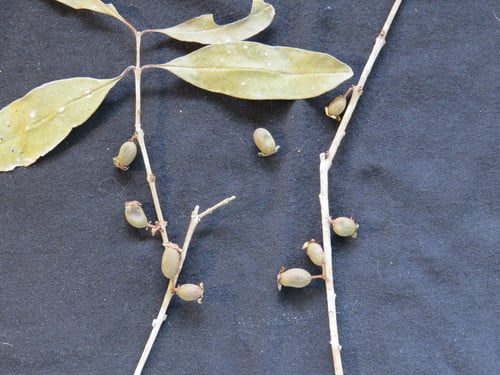
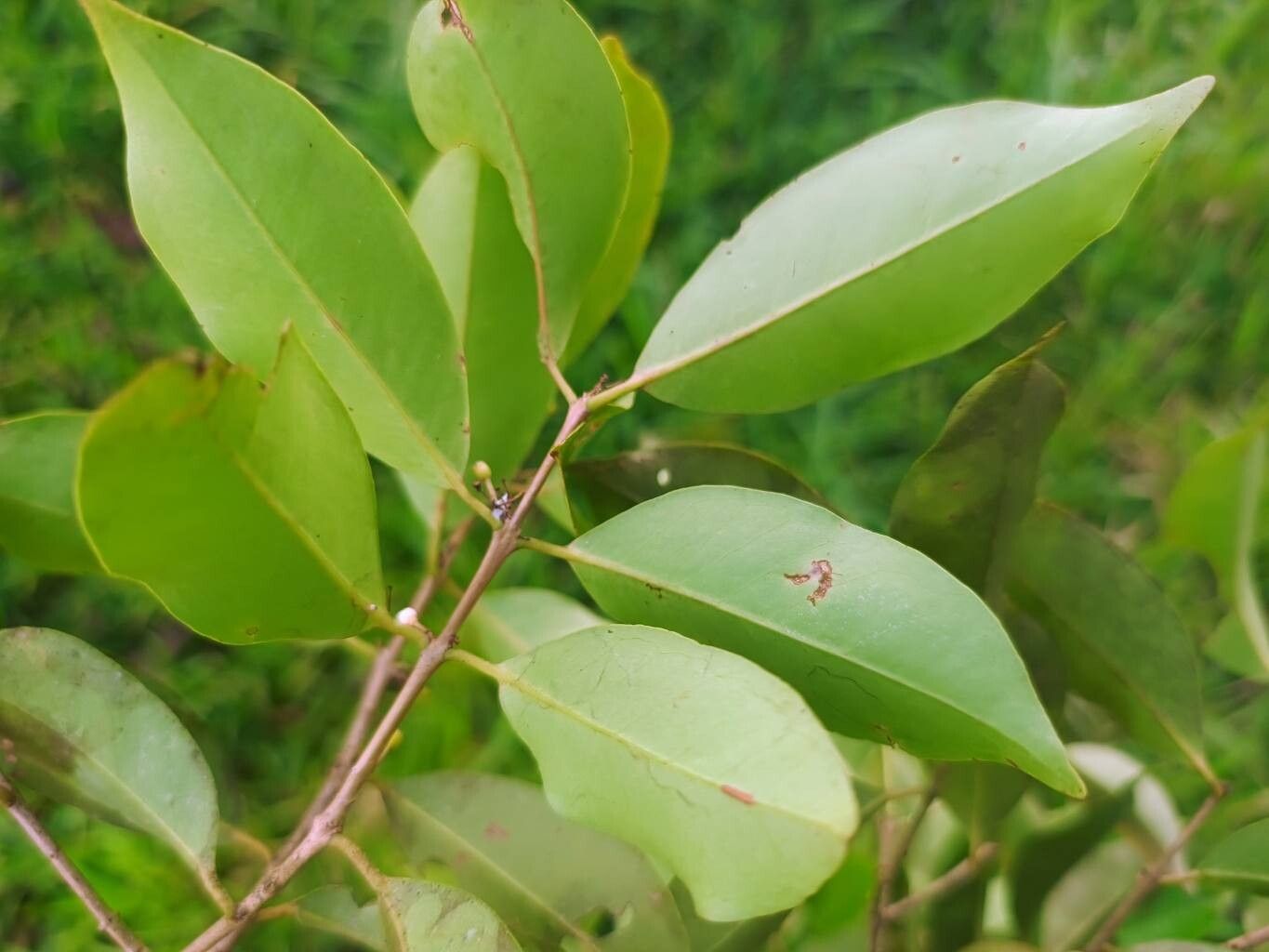
Syzygium grande
(Wight) Walp.
Sea apple
iNaturalist· cc-by-nc-sa
(c) 106611639464075912591, some rights reserved (CC BY-NC-SA), uploaded by 106611639464075912591
iNaturalist· cc-by-sa
(c) Ong Jyh Seng, some rights reserved (CC BY-SA)
iNaturalist· cc-by-sa
(c) Ong Jyh Seng, some rights reserved (CC BY-SA)
Summary
Source: WikipediaSyzygium grande or sea apple is a tall tree that can reach 30 m. The trees can be found along the coastal line of Southeast Asia. Its leaves are large with dark green color. It is a tree and grows primarily in the wet tropical biome. It is usually grown in elevation range between 770- 2000 m.
Description
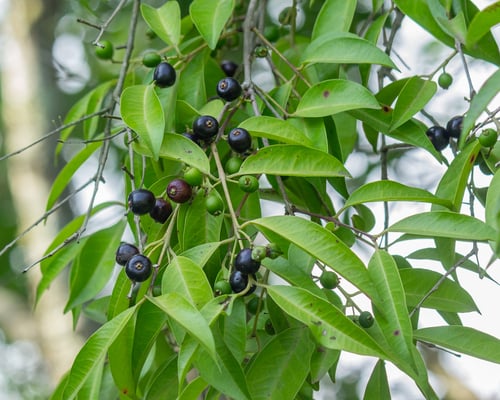
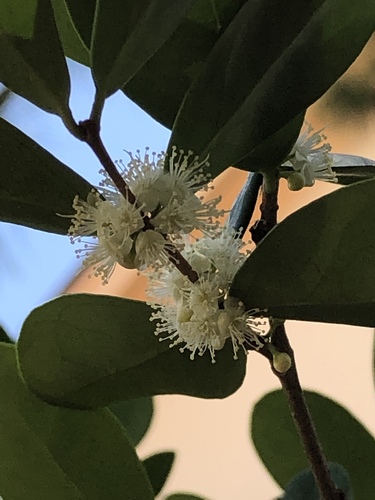
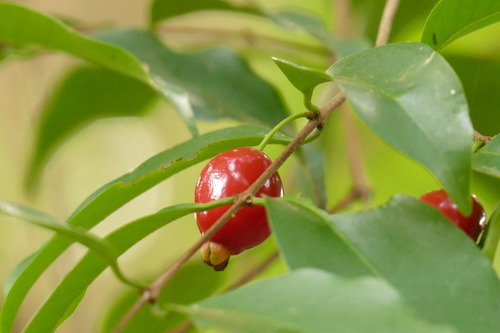
An evergreen tree. It grows up to 30 m tall with a spread of 5 m. The stem is erect and sturdy. The leaves are shiny green. They are long and taper towards the ends. The flowers are white. They form a fluffy head due to the long stamens. They occur in clusters at the ends of branches. The fruit are green and pear shaped.
Edible Uses
The ripe fruit are eaten.
Traditional Uses
The ripe fruit are eaten.
This uses section is brief — help expand it
Distribution
A tropical plant. It is native from Burma to Malaysia. It prefers rich moist soil. It needs to be well drained. Plants do best in a sunny position. It is drought and frost tender. It often grows on sea-shores.
Where It Grows
Asia, Australia, Cambodia, Cuba, India, Indochina, Indonesia, Laos, Malaysia, Myanmar, North America, Northeastern India, SE Asia, Singapore, Thailand, USA, West Indies,
Cultivation
The plant is grown from fresh seed. It can be grown from tip cuttings.
Propagation
Seed - best sown as soon as it is ripe.
Other Uses
The wood is greyish-brown, sometimes with a yellowish tinge. It is relatively heavy, durable, moderately hard. A good structural timber, it is used for building purposes, boat and house construction. We do not have any more specific information for the wood of this species, but the various species of Syzygium tend to have somewhat similar timber. The general description of syzygium timber is as follows:- The heartwood is a golden brown, greyish brown or brown, with pink or purplish glints; it is not clearly demarcated from the 1 - 4cm wide band of sapwood. The texture is fine; the grain slightly interlocked, sometimes wavy or irregular; there are resin deposits. The wood is heavy; moderately hard; somewhat durable, being moderately resistant to fungi and termites, but susceptible to dry wood borers. It seasons slowly, with a high risk of checking and distortion; once dry it is moderately stable in service. It works well with ordinary tools, nailing and screwing are good so long as the wood is pre-bored; gluing is correct. The wood is used for musical instruments, tool handles, furniture components, ship building, heavy carpentry, flooring, joinery etc.
Synonyms
Also Known As
Cherry, Jambu ayer laut, Jambu laut, Kamao, Keriang batu, Mannam hui, Mao, Ngara ngudu gal, Pring som bork krars, Thabye-gyi, Thabye-pinbwa, Thabye-ywet-gyi, Thei-chhawl, Wa dong
References (10)
- Ambasta, S.P. (Ed.), 2000, The Useful Plants of India. CSIR India. p 614
- Barwick, M., 2004, Tropical and Subtropical Trees. A Worldwide Encyclopedic Guide. Thames and Hudson p 392
- Bodkin, F., 1991, Encyclopedia Botanica. Cornstalk publishing, p 963
- Burkill, I.H., 1966, A Dictionary of the Economic Products of the Malay Peninsula. Ministry of Agriculture and Cooperatives, Kuala Lumpur, Malaysia. Vol 1 (A-H) p 983 (As Eugenia grandis)
- Crawford, I. M., 1982, Traditional Aboriginal Plant Resources in the Kalumburu Area: Aspects in Ethno-economics. Records of the Western Australian Museum Supplement No. 15 (As Eugenia grandis)
Show all 10 references Hide references
- Kar, A., et al, 2013, Wild Edible Plant Resources used by the Mizos of Mizoram, India. Kathmandu University Journal of Science, Engineering and Technology. Vol. 9, No. 1, July, 2013, 106-126
- Miguel, E., et al, 1989, A checklist of the cultivated plants of Cuba. Kulturpflanze 37. 1989, 211-357
- Rep. 2:180. 1843
- Sen, R., et al, 1985, Ethnobotanical Uses of Herbaria - 4 J. Econ. Tax. Bot. Vol 6. No.2 pp 331-335 (As Eugenia grandis)
- Turreira Garcia, N., et al, 2017, Ethnobotanical knowledgeof the Kuy and Khmer people in Prey Lang, Cambodia. Cambodian Journal of Natural History 2017 (1): 76-101