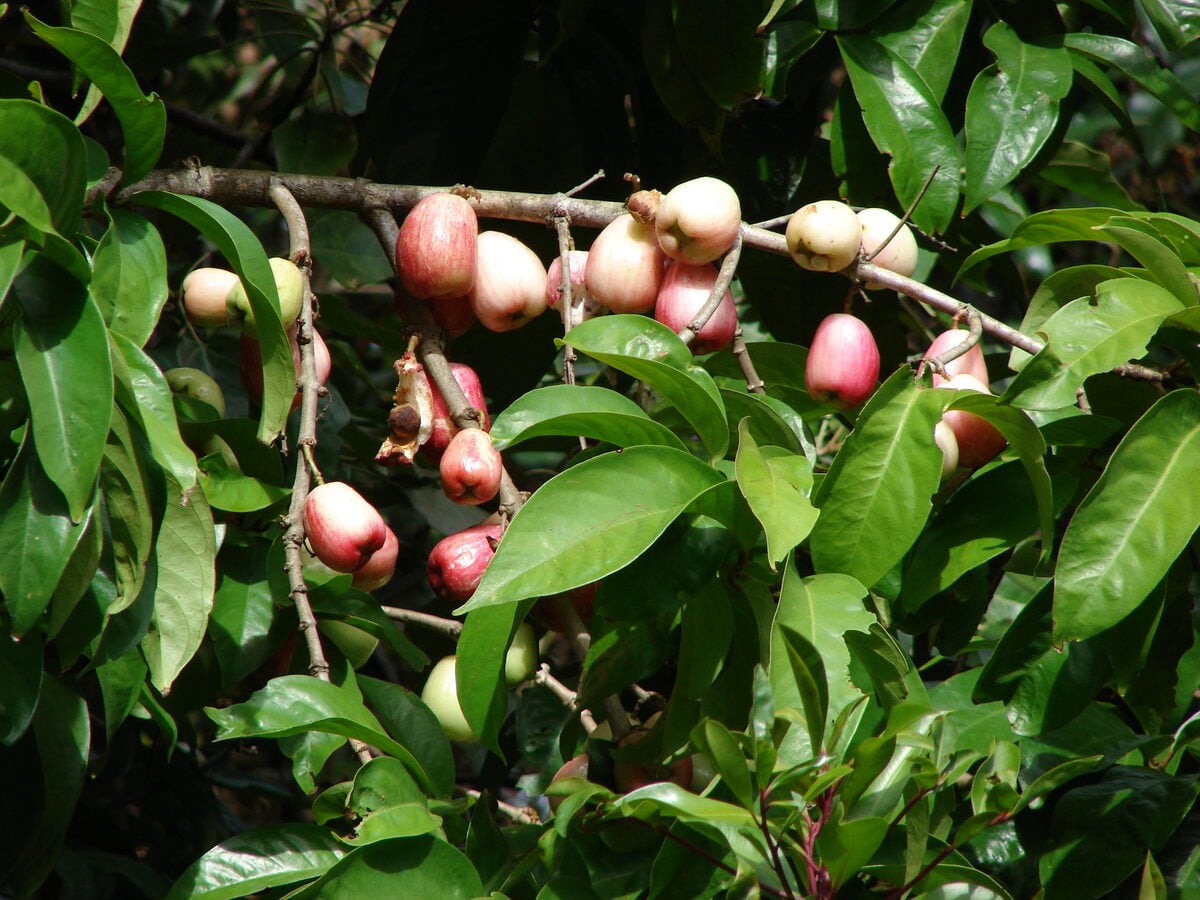
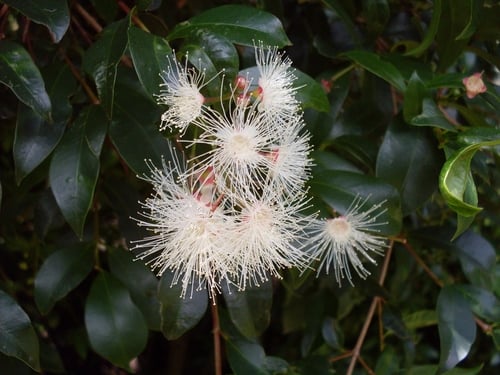
Syzygium munronii
(Wight.) Chandrab.
Ja Jin
iNaturalist· cc-by
(c) T R Shankar Raman, some rights reserved (CC BY)
iNaturalist· cc-by
(c) T R Shankar Raman, some rights reserved (CC BY)
iNaturalist· cc-by
(c) T R Shankar Raman, some rights reserved (CC BY)
Description
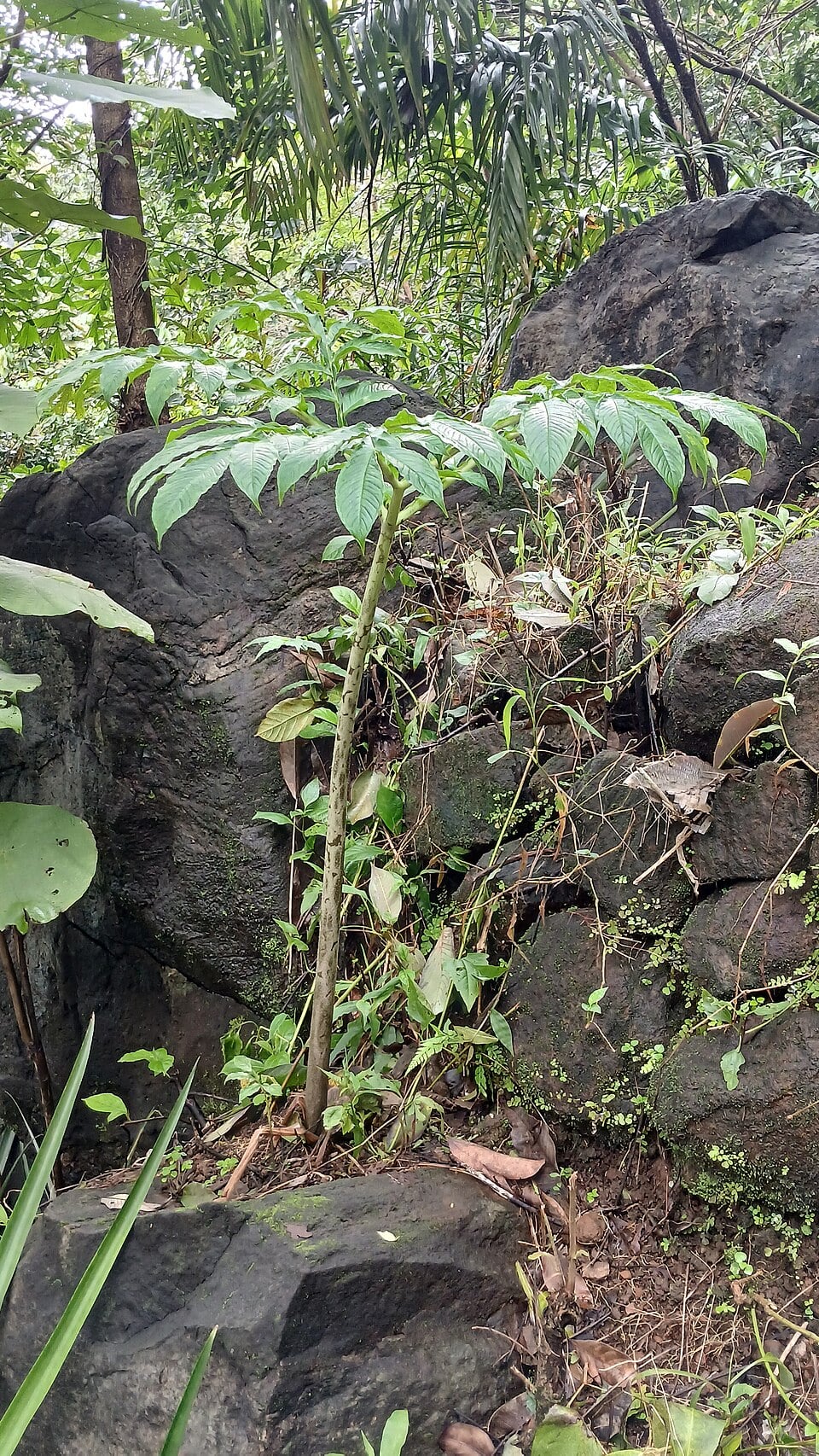
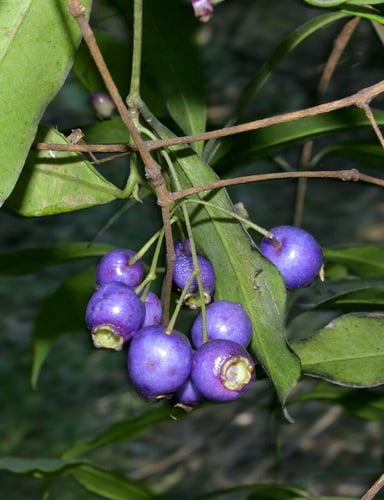
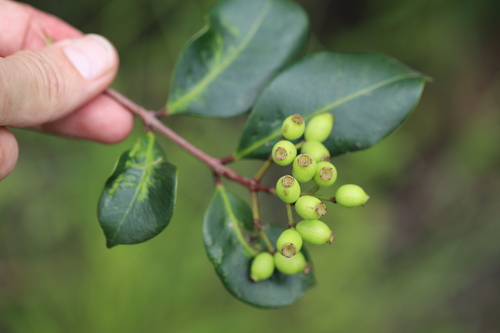
A shrub or small tree. It can grow to 8 m tall. The young branches are angular or winged. The leaves are simple and opposite. They are 15-28 cm long by 4-7 cm wide. They taper to the tip. The flowers are in groups at the ends of branches. They are pink or white. The fruit is a berry about 4 cm across. It is greenish pink. It has a crown from the calyx at the top.
Edible Uses
The young leaves are eaten raw.
Traditional Uses
The young leaves are eaten raw.
This uses section is brief — help expand it
Distribution
A tropical plant. It grows as an understorey tree in wet evergreen forest between 800-1,400 m above sea level.
Where It Grows
Asia, India,
Production
In India it flowers and fruits from December to May.
Synonyms
Also Known As
Ilambili, Kaattu saambal, Malamchamba, Njara, Njaral, Njaval, Nyaral
References (2)
- Chandrashekara, U. M., 2009, Tree species yielding edible fruit in the coffee-based homegardens of Kerala, India: their diversity, uses and management. Food Sec. 1:361-370
- Sen, R., et al, 1985, Ethnobotanical Uses of Herbaria - 4 J. Econ. Tax. Bot. Vol 6. No.2 pp 331-335 (As Eugenia munronii Wight)