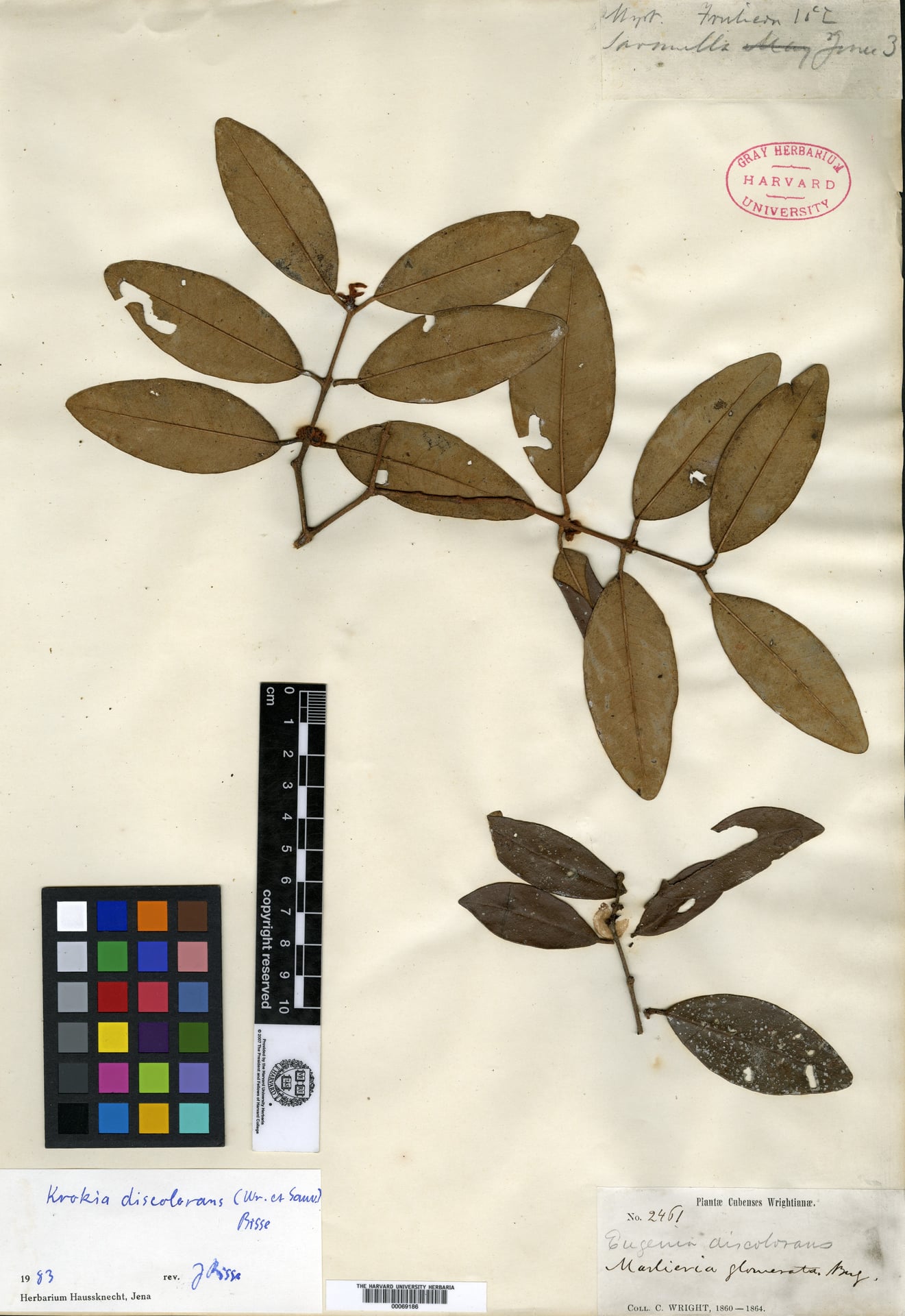
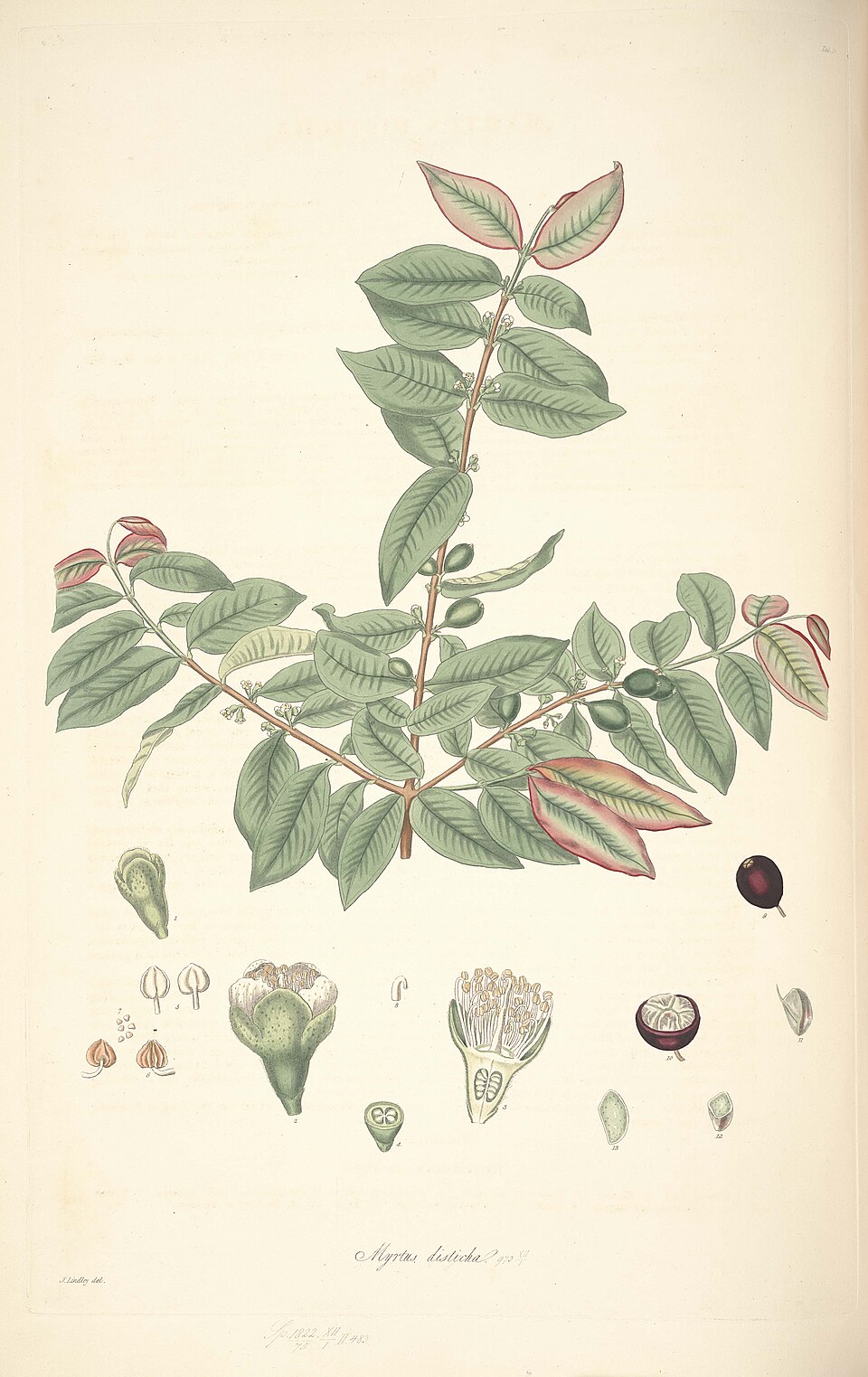
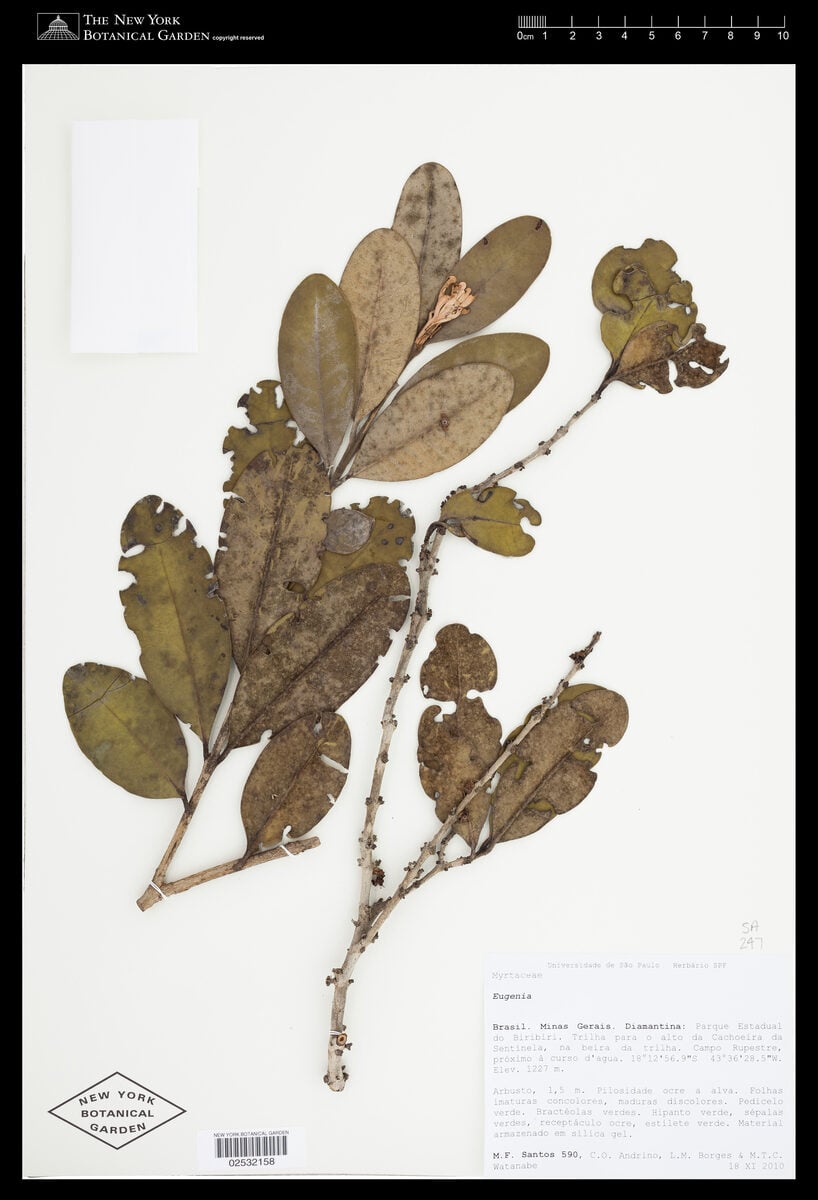
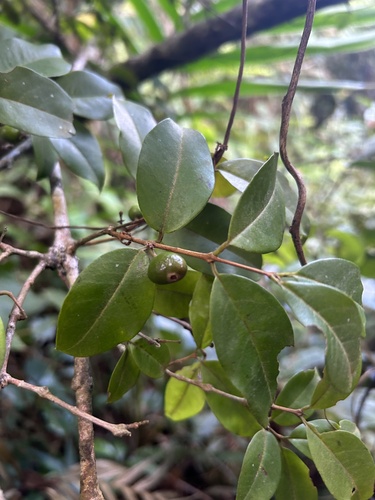
Syzygium nervosum
A. Cunn. ex DC.
Satin ash
iNaturalist· cc-by-nc-nd
(c) Yu Ching Tam, some rights reserved (CC BY-NC-ND), uploaded by Yu Ching Tam
iNaturalist· cc-by
(c) Yj, some rights reserved (CC BY)
iNaturalist· cc-by
(c) Yj, some rights reserved (CC BY)
Summary
Source: WikipediaSyzygium nervosum is a species of tree native to tropical Asia and Australia, extending as far north as Guangdong and Guangxi in China and as far south as the Northern Territory of Australia. It was previously known as Cleistocalyx operculatus, C. nervosum, and Eugenia operculata, and it has many other synonyms. It is a medium-sized tree of about 10 meters in height with pale brown bark and dull green leaves.
Description
A large evergreen tree. It grows up to 15-25 m tall. It has a broad crown densely covered with leaves. The bark is slightly rough and mostly flaky. It is dark cream to grey-brown. Larger trees have buttresses. The leaves are produced opposite one another along the stalk and are leathery. They are 10-18 cm long by 4-7 cm wide. The leaves are dark green and shiny on top and pale green underneath. The leaves have a pointed tip, a wavy edge and distinct veins. The leaf stalk is 1 cm long. The leaves have a strong citrus type smell when crushed. The flowers are white or cream coloured. They have many stamens up to 1 cm long and the flowers have a scent. The flowers occur in clusters in the angles of leaves near the ends of branches. The fruit is smooth and round with a hollow at the end. It is 1-1.5 cm across. It is a shiny purple black when ripe. The fruit has one seed. The seed is oval and 0.8 cm across. The fruit is edible.
Edible Uses
The ripe fruit can be eaten raw. The leaves can be made into a drink, and seeds are also edible, though the fruit contain little flesh.
Traditional Uses
The ripe fruit can be eaten raw.
This uses section is brief — help expand it
Medicinal Uses
In Vietnam the leaves and buds of S. nervosum are harvested, dried, and brewed as an herbal tea known as "nước vối" with stomachic properties.
Distribution
It is a tropical plant. It grows in monsoon forest in the Northern Territory in Australia. It also occurs in Indonesia, Malaysia, Philippines, and other Asian countries. Often trees are near streams or swamps. They need deep well drained soil. It needs plenty of moisture. In India it grows between 200-1,400 m above sea level. In Nepal plants grow to about 1100 m altitude. They grow in open places. It is found throughout the Philippines.
Where It Grows
Asia, Australia, Bangladesh, Bhutan, China, Christmas Island, East Timor, Himalayas, India, Indochina, Indonesia, Laos, Malaysia, Myanmar, Nepal, Northeastern India, Pacific, Philippines, SE Asia, Sikkim, Sri Lanka, Thailand, Timor-Leste, Vietnam,
Cultivation
Plants are grown from fresh seed.
Propagation
Seed - The seed loses viability quickly, and should be sown soon after harvesting.
Other Uses
The bark is a source of tannins. The reddish-grey wood is hard. It can be used as structural timber. A useful wood, it is used in construction and for agricultural implements. We do not have any more specific information for the wood of this species, but the various species of Syzygium tend to have somewhat similar timber. The general description of syzygium timber is as follows:- The heartwood is a golden brown, greyish brown or brown, with pink or purplish glints; it is not clearly demarcated from the 1 - 4cm wide band of sapwood. The texture is fine; the grain slightly interlocked, sometimes wavy or irregular; there are resin deposits. The wood is heavy; moderately hard; somewhat durable, being moderately resistant to fungi and termites, but susceptible to dry wood borers. It seasons slowly, with a high risk of checking and distortion; once dry it is moderately stable in service. It works well with ordinary tools, nailing and screwing are good so long as the wood is pre-bored; gluing is correct. The wood is used for musical instruments, tool handles, furniture components, ship building, heavy carpentry, flooring, joinery etc. A useful tree for reclothing grassy banks in Sal and mixed forests.
Production
Trees flower in September to November and have ripe fruit December to January (April to May).
Other Information
The fruit have little edible flesh.
Synonyms
Also Known As
Banje, Bhadreja muno, Bhali jum, Bhukijabu, Bhuti jam, Boti jam, Camuna, Dapha jam, Dugdugia, Goda jam, Godhajam, Hmui-zu-bel, Jambon, Jangmiso, Khyamuna, Kyamun, Kyamuna, Madar jamua, Malaruhat, Rai jaman, Rai jamun, Salam banen, Salam, Scalybark, Sumuk, Tenuwa, Tram voi, Wa kao
References (53)
- Acharya K. P. and Acharya, R., 2010, Eating from the Wild: Indigenous knowledge on wild edible plants in Parroha VDC of Rupandehi District, Central Nepal. International Journal of Social Forestry. 3(1):28-48 (As Cleistocalyx operculatus)
- Argent, G et al, nd, Manual of the Larger and More important non Dipterocarp Trees of Central Kalimantan Indonesia. Volume 2 Forest Research Institute, Samarinda, Indonesia. p 464 (As Cleistocalyx operculatus)
- Aryal, K. P. et al, 2009, Uncultivated Plants and Livehood Support - A case study from the Chepang people of Nepal. Ethnobotany Research and Applications. 7:409-422 (As Syzygium cerasoides)
- Bajpai, O., et al, 2015, Tree species of the Himalayan Terai region of Uttar Pradesh, India: a checklist. Check List 11(4): 1718
- BARC, 2016, State of Biodiversity for Food and Agriculture in Bangladesh. Bangladesh Agricultural Research Council. (As Cleistocalyx nervosum var. paniala)
Show all 53 references Hide references
- Brock, J., 1993, Native Plants of Northern Australia, Reed. p 309
- Burkill, I.H., 1966, A Dictionary of the Economic Products of the Malay Peninsula. Ministry of Agriculture and Cooperatives, Kuala Lumpur, Malaysia. Vol 1 (A-H) p 984 (As Eugenia operculata)
- Chakraborty, S. & Chaturbedi, H. P., 2014, Some Wild Edible Fruits of Tripura- A Survey. Indian Journal of Applied research. (4) 9
- Chandrashekara, U. M., 2009, Tree species yielding edible fruit in the coffee-based homegardens of Kerala, India: their diversity, uses and management. Food Sec. 1:361-370 (As Syzygium operculatum var. obovatum)
- Chaudhary, L. B., et al, 2014, Tree Resources of Katerniaghat Wildlife Sanctuary, Uttar Pradesh, India with especial emphasis on Conservation Status, Phenology and Economic Values. International Journal of Environment. 3(1)
- Cherikoff V. & Isaacs, J., The Bush Food Handbook. How to gather, grow, process and cook Australian Wild Foods. Ti Tree Press, Australia p 201
- Cowie, I, 2006, A Survey of Flora and vegetation of the proposed Jaco-Tutuala-Lore National Park. Timor-Lests (East Timor) www.territorystories.nt/gov.au p 51
- Dangol, D. R. et al, 2017, Wild Edible Plants in Nepal. Proceedings of 2nd National Workshop on CUAOGR, 2017.
- Ethnobotany of Karbis. Chapter 4 in p 106 (As Syzygium cerasoides)
- Facciola, S., 1998, Cornucopia 2: a Source Book of Edible Plants. Kampong Publications, p 157 (As Cleistocalyx operculatus)
- Gautam, R. S., et al, 2020, Wild Edible Fruits of Nepal. Int. J. Appl. Sci. Biotechnol. Vol 8(3): 289-304
- Ghimeray, A. K., Lamsal, K., et al, 2010, Wild edible angiospermic plants of the Illam Hills (Eastern Nepal) and their mode of use by local community. Korean J. Pl. Taxon. 40(1) (As Syzygium operculatum)
- H. G. A. Engler & K. A. E. Prantl, Nat. Pflanzenfam. 3(7):85. 1893 (As Syzygium operculatum)
- Hedrick, U.P., 1919, (Ed.), Sturtevant's edible plants of the world. p 300 (As Eugenia operculata)
- Hibbert, M., 2002, The Aussie Plant Finder 2002, Florilegium. p 296
- J. Arnold Arbor. 18(4):337. 1937 (As Cleistocalyx operculatus)
- Jeeva, S., 2009, Horticultural potential of wild edible fruits used by the Khasi tribes of Meghalaya. Journal or Horticulture and Forestry Vol. 1(9) pp. 182-192 (As Eugenia operculata)
- Kar, A., et al, 2013, Wild Edible Plant Resources used by the Mizos of Mizoram, India. Kathmandu University Journal of Science, Engineering and Technology. Vol. 9, No. 1, July, 2013, 106-126 (As Syzygium operculatum)
- Krishen P., 2006, Trees of Delhi, A Field Guide. DK Books. p 89
- Lazarides, M. & Hince, B., 1993, Handbook of Economic Plants of Australia, CSIRO. p 233
- Luo, B., et al, 2019, Wild edible plants collected by Hani from terraced rice paddy agroecosystem in Honghe Prefecture, Yunnan, China. Journal of Ethnobiology and Ethnomedicine 15:56 (As Cleistocalyx operculatus)
- Maituthisakul, P., et al, 2007, Assessment of phenolic content and free radical-scavenging capacity of some Thai indigenous plants. Food Chemistry 100: 1409-1418 (As var. paniala) (As Cleistocalyx operculatus)
- Maisuthisakul, P., 2012, Phenolic Constituents and Antioxidant Properties of some Thai Plants. Chp. 9 in Book Phytochemicals - A Global Perspective of Their Role in Nutrition and Health (As Cleistocalyx operculatus var. paniala)
- Majumdar, K and Datta, N., 2009, Traditional wild edible fruits for the forest dwellers of Tripura, India. Pleione 3(2) 167-178 (As Syzygium cerasoides)
- Manandhar, N.P., 2002, Plants and People of Nepal. Timber Press. Portland, Oregon. p 157 (As Cleistocalyx operculatus)
- Milow, P., et al, 2013, Malaysian species of plants with edible fruits or seeds and their evaluation. International Journal of Fruit Science. 14:1, 1-27
- Miya, M. S. & Gautum, D., 2021, Checklist of floral species at the Institute of Forestry, Pokhara Campus, Pokhara, Nepal. Journal of Institute of Forestry, Nepal 18 (2021) 133-177
- Monsalud, M.R., Tongacan, A.L., Lopez, F.R., & Lagrimas, M.Q., 1966, Edible Wild Plants in Philippine Forests. Philippine Journal of Science. p 506 (As Cleistocalyx operculatus)
- Mukhia, P.K., et al, 2013, Wild plants as Non Wood Forest Products used by the rural community of Dagana, a southern foothill district of Bhutan, SAARC Journal, 27 pages (As Syzygium operculatum)
- Paczkowska, G . & Chapman, A.R., 2000, The Western Australian Flora. A Descriptive Calatogue. Western Australian Herbarium. p 403
- Pasha, M. K. & Uddin, S. B., 2019, Minor Edible Fruits of Bangladesh. Bangladesh J. Plant Taxon. 26(2): 299–313
- Patiri, B. & Borah, A., 2007, Wild Edible Plants of Assam. Geethaki Publishers. p 57 (As Syzygium operculatum)
- Sarma, H., et al, 2010, Updated Estimates of Wild Edible and Threatened Plants of Assam: A Meta-analysis. International Journal of Botany 6(4): 414-423 (As Syzygium operculatum)
- Savita, et al, 2006, Studies on wild edible plants of ethnic people in east Sikkim. Asian J. of Bio Sci. (2006) Vol. 1 No. 2 : 117-125 (As Eugenia operculata)
- Sawian, J. T., et al, 2007, Wild edible plants of Meghalaya, North-east India. Natural Product Radiance Vol. 6(5): p 416 (As Eugenia operculata)
- Singh, H.B., Arora R.K.,1978, Wild edible Plants of India. Indian Council of Agricultural Research, New Delhi. p 73 (As Syzygium operculatum)
- Sukarya, D. G., (Ed.) 2013, 3,500 Plant Species of the Botanic Gardens of Indonesia. LIPI p 202, 533 (Also as Cleistocalyx operculatus)
- Teron, R. & Borthakur, S. K., 2016, Edible Medicines: An Exploration of Medicinal Plants in Dietary Practices of Karbi Tribal Population of Assam, Northeast India. In Mondal, N. & Sen, J.(Ed.) Nutrition and Health among tribal populations of India. p 153 (As Syzygium cerasoides)
- Thapa, L. B., et al, 2014, Wild Edible Plants used by endangered and Indigenous Raji Tribe in Western Nepal. International Journal of Applied Sciences and Biotechnology. Vol 2(3):243-252 (As Syzygium operculatum)
- Townsend, K., 1994, Across the Top. Gardening with Australian Plants in the tropics. Society for Growing Australian Plants, Townsville Branch Inc. p 348 p 349 (As Syzygium operculatum)
- Tsering, J., et al, 2017, Ethnobotanical appraisal on wild edible plants used by the Monpa community of Arunchal Pradesh. Indian Journal of Traditional Knowledge. Vol 16(4), October 2017, pp 626-637
- Upreti, K., et al, 2010, Diversity and Distribution of Wild Edible Fruit Plants of Uttarakhand. Bioversity Potentials of the Himalaya. p 165 (As Cleistocalyx operculatus)
- Van Sam, H. et al, 2008, Uses and Conservation of Plant Species in a National Park. A case study of Ben En, Vietnam. Economic Botany 62:574-593
- Wheeler, J.R.(ed.), 1992, Flora of the Kimberley Region. CALM, Western Australian Herbarium, p 543
- Wiersema, J. H. & Leon, B., 2013, World Economic Plants. A Standard Reference CRC Press. 2nd Ed. p 672
- Wightman, G. M. & Andrews, M.R., 1989, Plants of Northern Territory Monsoon Vine Forests (Vol 1). Conservation Commission of Northern Territory. p 82
- Wild edible plants of Himachal Pradesh
- World Checklist of Useful Plant Species 2020. Royal Botanic Gardens, Kew