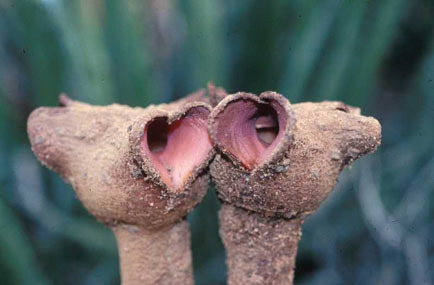
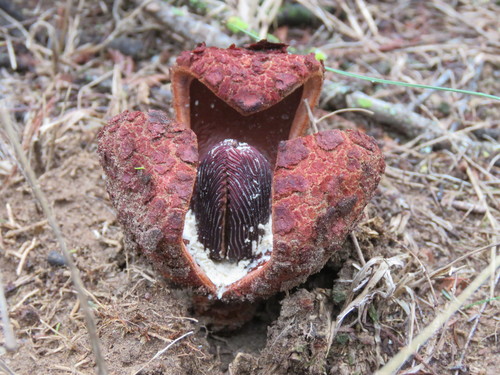
Asarum europaeum
L.
European wild ginger
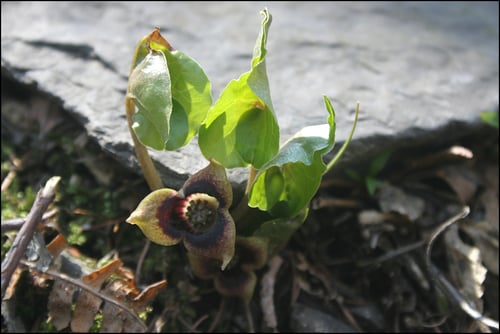
iNaturalist· cc-by-nc-sa
(c) Amadej Trnkoczy, some rights reserved (CC BY-NC-SA)
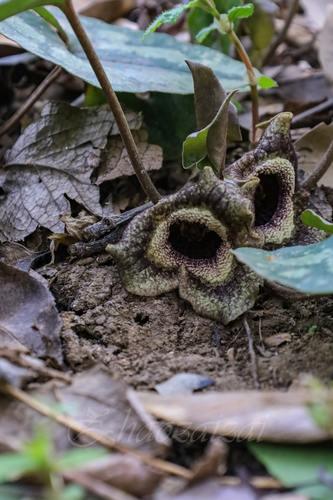
iNaturalist· cc-by-nc
(c) Li Jianong, some rights reserved (CC BY-NC), uploaded by Li Jianong
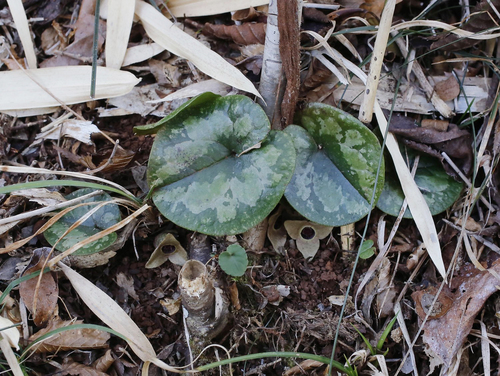
iNaturalist· cc-by-sa
(c) Photo by David J. Stang, some rights reserved (CC BY-SA)
Summary
Source: WikipediaAsarum europaeum, known as asarabacca, European wild ginger, hazelwort, and wild spikenard, historically cabarick, is a species of flowering plant in the birthwort family Aristolochiaceae, native to parts of temperate Europe, and also cultivated in gardens. It is a creeping evergreen perennial with glossy green, kidney shaped leaves and solitary dull purple flowers hidden by the leaves. Though its roots have a ginger aroma, it is not closely related to the true culinary ginger Zingiber officinale. European wild ginger is sometimes harvested for use as a spice or a flavoring. In former days, it was used in snuff and also medicinally as an emetic and cathartic. The FDA warns against consuming Asarum, as it is nephrotoxic and contains the potent carcinogen aristolochic acid.
Description
An evergreen perennial reaching 0.1 m tall by 0.5 m wide, growing slowly and hardy to UK zone 4. Foliage persists year-round with hermaphroditic flowers appearing May–August and self-fertile. It adapts to light, medium, or heavy well-drained soils with mildly acidic to basic pH, growing in full shade to semi-shade and preferring moist conditions.
Edible Uses
None known
Traditional Uses
The rhizome is occasionally used as a spice.
This uses section is brief — help expand it
Medicinal Uses
Cathartic Diaphoretic Emetic Errhine Sternutatory Stimulant Tonic Asarabacca has a long history of herbal use dating back at least to the time of the ancient Greeks, though it is little used in modern herbalism. The root, leaves and stems are cathartic, diaphoretic, emetic, errhine, sternutatory, stimulant and tonic. The plant has a strong peppery taste and smell. It is used in the treatment of affections of the brain, eyes, throat and mouth. When taken as a snuff, it produces a copious flow of mucous. The root is harvested in the spring and dried for later use. Use with caution, see the notes above on toxicity. An essential oil in the root contains 50% asarone and is 65% more toxic than peppermint oil. This essential oil is the emetic and expectorant principle of the plant and is of value in the treatment of digestive tract lesions, silicosis, dry pharyngeal and laryngeal catarrh etc.
Known Hazards
Han, Jiayin; Xian, Zhong; Zhang, Yushi; Liu, Jing; Liang, Aihua (11 June 2019). "Systematic Overview of Aristolochic Acids: Nephrotoxicity, Carcinogenicity, and Underlying Mechanisms". Frontiers in Pharmacology. 10 648. doi:10.3389/fphar.2019.00648. PMC 6580798. PMID 31244661. Cartus, Alexander T.; Stegmüller, Simone; Simson, Nadine; Wahl, Andrea; Neef, Sylvia; Kelm, Harald; Schrenk, Dieter (14 August 2015). "Hepatic Metabolism of Carcinogenic β-Asarone". Chemical Research in Toxicology. 28 (9): 1760–1773. doi:10.1021/acs.chemrestox.5b00223. PMID 26273788. Jaspersen-Schib, R.; Theus, L.; Guirguis-Oeschger, M.; Meier, Peter J. (July 1996). "Serious plant poisonings in Switzerland 1966-1994. Case analysis from the Swiss Toxicology Information Center". Schweizerische Medizinische Wochenschrift. 126 (29): 1277–1284. Hasheminejad, G.; Caldwell, John (April 1994). "Genotoxicity of the alkenylbenzenes alpha- and beta-asarone, myristicin and elimicin as determined by the UDS assay in cultured rat hepatocytes". Food and Chemical Toxicology. 32 (4): 321–330. doi:10.1016/0278-6915(94)90003-8 (inactive 1 July 2025).{{cite journal}}: CS1 maint: DOI inactive as of July 2025 (link) Brändle, W.; Gurtner, B.; Wegmann, T. (August 1969). "Hemiparesis in an abortion attempt with hazelwort tea decoction (Asarum europaeum)". Schweizerische Medizinische Wochenschrift. 99 (32): 1161–1163.
Distribution
It is a temperate plant.
Where It Grows
Albania, Central Europe, Europe, Luxembourg, Mediterranean, Portugal, Siberia, Slovenia, Spain,
Cultivation
Prefers a rich moist neutral to acid soil in woodland or a shady position in the rock garden. Other reports say that this plant prefers a calcareous soil. Plants are hardy to at least -15°c. The flowers are malodorous and are pollinated by flies. The root has a pungent, aromatic smell like mild pepper and ginger mixed, but more strongly aromatic. Plants often self-sow when growing in a suitable position. This plant was at one time commonly cultivated as a medicinal herb.
Propagation
Seed - best sown in a cold frame as soon as it is ripe in the summer. Stored seed will require 3 weeks cold stratification and should be sown in late winter. The seed usually germinates in the spring in 1 - 4 or more weeks at 18°c. When large enough to handle, prick the seedlings out into individual pots and grow them on in light shade in the greenhouse for at least their first winter. Plant them out when large enough in late spring. Division in spring or autumn. Plants are slow to increase. It is best to pot the divisions up and keep them in light shade in the greenhouse until they are growing away strongly.
Other Uses
Dye A vibrant apple-green dye is obtained from plant. A useful ground cover for a shady position so long as it is not dry, spreading by its roots. Special Uses Food Forest Ground cover Scented Plants
Also Known As
Asarabacca, Navadni kopitnik
References (1)
- Seidemann J., 2005, World Spice Plants. Economic Usage, Botany, Taxonomy. Springer. p 57