Eugenia anastomosans
DC.
Anastomosing eugenia
gbif· cc-by-nc
Field Museum of Natural History - Botany Department | GDI 2013-2015
Description
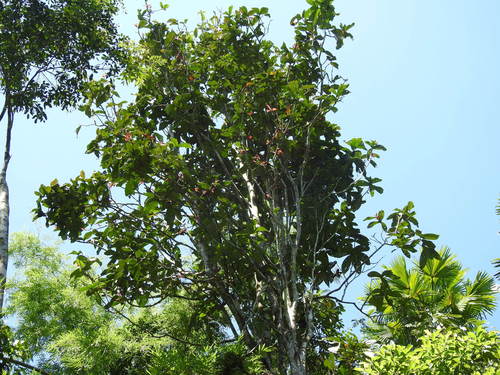
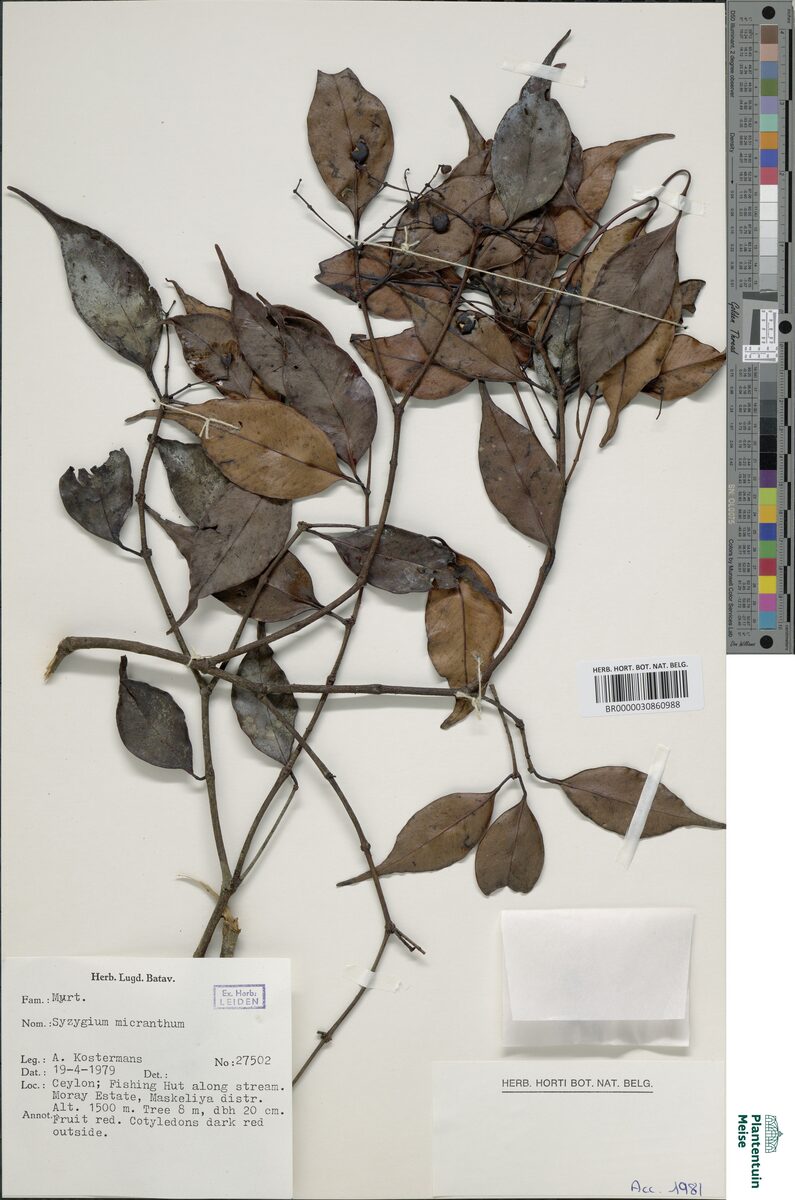
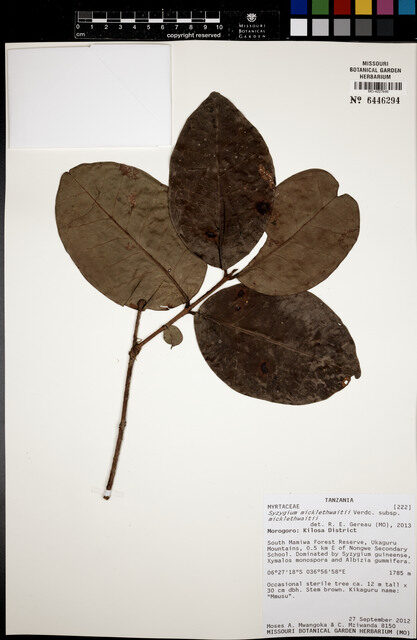
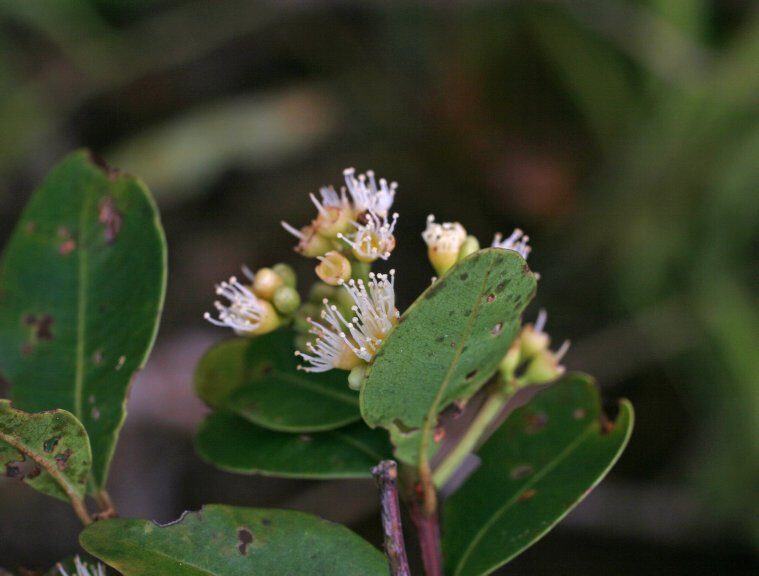
A tree. It grows 23 m high. A few flowers occur together in the twigs. The fruit is a narrowly oval berry. It is 2.5 cm long by 1.5 cm wide. It is yellow to black. It is shiny. There are some dark green sepals forming a crown on top. The pulp of the fruit is edible. There is one seed.
Edible Uses
Fruit. Somewhat astringent. The yellow to black, narrowly ovoid berry is around 20 - 25mm long and 15mm wide, containing a single seed.
Traditional Uses
The pulp of the fruit is eaten raw.
This uses section is brief — help expand it
Medicinal Uses
A decoction of the bark and leaves is drunk as a remedy for diarrhoea. A decoction of the leaves is drunk as a remedy for colds.
Distribution
It is a tropical plant. It grows in mountain rainforest.
Where It Grows
Amazon, Bolivia, Brazil, Colombia, Ecuador, French Guiana, Guianas, Guyana, Peru, South America, Suriname, Venezuela,
Synonyms
Also Known As
Guallabo montanero
References (5)
- Fouqué, A., 1972, Espèces fruitières d'Amérique tropicale. Institut français de recherches fruitierès outre-mer
- Grandtner, M. M. & Chevrette, J., 2013, Dictionary of Trees, Volume 2: South America: Nomenclature, Taxonomy and Ecology. Academic Press p 235
- Kew Plants of the World Online
- Roa, J. A. G. & Boada, D. S. G., 2018, Fundación para el Fortalecimiento de la Fruticultura y Plantas Alimenticias no Convencionales en Colombia.
- van Roosmalen, M.G.M., 1985, Fruits of the Guianan Flora. Utrecht Univ. & Wageningen Univ. p 322