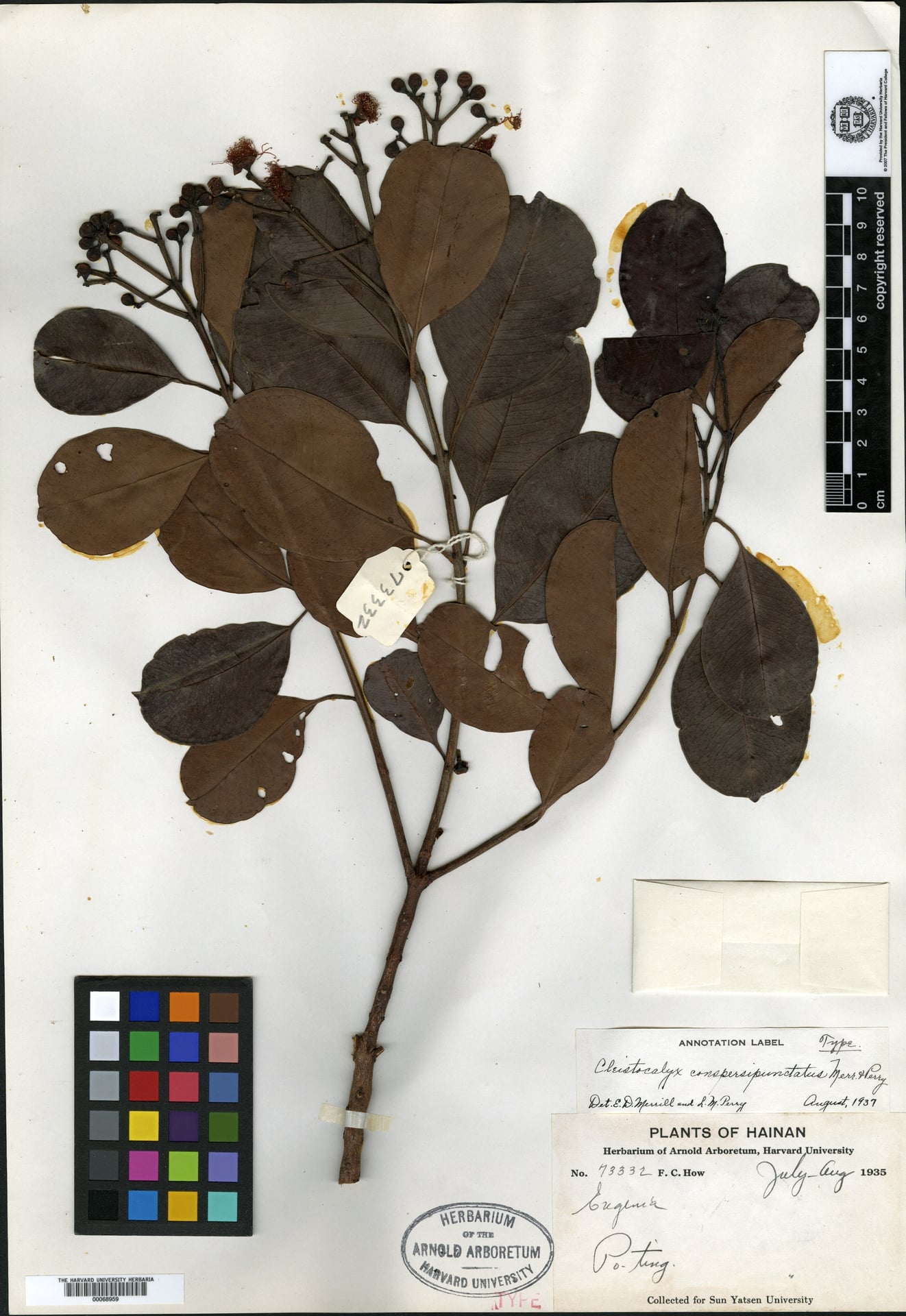
Syzygium cordatum
Hochst ex C. Krauss
Water berry
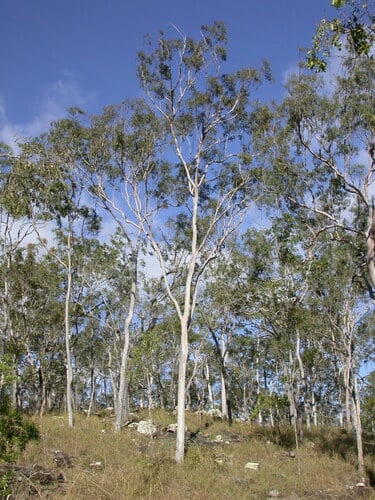
iNaturalist· cc-by-nc
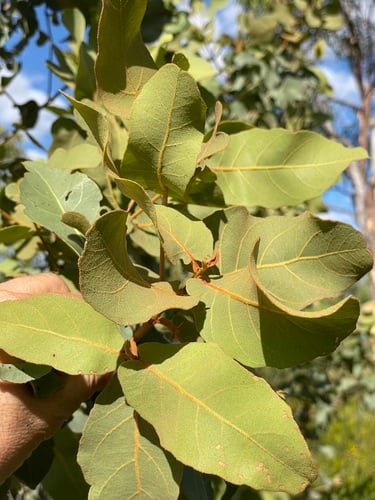
(c) Athol Ferguson, some rights reserved (CC BY-NC), uploaded by Athol Ferguson
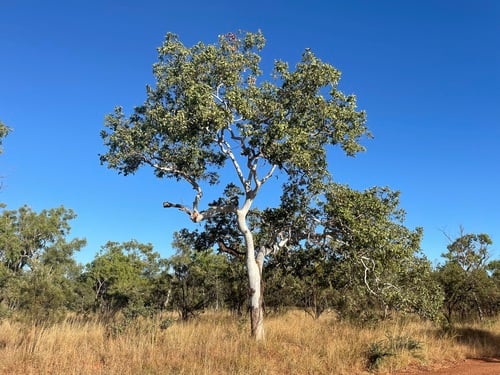
iNaturalist· cc-by-nc
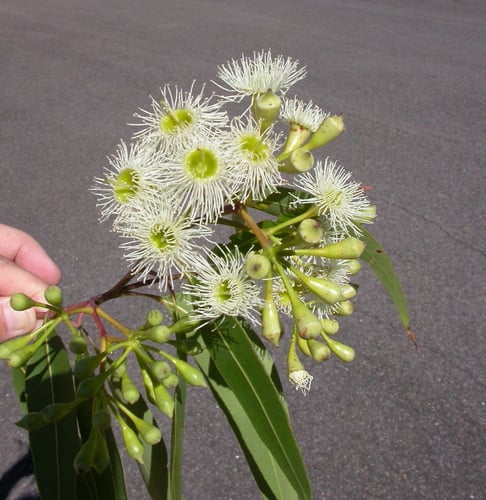
(c) Shobie, some rights reserved (CC BY-NC)
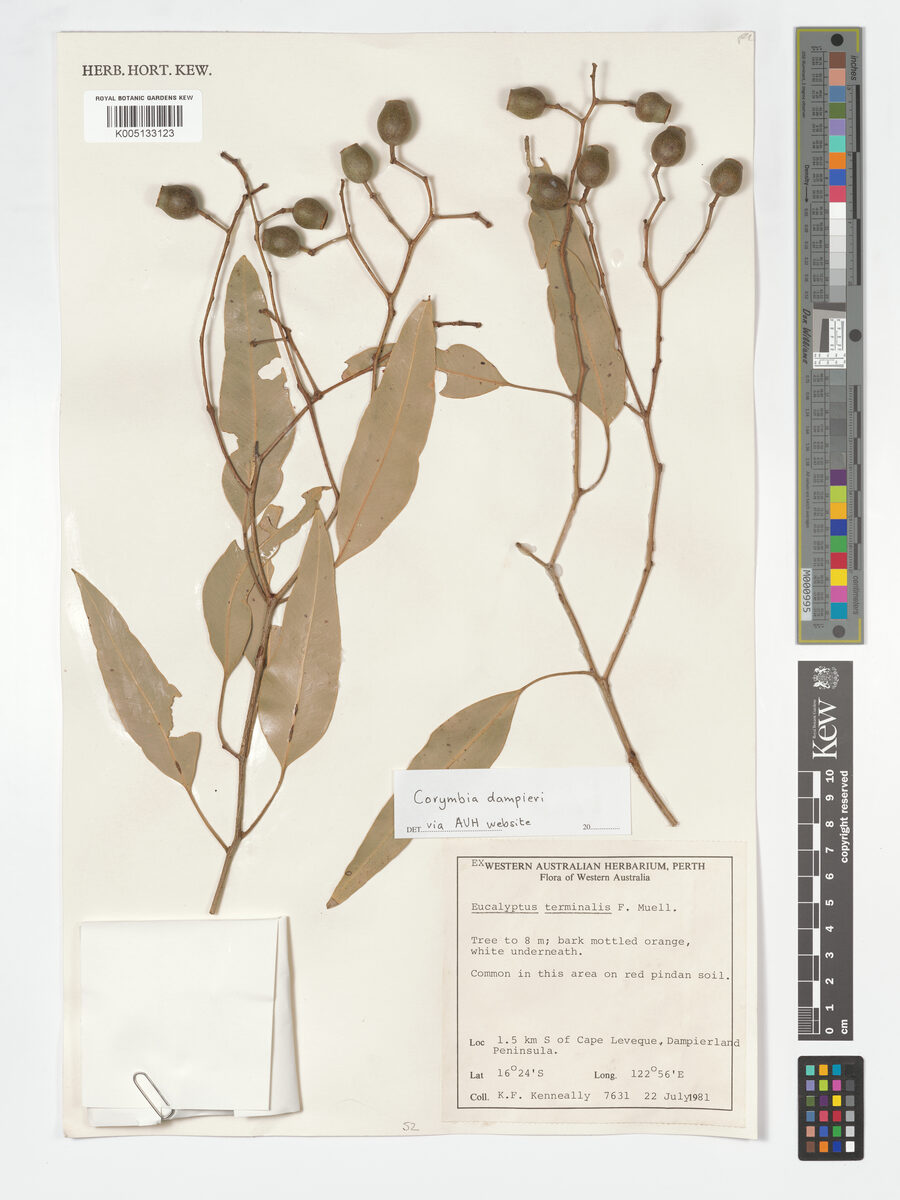
iNaturalist· cc-by-nc
(c) Shobie, some rights reserved (CC BY-NC)
Summary
Source: WikipediaSyzygium cordatum is an evergreen, water-loving tree, which grows to a height of 8–15 m. This tree is often found near streams, on forest margins or in swampy spots. The leaves are elliptic to circular, bluish green on top and a paler green below. Young leaves are reddish. The white to pinkish fragrant flowers are borne in branched terminals and have numerous fluffy stamens and produce abundant nectar. It flowers from August to November. The fruits are oval berries, red to dark-purple when ripe. Common names are waterbessie (Afrikaans), undoni, umSwi, umJoni and hute (Shona), trâm mốc, trâm vối or vối rừng (Vietnamese). "Water berry" is also used for other species of Syzygium.
Description
A medium sized evergreen tree. It grows to 8-15 m high. The trunk sometimes has buttresses. The crown of the tree is rounded. The bark is dark brown and rough with cracks along its length. The small branches are angular and the edges of them is winged. The leaves tend to be near the ends of branches and occur in large numbers. They clasp the stem in opposite pairs. The following leaf pair are at right angles. The leaves are leathery and blue-green. They are oblong to circular and 3-8 cm long by 2-8 cm across. The base of the leaf is heart shaped. The edges of the leaves are often wavy. The new leaves are bright red. The flowers occur in dense branched clusters. These can be 10 cm across. They are white or pink and the stamens show up clearly. The flowers contain both sexes. The flowers produce abundant nectar. They are also scented. The fruit is 1.3 cm long. They are purple. The fruit is edible. It has one seed inside.
Edible Uses
The fruit is eaten raw, used in drinks and jams, and fermented into an alcoholic beverage. The leaves serve as a seasoning and can be brewed as tea. The stems are used for flavoring.
Traditional Uses
The fruit is eaten raw. It is also used for drinks and jams. An alcoholic drink is made from the fruit. Caution: Alcohol is a cause of cancer. The leaves are used as a seasoning and preservative.
Medicinal Uses
Various parts of the plant are often used in traditional medicine. Some studies have been carried out into its medicinal properties. Methanol and water extracts of the bark have shown in-vitro antifungal activity against Candida albicans. Leaf extracts have shown in-vivo hypoglycaemic activity. The bark and wood contain proanthocyanidins, pentacyclic triterpenoids, steroidal triterpenoids, ellagic acid and gallic acid. The anti-diarrhoeal properties of the bark may be due to the presence of phenolic compounds. The roots and bark are boiled and the decoction is used as a remedy for coughs, indigestion and giddiness. The bark is emetic. It is used in the treatment of diarrhoea, stomach problems, headache, amenorrhoea, wounds and respiratory problems. Decoctions of the root bark and stem bark are taken for the treatment of malaria. A decoction of the roots is drunk as a treatment against amenorrhoea. The ash of the burnt wood is rubbed on the forehead to remedy headaches. Ground leaves, bark and roots are steeped in water and then applied externally as a poultice and galactagogue. The leaves are purgative. An infusion is used as a treatment for coughs, diarrhoea and stomach complaints.
Known Hazards
This tree is known for its many uses. The fleshy fruit is slightly acidic in flavour and is eaten by children, monkeys, bush-babies, bats and birds. The berries are also used to sometimes make an alcoholic drink. The powdered bark is used as a fish poison. In central Africa the tree is known as a remedy for stomach ache and diarrhoea. It is also used to treat respiratory ailments and tuberculosis
Distribution
A tropical plant. It occurs in lowland forests always near streams and swamps. It can grow up to 1680 m above sea level in South Africa. In swamps forests it can form a very large fern covered tree while in drier areas is is a much smaller rounded shrub. It grows in areas with an annual rainfall above 500 mm. It can re-grow after fire. It can grow in arid places.
Where It Grows
Africa, Angola, Botswana, Burundi, Central Africa, Central African Republic, Congo R, Congo DR, Djibouti, East Africa, Eritrea, Eswatini, Ethiopia, Gabon, Kenya, Lesotho, Malawi, Mozambique, Namibia, Somalia, South Africa, Southern Africa, Swaziland, Tanzania, Uganda, Zambia, Zimbabwe,
Cultivation
It is grown from fresh seed. The seeds can be in pots for transplanting or sown directly. There are 400-500 seeds per kg. The seeds germinate well and evenly. Most have germinated in 25 days. Seed cannot be dried out and will only remain viable for a day.
Propagation
Seed - pre-sowing treatment is not necessary. Fresh seeds are sown directly into black nursery bags filled with a mixture of river sand and compost (3:2). Germination of fresh seed is very good and uniform, 90% after 25 days. All the flesh should be removed before seeds are dried in the shade. The seed should not be dried - it has a viability of only one day once dried removed from the fruit.
Other Uses
A blue dye can be obtained from the bark. An orange or reddish brown dye is obtained from the bark. A purple dye is obtained from the fruit. The heartwood is light, reddish-brown to greyish wood; it is not clearly demarcated from the sapwood. The grain is usually straight, sometimes wavy or interlocked; the texture fine and even. The wood is medium hard, moderately heavy , moderately strong and durable, especially in water, and is said to be resistant to termites. It saws easily and works well with standard tools; pre-boring is necessary for nailing; nail-holding properties are good; moulding properties are good, and the wood planes to a smooth surface, taking a nice polish; it glues satisfactorily. It is used for good quality furniture, window frames, flooring, beams, rafters, railway ties, mortars, utensils etc. Being durable in water, it is especially suitable for boat building and is used to make jetties and slipways. Popular as a source of firewood and charcoal. With its ability to withstand extended periods of waterlogging, the plant can be used to stabilize river and stream banks. Makes an effective screen plant in a shrubbery. The flowers produce an abundance of nectar.
Production
The tree is fairly fast growing. It can be cut back and allowed to re-grow. In the southern hemisphere the fruit are ripe November to March. A fruit weighs about 2.5 g.
Other Information
It is a commonly used fruit in Mozambique. The fruit are especially eaten by children.
Nutrition
| Part | Moisture | kJ | kcal | Protein | Vit A | Vit C | Iron | Zinc |
|---|---|---|---|---|---|---|---|---|
| Fruit | 85.8 | 204 | 49 | 0.6 | — | 11.6 | 1.4 | 0.2 |
Synonyms
Also Known As
Dawabissu, Ingozi, Katope, Katoye, Kikumbia, Mchisu, Mhugu, Mhuluhyti, Mivengi lulenga, Mlengwelengwe, Mng'wilanyama, Mnyonyo, Montha, Montho motazwa, Motlho wa tlhaga, Mshiwi-mazi, Msu, Mucho, Muhlu, Mukute, Mundukundu, Munonyanansi, Musafwa, Musombo, Mutu, Muvengi, Mvenge, Mvengi, Mvungi lulenga, Mvungi msitu, Mzambarau, Namunsi, Nsinika, Nyowe, Olairagai, Reperwa, Thsana, Timuhlu, Tincozi, Tucura, Umcozi, Umdoni, Umgcosi, Umswi, Waterbessie, Waterwood
References (50)
- Bunderson, W. T. et al, 2002, Common Agroforestry Species in Malawi. Malawi Agroforestry Extension Project, Pubication No. 46, Lilongwe. p 44
- Campbell, B. M., 1987, The Use of Wild Fruits in Zimbabwe. Economic Botany 41(3): 375-385
- CROSS-UPCOTT,
- Facciola, S., 1998, Cornucopia 2: a Source Book of Edible Plants. Kampong Publications, p 160
- Fowler, D. G., 2007, Zambian Plants: Their Vernacular Names and Uses. Kew. p 50
Show all 50 references Hide references
- Fox, F. W. & Young, M. E. N., 1982, Food from the Veld. Delta Books. p 276
- Glover et al, 1966b,
- Grivetti, L. E., 1980, Agricultural development: present and potential role of edible wild plants. Part 2: Sub-Saharan Africa, Report to the Department of State Agency for International Development. p 45
- http://www.fao.org/forestry/25323-096344a3de335832e8f363c3ac5184a66.pdf
- INFOODS:FAO/INFOODS Databases
- Jardin, C., 1970, List of Foods Used In Africa, FAO Nutrition Information Document Series No 2.p 164
- Joffe, P., 2007, Creative Gardening with Indigenous Plants. A South African Guide. Briza. p 97
- JSTOR Global Plants edible
- Katende, A.B., Birnie, A & Tengnas B., 1995, Useful Trees and Shrubs for Uganda. Identification, Propagation and Management for Agricultural and Pastoral Communities. Technical handbook No 10. Regional Soil Conservation Unit, Nairobi, Kenya. p 600
- Long, C., 2005, Swaziland's Flora - siSwati names and Uses http://www.sntc.org.sz/flora/
- Lovett, J. C. et al, Field Guide to the Moist Forest Trees of Tanzania. p 116
- Magwede, K., van Wyk, B.-E., & van Wyk, A. E., 2019, An inventory of Vhavenḓa useful plants. South African Journal of Botany 122 (2019) 57–89
- Malaisse, F., 1997, Se nourrir en floret claire africaine. Approche ecologique et nutritionnelle. CTA., p 69
- Mannheimer, C. A. & Curtis. B.A. (eds), 2009, Le Roux and Muller's Field Guide to the Trees and Shrubs of Namibia. Windhoek: Macmillan Education Namibia. p 376
- Mashile, S. P., et al, 2019, Indigenous fruit plants species of the Mapulana of Ehlanzeni district in Mpumalanga province, South Africa. South African Journal of Botany 122 (2019) 180–183
- Maundu, P. et al, 1999, Traditional Food Plants of Kenya. National Museum of Kenya. 288p
- Mbuvi, M. T. E., et al, 2019, Annonated checklist of plant species of Loita Forest Narok County, Kenya. Int. J. Adv. Res. Biol. Sci. (2019). 6(3): 54-110
- Mbuya, L.P., Msanga, H.P., Ruffo, C.K., Birnie, A & Tengnas, B., 1994, Useful Trees and Shrubs for Tanzania. Regional Soil Conservation Unit. Technical Handbook No 6. p 462
- Msola, D. K., 2007, The role of Wild Foods in Household Income and Food Security in Mufundi District, Tanzania. Morogoro, Tanzania. p 44
- Msuya, T. S., et al, 2010, Availability, Preference and Consumption of Indigenous Foods in the Eastern Arc Mountains, Tanzania, Ecology of Food and Nutrition, 49:3, 208-227
- Mutie, F. M., et al, 2023, Important Medicinal and Food Taxa (Orders and Families) in Kenya, Based on Three Quantitative Approaches. Plants 2023, 12, 1145
- Palgrave, K.C., 1996, Trees of Southern Africa. Struik Publishers. p 690
- Palmer, E and Pitman, N., 1972, Trees of Southern Africa. Vol. 3. A.A. Balkema, Cape Town p 1675
- Peters, C. R., O'Brien, E. M., and Drummond, R.B., 1992, Edible Wild plants of Sub-saharan Africa. Kew. p 154
- Prins, H. & Maghembe, J. A., 1994, Germination studies on seed of fruit trees indigenous to Malawi. Forest Ecology and Management 64:111-125
- Roodt, V., 1998, Trees & Shrubs of the Okavango Delta. Medicinal Uses and Nutritional value. The Shell Field Guide Series: Part 1. Shell Botswana. p 196
- Royal Botanic Gardens, Kew (1999). Survey of Economic Plants for Arid and Semi-Arid Lands (SEPASAL) database. Published on the Internet; http://www.rbgkew.org.uk/ceb/sepasal/internet [Accessed 4th May 2011]
- Ruffo, C. K., Birnie, A. & Tengnas, B., 2002, Edible Wild Plants of Tanzania. RELMA p 648
- Ruiters-Welcome, A. K., 2019, Food plants of southern Africa. Ph.D. thesis. Univ. of Johannesburg p 81
- Schmidt, E., Lotter, M., & McCleland, W., 2007, Trees and shrubs of Mpumalanga and Kruger National Park. Jacana Media p 480
- Swaziland's Flora Database http://www.sntc.org.sz/flora
- Termote, C., et al, 2014, Assessing the potential of wild foods to reduce the cost of a nutritionally adequate diet: An example from eastern Baringo District, Kenya. Food and Nutrition Bulletin, vol. 35, no. 4
- Tredgold, M.H., 1986, Food Plants of Zimbabwe. Mambo Press. p 125
- van Wyk, B, van Wyk, P, and van Wyk B., 2000, Photographic guide to Trees of Southern Africa. Briza. p 301
- van Wyk, B., 2005, Food Plants of the World. An illustrated guide. Timber press. p 358
- van Wyk, Be., & Gericke, N., 2007, People's plants. A Guide to Useful Plants of Southern Africa. Briza. p 58
- van Wyk, B-E., 2011, The potential of South African plants in the development of new food and beverage products. South African Journal of Botany 77 (2011) 857–868
- Venter, F & J., 2009, Making the most of Indigenous Trees. Briza. p 280
- Wehmeyer, A. S, 1986, Edible Wild Plants of Southern Africa. Data on the Nutrient Contents of over 300 species
- Welcome, A. K. & Van Wyk, B.-E., 2019, An inventory and analysis of the food plants of southern Africa. South African Journal of Botany 122 (2019) 136–179
- White, F., Dowsett-Lemaire, F. and Chapman, J. D., 2001, Evergreen Forest Flora of Malawi. Kew. p 411
- Williamson, J., 2005, Useful Plants of Malawi. 3rd. Edition. Mdadzi Book Trust. p 240
- Wilson, A. L. & Downs, C. T., 2012, Fruit nutritional composition and non-nutritive traits of indigenous South African tree species. South African Journal of Botany. 78:30-36
- World Checklist of Useful Plant Species 2020. Royal Botanic Gardens, Kew
- www.worldagroforestrycentre.org/treedb/