Sauromatum horsfieldii
Miq.
iNaturalist· cc-by-nc
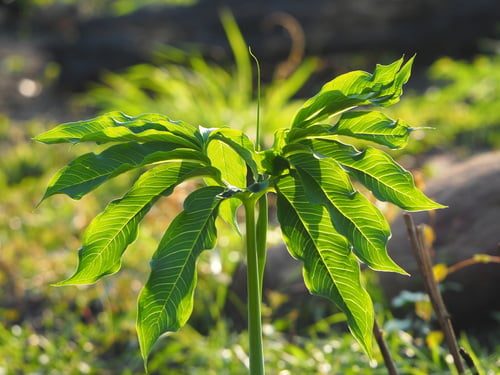
(c) Hani Ristiawan, some rights reserved (CC BY-NC), uploaded by Hani Ristiawan
iNaturalist· cc-by-nc
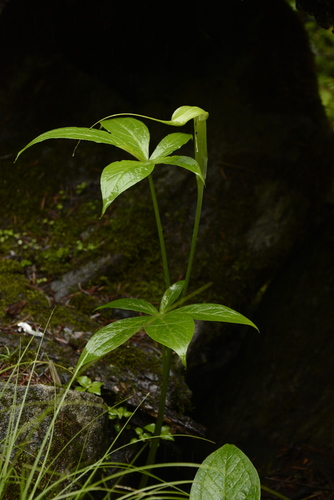
(c) Bayan Izzani, some rights reserved (CC BY-NC)
Description
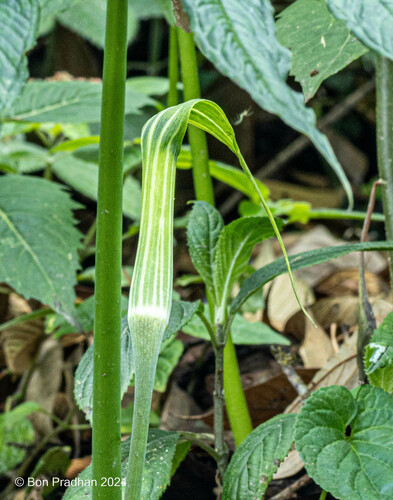
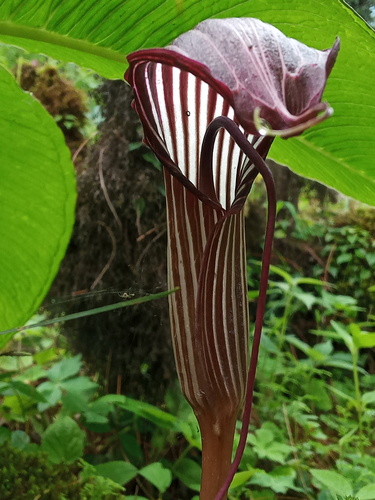
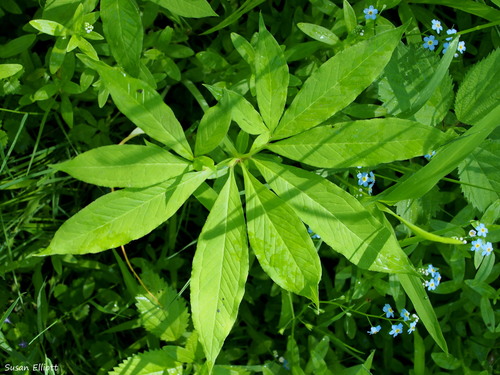
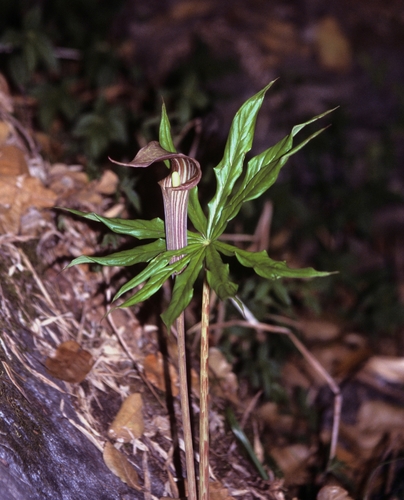
A large herb. It has a round tuber that produces annual offsets. The leaf stalk can be striped or spotted. It is green or purple. It is 35-60 cm long. The leaf blade is pale green underneath sometimes with scattered red spots. It is dark green above. There are 7-13 lobes. These are narrowly oval to sword shaped. The flower stalk is 5-20 cm long. The spathe around the flower can be red to brown with spots. It is pale inside.
Edible Uses
The corms are boiled and eaten.
Traditional Uses
The corms are boiled and eaten. Caution: Many plants in this group contain oxalates that burn the throat and affect calcium absorption.
This uses section is brief — help expand it
Known Hazards
Many plants in this group contain oxalates that burn the throat and affect calcium absorption.
Distribution
It is a tropical plant. It grows in forests and grasslands between 100-3,100 m above sea level in south China. In Sichuan and Yunnan.
Where It Grows
Asia, Cambodia, China, India, Indochina, Indonesia, Laos, Myanmar, Northeastern India, SE Asia, Thailand, Vietnam,
Synonyms
Also Known As
Tel-hawng-nu
References (1)
- Kar, A., et al, 2013, Wild Edible Plant Resources used by the Mizos of Mizoram, India. Kathmandu University Journal of Science, Engineering and Technology. Vol. 9, No. 1, July, 2013, 106-126 (As Typhonium horsfieldii)