Brassiophoenix drymophloeoides
Burret
Dwarf jelly palm
iNaturalist· cc-by-nc
(c) RykerKelley, some rights reserved (CC BY-NC), uploaded by RykerKelley
iNaturalist· cc-by-nc
(c) RykerKelley, some rights reserved (CC BY-NC), uploaded by RykerKelley
iNaturalist· cc-by-nc
(c) RykerKelley, some rights reserved (CC BY-NC), uploaded by RykerKelley
Description
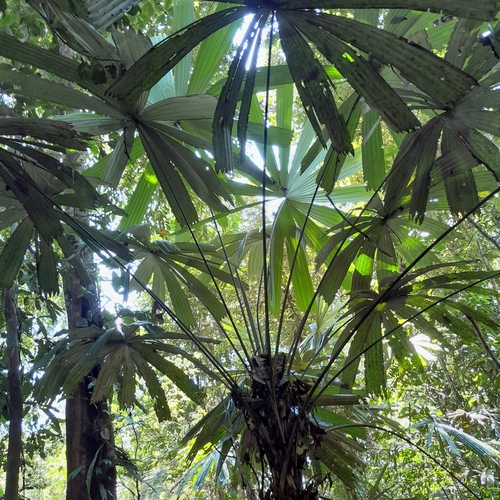
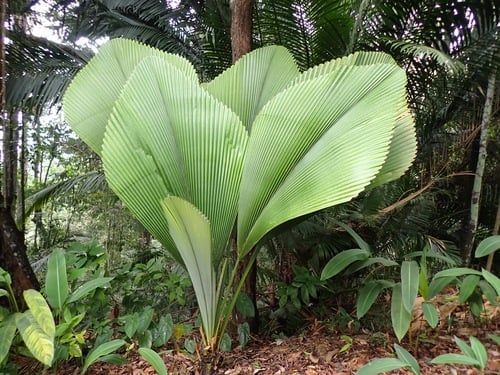
A slender palm with a single stem. It grows about 10 m tall. The stem is about 5-7 cm across. The leaves are 1.4-2.3 m long. The leaflets are broad and wedge shaped. It has a crown-shaft. The flowering stalk is below the leaves. The fruit are 3.5 cm long and orange.
Edible Uses
The nuts are chewed as a betel substitute.
Traditional Uses
The nut is used as a betel substitute.
This uses section is brief — help expand it
Distribution
A tropical plant. It occurs in lowland rainforest from sea level up to 800 m altitude.
Where It Grows
Australia, Pacific, Papua New Guinea, PNG,
Notes
There are 2 Brassiophoenix species and they occur in Papua New Guinea.
References (1)
- Baker, W.J. and Dransfield, J., 2006, Field Guide to Palms of New Guinea. Kew p 56