Swinglea glutinosa
(Blanco) Merr.
Tabog, Kabuyok
iNaturalist· pd
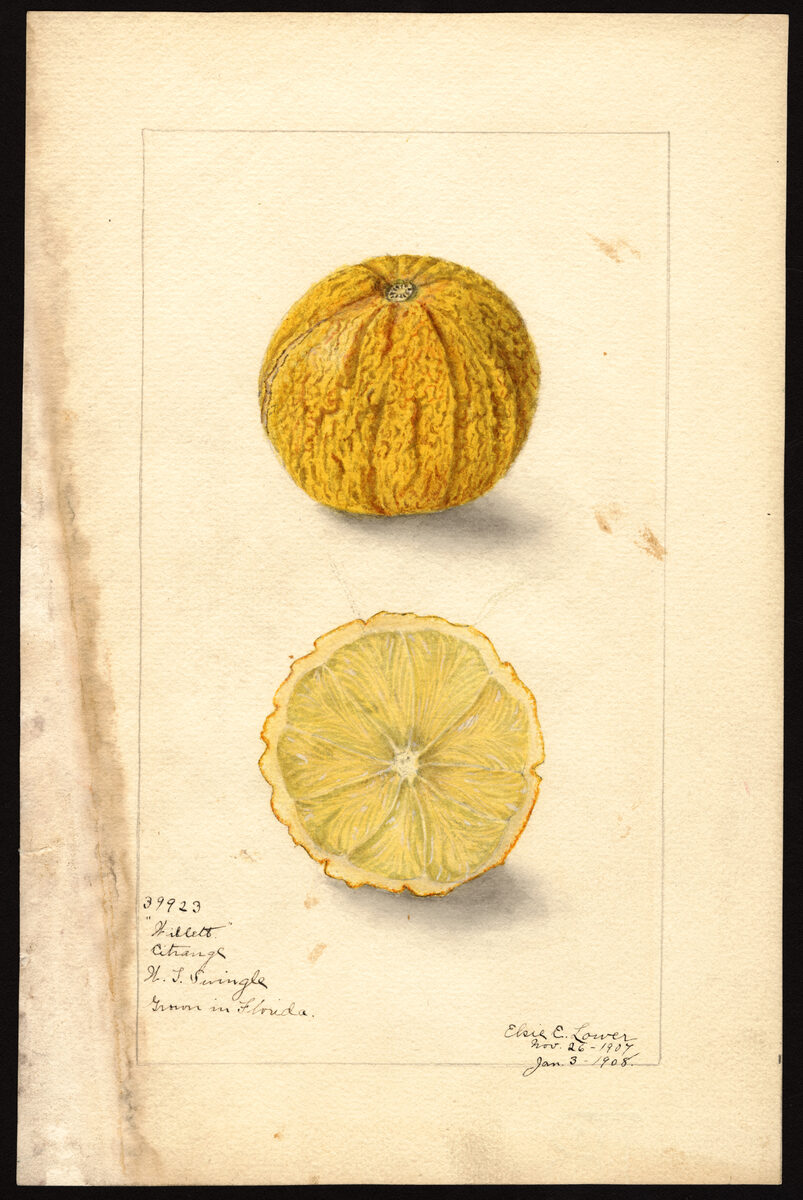
Francisco Manuel Blanco (O.S.A.), no known copyright restrictions (public domain)
iNaturalist· cc-by-nc
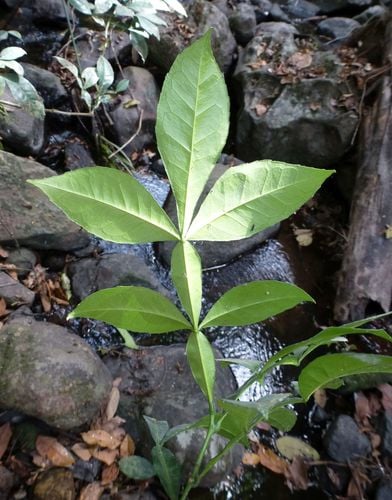
(c) María Cristina Miranda Cardona, some rights reserved (CC BY-NC)
iNaturalist· cc-by-nc
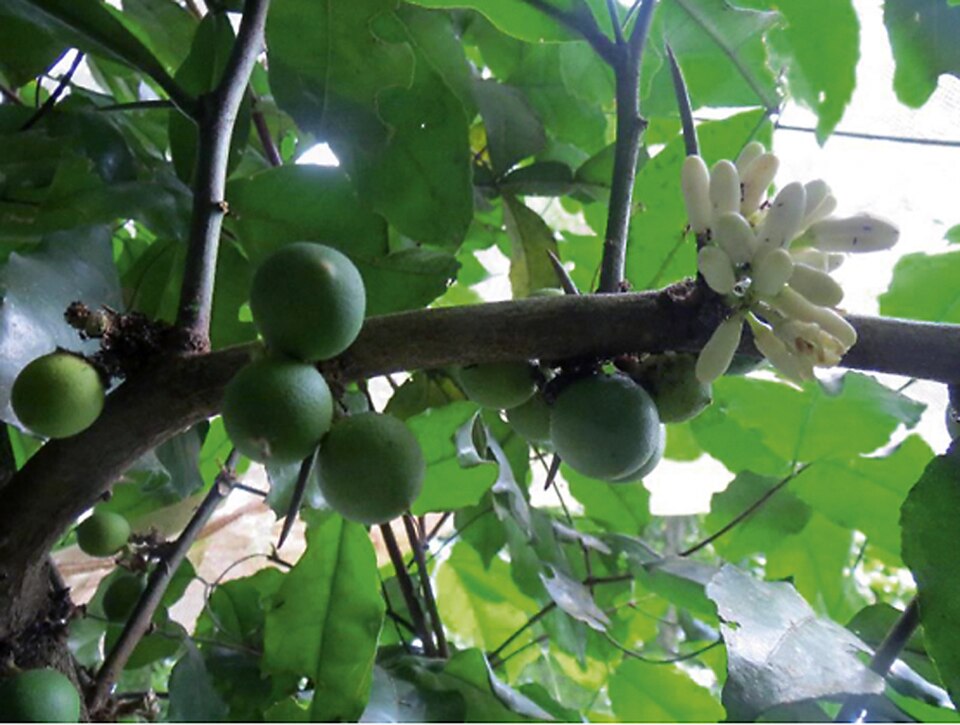
(c) Yeison Herrera Medina, some rights reserved (CC BY-NC)
Description
A small evergreen tree. It grows up to 10 m high. The trunk is spiny and small spines are found on the branches. The twigs are angular. The leaves have 3 leaflets and the leaflets are oval but pointed at the base and rounded or pointed at the tip. The end leaflets are 6 to 10 cm long while the side ones are smaller. The flowers are white and have a smell. They have 5 thick waxy petals which are long and narrow. There are 10 stamen. The fruit are green or yellow. They are 9 cm across. They have a strong smell. The fruit are long and have furrows. They are divided into 10 faint segments. Each segments has many seeds with tufts at their tips. The peel of the fruit is leathery and has oil glands.
Edible Uses
The fruit is used for food flavouring and the peel is used in soft drinks.
Traditional Uses
The fruit are used for food flavouring. The peel is used in soft drinks.
This uses section is brief — help expand it
Distribution
A tropical plant. It is native to the Philippines. It grows in lowland evergreen woodland. It needs well drained sandy loam soils. They occur in secondary forests at low and medium altitudes in the Philippines. They occur only in the Provinces of Isabela and Quezon. It suits hardiness zones 10-12.
Where It Grows
Asia, Indonesia, Pacific, Philippines, SE Asia,
Cultivation
Plants are grown from seed.
Production
It is slow growing.
Other Information
There is only one Swinglea species.
Notes
There is only one Swinglea species.
Also Known As
Kabuyok, Pohon tabog
References (6)
- Barwick, M., 2004, Tropical and Subtropical Trees. A Worldwide Encyclopedic Guide. Thames and Hudson p 389
- J. Arnold Arbor. 8:131. 1927
- Kermath, B. M., et al, 2014, Food Plants in the Americas: A survey of the domesticated, cultivated and wild plants used for Human food in North, Central and South America and the Caribbean. On line draft. p 841
- Llamas, K.A., 2003, Tropical Flowering Plants. Timber Press. p 341
- Monsalud, M.R., Tongacan, A.L., Lopez, F.R., & Lagrimas, M.Q., 1966, Edible Wild Plants in Philippine Forests. Philippine Journal of Science. p 537
Show all 6 references Hide references
- Sukarya, D. G., (Ed.) 2013, 3,500 Plant Species of the Botanic Gardens of Indonesia. LIPI p 531