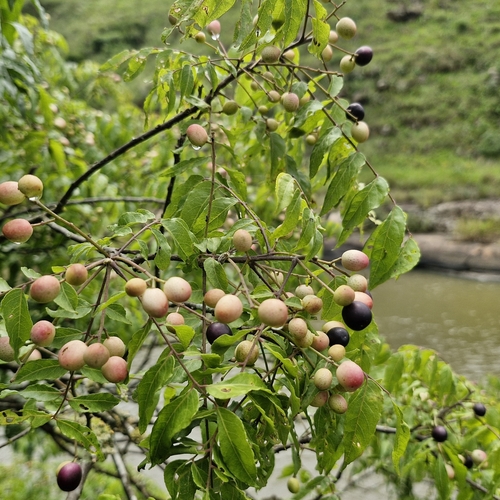
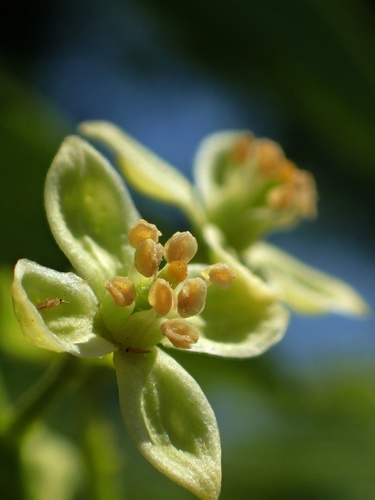
Zanthoxylum gilletii
(De Wild.) P. G. Waterman
African satinwood
iNaturalist· cc-by-nc
(c) Carel Jongkind, some rights reserved (CC BY-NC), uploaded by Carel Jongkind
iNaturalist· cc-by-nc
(c) Saskia Thomas, some rights reserved (CC BY-NC)
iNaturalist· cc-by-nc
(c) Saskia Thomas, some rights reserved (CC BY-NC)
Summary
Source: WikipediaZanthoxylum gilletii, the East African satinwood, is a tree species in the genus Zanthoxylum found in Africa. The fruits are used to produce the spice uzazi, which is the Nigerian (Igbo language) name of both the plant and the spice. It is native to Central and West Africa, and a close relative of the Sichuan pepper. "Uzazi" usually refers specifically to the spice made from its fruit and pericarp, though sometimes other parts of it such as its leaves are used.
Description
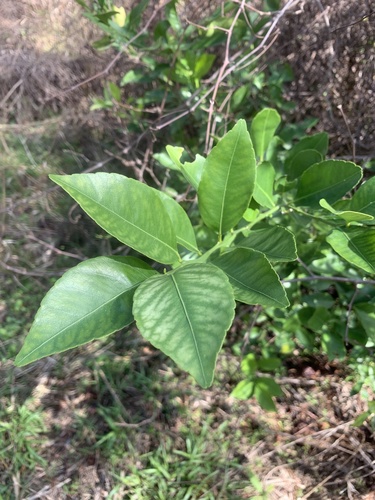
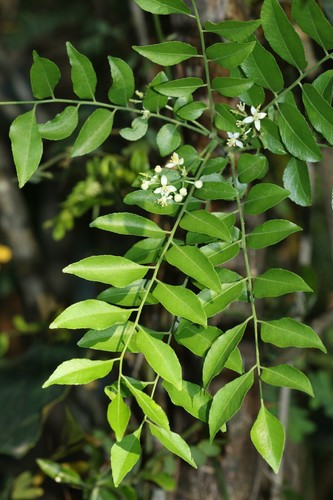
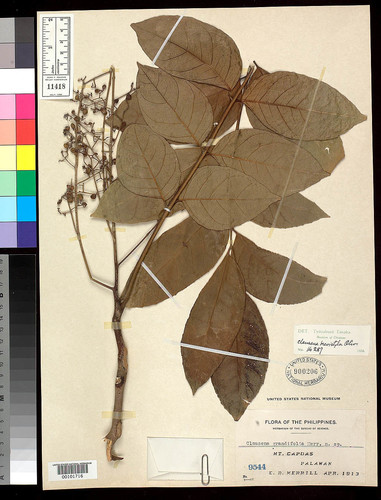
A tree. It grows 35 m tall. The trunk is without branches for 15 m. It is straight and cylinder shaped. It is 90 cm across. It has prickles up to 3 cm long. The leaves are alternate and clustered at the ends of branches. They are compound. There are 13-27 leaflets with one leaflet at the end. The leaves are 120 cm long. The leaflets are 14-30 cm long by 4-10 cm wide. The flowers are of separate sexes. The fruit are round and woody. They are 4-6 mm across. The seeds are round.
Edible Uses
The young shoots are used for flavouring sauces, the leaves are added to tea for flavouring, and the seeds yield an edible oil.
Traditional Uses
The young shoots are used for flavouring sauces. The leaves are added to tea for flavouring. The seeds yield an edible oil.
This uses section is brief — help expand it
Medicinal Uses
The plant is an important component of traditional medicine. Modern research has confirmed the presence of a range of medically active compounds in the plant including an essential oil, alkaloids and saponins. Various of the alkaloids have shown actions such as the ability to lower blood pressure, combat cancer growths, relieve pain and combat infections and parasites. The bark of the stem and roots is considered to be analgesic, aphrodisiac and vermifuge. It is commonly used as an analgesic, especially to treat burns, rheumatism, headache, stomach-ache, toothache and pain after childbirth. It is also used as a treatment against colic, fever, urogenital problems including kidney complaints and gonorrhoea, and as an enema against severe diarrhoea. The bark is applied externally to treat cough, colds, skin complaints and smallpox. The leaves are used to treat heart complaints and snake bites, whereas a leaf decoction is taken to treat cough, gonorrhoea and schistosomiasis, and a leaf maceration to treat diarrhoea and gastritis. The leaf sap is applied externally against an enlarged spleen.
Known Hazards
The bark is used as fish poison and arrow poison.
Distribution
It is a tropical plant. It grows up to 2,400 m altitude. The rainfall is 1,200-2,400 mm per year. It grows in the humid zone in West Africa.
Where It Grows
Africa, Angola, Benin, Cameroon, Central Africa, Central African Republic, CAR, Congo DR, Congo R, Côte d'Ivoire, East Africa, Gabon, Ghana, Guinea, Guinée, Ivory Coast, Kenya, Liberia, Malawi, Mozambique, Nigeria, Sao Tome and Principe, Sierra Leone, Southern Africa, Sudan, Tanzania, Togo, Uganda, West Africa, Zambia, Zimbabwe,
Cultivation
Plants are grown from seed. The fruit are dried for 1-2 days then the seed shaken out. Seeds germinate 3 weeks after planting. The germination rate is low. Seedlings should be grown in the shade.
Propagation
Germination starts 3 weeks after sowing. Seeds are recalcitrant and the germination rate is often low. Germination rates of 20 - 50% have been reported, but in western Kenya rates of up to 80% in 75 - 120 days. The oily and hard seed coat contributes to the often poor germination. Washing seeds thoroughly with a soap solution improves the germination rate and reduces the germination period significantly. In West Africa it has been recorded that germination is rapid and that viability of the seed is short. The seed should be kept in the shade, and can be stored for up to 2 months. To prevent insect attacks, ash should be added. Wildlings are commonly used for planting because of the erratic germination. Seedlings are pricked out into tubes at 5 - 12 days after germination, or 3 - 4 seeds are sown directly in tubes. The seedlings should be grown in the shade and slowly hardened. They are ready for transplanting after 5 - 7 months. Seedlings are light-demanding and natural regeneration may be abundant in large gaps in the forest and in regrowth of old farmland. In Liberia seedlings are commonly present in such localities, but reportedly never gregarious. Fruits should be collected from the tree before they open but when already reddish brown. They should be dried in the sun for 1 - 2 days, and subsequently the seed can be shaken out. The 1000-seed weight is 15 - 35 g.
Other Uses
The stem protuberances are used as plugs The seedcoat contains an essential oil. The roots are used as chewing sticks to clean the teeth. The heartwood is pale yellow to bright yellow or yellowish brown, darkening upon exposure, and indistinctly demarcated from the narrow sapwood. The grain is interlocked; texture fine to moderately coarse; lustre is silky; quartercut surfaces show a stripe figure, and backsawn surfaces occasionally have a fiddleback figure; the freshly cut wood has a sweet scent. The wood is moderately heavy to heavy, strong and hard; it is only moderately durable and often susceptible to termite, Lyctus and marine borer attacks. It usually saws moderately well, but is rather difficult to work; reduction of cutting angles to 15° gives best results in planing; it can be finished to a smooth and lustrous surface, but splitting and a rough finish may occur after machine mortising and boring; good mouldings are possible when sharp cutters are used; the nailing properties are good, but gluing properties are variable; steam-bending properties are excellent. The wood is used for construction in house building, for flooring, joinery, interior trim, panelling, doors, shipbuilding, vehicle bodies, furniture, cabinet work, mine props, railway sleepers, handles, ladders, sporting goods, agricultural implements, drums, toys, novelties, boxes, crates, turnery, veneer and plywood. The wood makes a good quality firewood and is used for charcoal production. A pioneer species that is most commonly found in secondary forests. Seedlings can be common in areas of forest that were recently burnt.
Production
It grows rapidly. Fruit ripen about 3 months after flowering.
Synonyms
Also Known As
Bahe, Bolongolo, Cipolo, Dongolo, Geyee, Kanyambumbu, Kengene, Kimpanga, Kitutube, Mafu, Mbi, Mfuakambi, Mhangana, Mhombo, Mkome, Mlungulungu, Mulungulu, Musamba-mayele, Nkongo mayeno, Nkonko nkumanga, Nungu nsende, Nzongo, Olondu
References (13)
- Burkill, H. M., 1985, The useful plants of west tropical Africa, Vol. 4. Kew.
- FAO Corporate Document Repository. The Major Significance of 'Minor' Forest Products. Appendix 3 (As Fagara macrophylla)
- Fowler, D. G., 2007, Zambian Plants: Their Vernacular Names and Uses. Kew. p 59
- http://www.fao.org/forestry/25323-096344a3de335832e8f363c3ac5184a66.pdf
- Latham, P., 2004, Useful Plants of Bas-Congo province. Salvation Army & DFID p 296
Show all 13 references Hide references
- Makonda, F. B. S., & Ruffo, C. K., 2011, Species List. NAFORMA, Tanzania
- Martin, F. W., et al, 1987, Perennial Edible Fruits of the Tropics. USDA Handbook 642 p 75 (As Fagara inaequalis)
- Okeyo, M.M., 2008. Zanthoxylum gilletii (De Wild.) P.G.Waterman. [Internet] Record from Protabase. Louppe, D., Oteng-Amoako, A.A. & Brink, M. (Editors). PROTA (Plant Resources of Tropical Africa), Wageningen, Netherlands. < http://database.prota.org/search.htm>. Accessed 23 October 2009
- Oteng-Amoako, A. A. (Ed.), 2006, 100 Tropical African Timber Trees from Ghana. Forestry Research Institute of Ghana. p 256
- Perennial Edible Fruit (As Fagara inaequalis)
- von Katja Rembold, 2011, Conservation status of the vascular plants in East African rain forests. Dissertation Universitat Koblenz-Landau p 186
- White, F., Dowsett-Lemaire, F. and Chapman, J. D., 2001, Evergreen Forest Flora of Malawi. Kew. p 518
- World Checklist of Useful Plant Species 2020. Royal Botanic Gardens, Kew