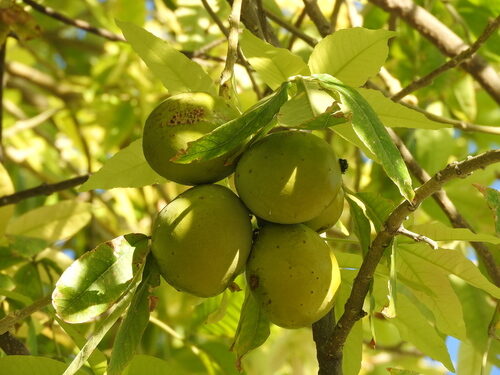
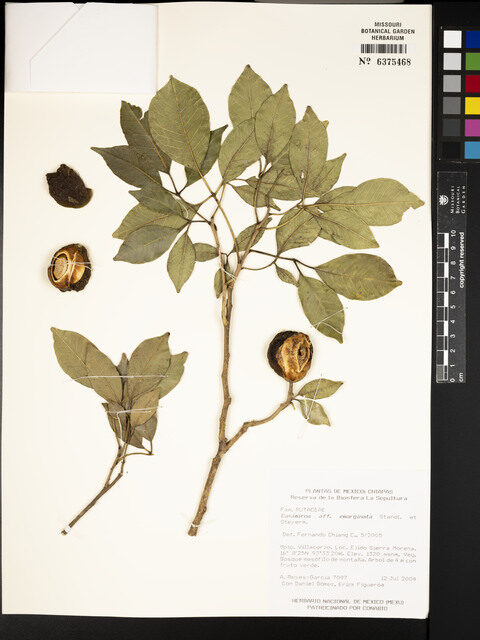
Zanthoxylum coreanum
Nakai
wikimedia· cc-by-sa
Wikimedia Commons - Dysmorodrepanis
wikimedia· cc-by-sa
Wikimedia Commons - Kenraiz
Summary
Source: WikipediaA deciduous shrub. Dioecious species requiring both male and female plants for seed production; not self-fertile. Tolerates light sandy, medium loamy, and heavy clay soils with good drainage. Grows in mildly acid, neutral, or mildly alkaline pH. Adapts to semi-shade (light woodland) or full sun, preferring consistently moist soil.
Description
A deciduous shrub. Dioecious species requiring both male and female plants for seed production; not self-fertile. Tolerates light sandy, medium loamy, and heavy clay soils with good drainage. Grows in mildly acid, neutral, or mildly alkaline pH. Adapts to semi-shade (light woodland) or full sun, preferring consistently moist soil.
Edible Uses
The leaves can be eaten raw.
Traditional Uses
The leaves are eaten fresh.
This uses section is brief — help expand it
Medicinal Uses
The resin found in the bark — and particularly in the root bark — is powerfully stimulant and tonic.
Distribution
It is a temperate plant.
Where It Grows
Asia, Korea,
Cultivation
We have very little information on this species and do not know if it will be hardy in Britain, though judging by its native range it could succeed outdoors at least in the milder areas of the country. The following notes are based on the general needs of the genus. Prefers a good deep well-drained moisture retentive soil in full sun or semi-shade. Dioecious. Male and female plants must be grown if seed is required. Flowers are formed on the old wood.
Propagation
Seed is best sown in a greenhouse as soon as it ripens in autumn. Stored seed may need up to 3 months of cold stratification, though scarification can also help. Sow stored seed in a cold frame as early in the year as possible; germination should occur in late spring, though it may take a further 12 months. Prick seedlings into individual pots when large enough to handle, grow on in a cold frame through their first winter, then plant out in early summer. Cuttings of half-ripe wood can be taken in July or August and rooted in a frame. Root cuttings 3cm long, planted horizontally in pots in a greenhouse, give a good success rate. Suckers can be removed in late winter and planted directly into their permanent positions.
Other Uses
None known.
Notes
There are about 200 Zanthoxylum species. It is an unresolved name in The Plant List.
Also Known As
O-shansho
References (3)
- Bot. Mag. (Tokyo) 44:528. 1930
- Martin, F. W., et al, 1987, Perennial Edible Fruits of the Tropics. USDA Handbook 642 p 78
- Plants for a Future database, The Field, Penpol, Lostwithiel, Cornwall, PL22 0NG, UK. http://www.scs.leeds.ac.uk/pfaf/