Aristida inaequiglumis
Domin
Curly wire grass, Feathertop Threeawn Grass, Unequal threeawn
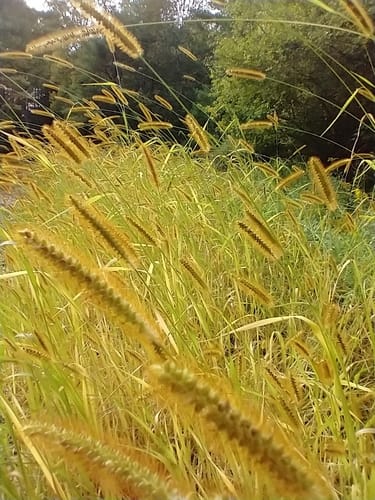
iNaturalist· cc-by
(c) Kym Nicolson, some rights reserved (CC BY), uploaded by Kym Nicolson
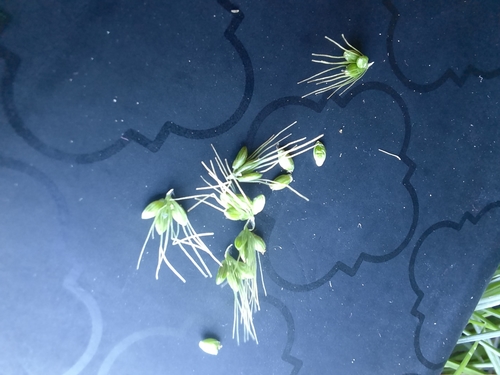
iNaturalist· cc-by-nc
(c) Alan Bedggood, some rights reserved (CC BY-NC), uploaded by Alan Bedggood
Description
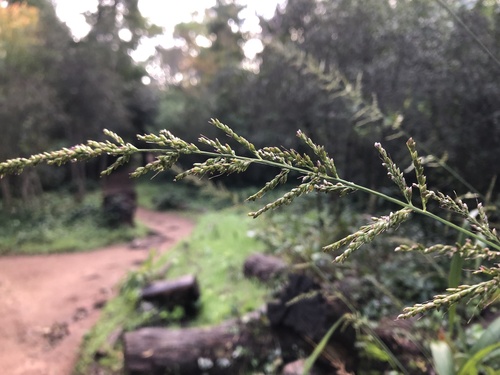
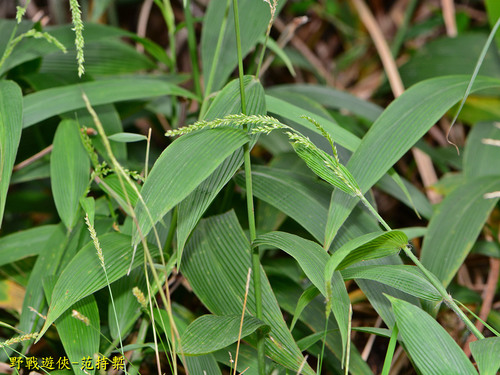
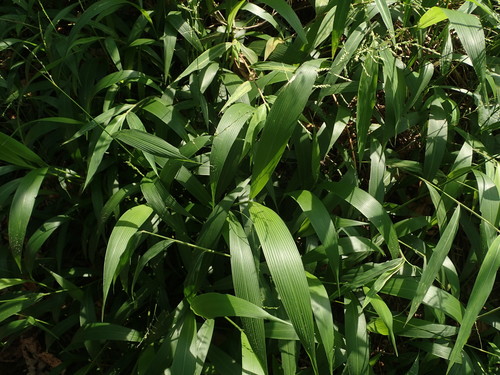
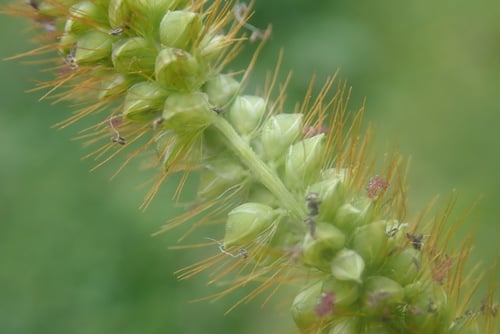
A grass which forms tufts. It keeps growing from year to year. It grows 30-150 cm high. The sheath is longer than the distance between the separate leaves. The leaf blade is 30 cm long and 2.5-4.5 mm wide. It curls at maturity. The flowering stalk is 13-40 cm long. It has branches 8 cm long. The seeds are spear-like.
Edible Uses
The seeds are collected and eaten as a cereal grain.
Traditional Uses
The seeds are collected from ants nests and eaten.
This uses section is brief — help expand it
Distribution
A tropical plant. It grows in arid and tropical areas. It can grow in arid places.
Where It Grows
Australia*,
Notes
There are about 330 Aristida species.
References (6)
- Cancilla, D., 2018, Ethnobotanical and Ethnozoological Values Desktop Assessment - Eliwana Project. p 10
- Kenneally, K.E., Edinger, D. C., and Willing T., 1996, Broome and Beyond, Plants and People of the Dampier Peninsula, Kimberley, Western Australia. Department of Conservation and Land Management. p 215
- Latz, P.K., 1996, Bushfires and Bushtucker: Aboriginal plant use in Central Australia. IAD Press Alice Springs p 128
- Lazarides, M. & Hince, B., 1993, Handbook of Economic Plants of Australia, CSIRO. p 25
- Paczkowska, G. & Chapman, A.R., 2000, The Western Australian Flora. A Descriptive Catalogue. Western Australian Herbarium. p 95
Show all 6 references Hide references
- Petheram, R.J. and Kok, B., 2003, Plants of the Kimberley Region of Western Australia. UWA Press p 41