Chimonobambusa pachystachys
Hsueh & Yi
Ci fang zhu, Thorny bamboo
No photos yet for Chimonobambusa pachystachys
Sign in to contribute a photoSummary
An evergreen bamboo reaching 5 m tall with year-round foliage. Wind-pollinated hermaphrodite. Tolerates light sandy, medium loamy, and heavy clay soils with mildly acid, neutral, or basic pH. Grows in semi-shade or full sun with preference for moist soil.
Description
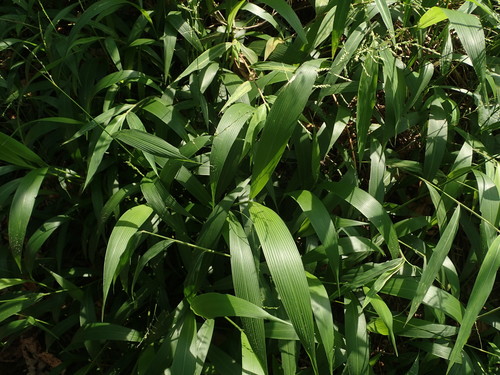
A bamboo. It grows 3-7 m tall. The stems are 1-3 cm across. The internodes are 15-22 cm long. They have brown hairs when young. There are root thorns in a ring on the lower stems.
Edible Uses
The stems are cooked and make an excellent vegetable.
Medicinal Uses
None known
Distribution
It is a warm temperate plant. In grows in evergreen broad-leaved forests between 1,000-2,000 m above sea level in southern China. In Sichuan.
Where It Grows
Asia, China,
Cultivation
Prefers a good loamy soil. Succeeds in most soils so long as they do not dry out. Dislikes drought. Prefers a position sheltered from cold north and east winds. This species is notably resistant to honey fungus. Plants only flower at intervals of many years. When they do come into flower most of the plants energies are directed into producing seed and consequently the plant is severely weakened. They sometimes die after flowering, but if left alone they will usually recover though they will look very poorly for a few years. If fed with artificial NPK fertilizers at this time the plants are more likely to die.
Propagation
Surface sow seed as soon as it is ripe in a greenhouse at about 20°c, keeping the compost consistently moist. Germination usually occurs fairly quickly with good-quality seed, though it can take 3–6 months. Grow seedlings on in a lightly shaded greenhouse position until large enough to plant out. Seed is rarely available. Divide in spring as new growth begins, taking divisions with at least three canes and disturbing the main plant's roots as little as possible. Grow divisions in light shade in a greenhouse in pots of high-fertility sandy medium, misting the foliage regularly until established. Plant out when a good root system has developed, which can take a year or more. Basal cane cuttings can also be used.
Other Uses
None known Special Uses
References (4)
- http://www.plantnames.unimelb.edu.au/sorting/Bamboos_Edible.html
- Ohrnberger, D. 1999. The bamboos of the world. (Bamboo World)
- Wiersema, J. H. & Leon, B., 2013, World Economic Plants. A Standard Reference CRC Press. 2nd Ed. p 169
- World Checklist of Useful Plant Species 2020. Royal Botanic Gardens, Kew