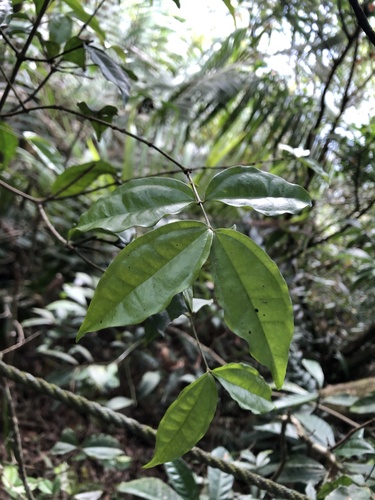
Strychnos nux-blanda
A. W. Hill
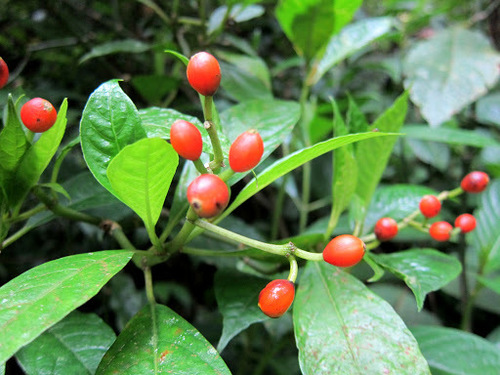
iNaturalist· cc-by-nc
(c) dechaphaetkrathok, some rights reserved (CC BY-NC)
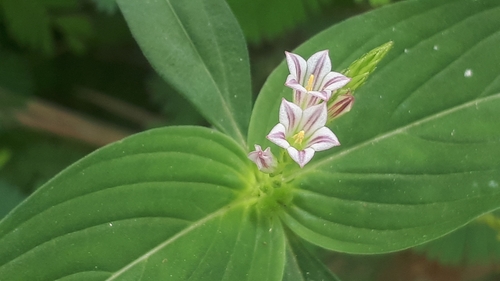
iNaturalist· cc-by-nc-sa
(c) LannaMountainsCharlie, some rights reserved (CC BY-NC-SA)
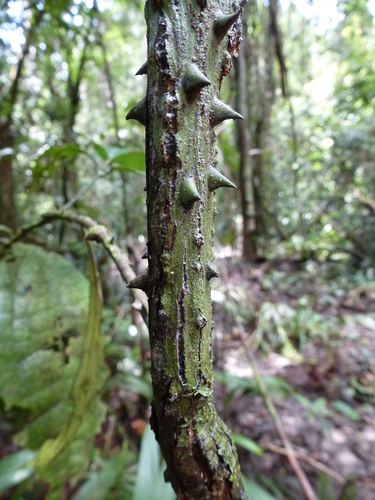
iNaturalist· cc-by-nc-sa
(c) LannaMountainsCharlie, some rights reserved (CC BY-NC-SA)
Summary
Source: WikipediaStrychnos nux-blanda is a shrub or small tree in the Loganiaceae family. It is native to Southeast Asia and Assam. The wood is used as fuel; seeds are toxic, but used in folk-medicine. It is one of the plants featured in the garden of King Narai (1633–88) at Lopburi, Thailand.
Description
A tree. It grows 15 m tall. The leaves are broadly oval and 9-22 cm long by 7-16 cm wide. The fruit are round and 6-8 cm across. There are 4-15 seeds.
Edible Uses
Fruit - raw. The pulp is eaten, but not the seeds. The fruit is probably almost free of the poisonous alkaloids found in many plants in this genus. The fruit is a berry about the size of a small orange, with a rather hard coriaceous orange-coloured pericarp and a whitish pulp in which are a number of seeds.
Known Hazards
The wood furnishes firewood. The fruit is toxic, in the indigenous medicine of Cambodia the seeds are often sold in a mixture with the seeds of Strychnos nux-vomica to be used as an emetic. Warning: taking these seeds is often fatal, and their effective use as an emetic is not verified by science. The plant is also used for folk medicine in Thailand. Use of the trunk bark is described by the chief herbalist of Khao Kho District (Phetchabun Province, northern Thailand) to treat liver cancer, in a mixture with Enydra fluctuans and Myxopyrum smilacifolium ssp. confertum. There are palm-leaf manuscripts written by Isan people (Sakon Nakhon Province, northeastern Thailand) in the recent-past. One describes a treatment for abscesses using the bark stem of this species (in a mixture with Alpinia galanga, Momordica cochinchinensis and Mimosa pudica). Amongst Kuy- and Khmer-speaking people living in the same villages in Stung Treng and Preah Vihear Provinces of north-central Cambodia, the tree is used as source of medicine. The Bunong people of Mondulkiri Province, northeastern Cambodia, gather the bark and wood from wild trees for various folk remedies, to clean wounds, to treat headaches (sometimes mixed with Helicteres angustifolia wood), and for post-natal care.
Distribution
It is a tropical plant. It grows between 300-600 m above sea level in southern China. Shan ma qian,
Where It Grows
Asia, Cambodia, China, India, Laos, Myanmar, SE Asia, Vietnam, Thailand,
Cultivation
A plant of the tropics, where it grows mainly in areas with seasonal rainfall. It does not tolerate even light frosts. Plants are normally found growing in the shade of deciduous or semideciduous trees. The tree usually fruits well every year. During the first season the growth of the seedhng above ground is slow, development being confined to little or nothing more than the expansion of the large green leafy cotyledons : a long rather thick taproot of somewhat delicate texture is rapidly formed, and may reach a length of 20 - 22cm within a month of germination. During the second season the growth of the seedling is more rapid.
Propagation
Seed - sown fresh in a shaded position it normally germinates quickly and well. It quickly forms a taproot after germinating and so needs to be sown in deep, individual containers or in situ. In a test, 50% of seeds remained viable after 1 year in storage.
Other Uses
The wood is used for making carts and agricultural implements and for fancy cabinet work.