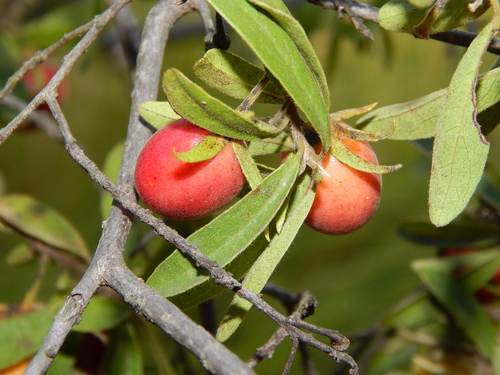
Ptychopetalum olacoides
Benth.
Muira puama
wikimedia· cc-by-sa
Wikimedia Commons - Luigiman2007
wikimedia· cc-by-sa
Wikimedia Commons - Maša Sinreih in Valentina Vivod
Summary
An evergreen tree reaching 5 m in height and width at medium growth rate. Hardy to UK zone 10. Requires full sun and well-drained soil, thriving in sandy, loamy, or clay substrates across mildly acid to basic pH ranges. Prefers moist conditions.
Description
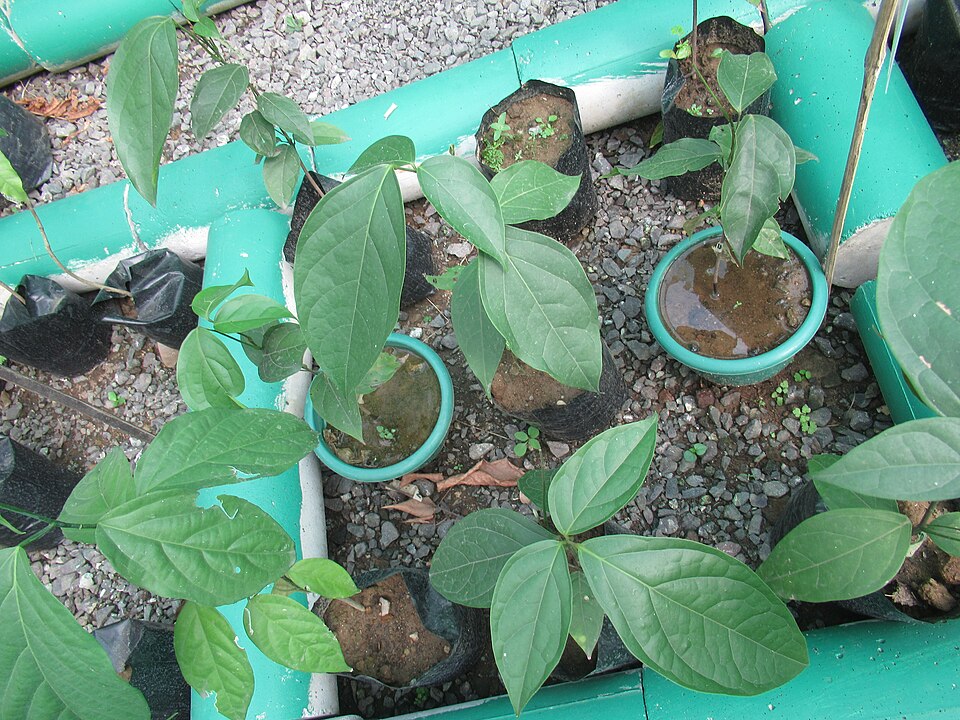
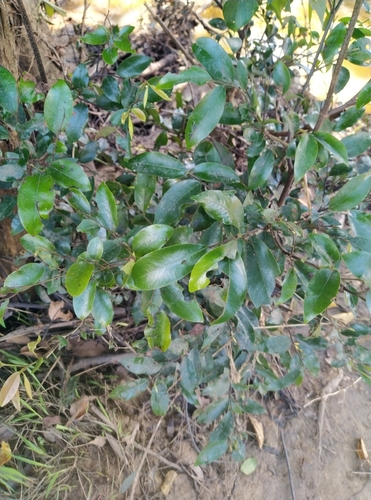
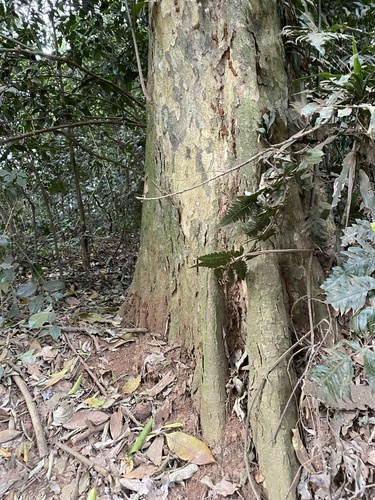
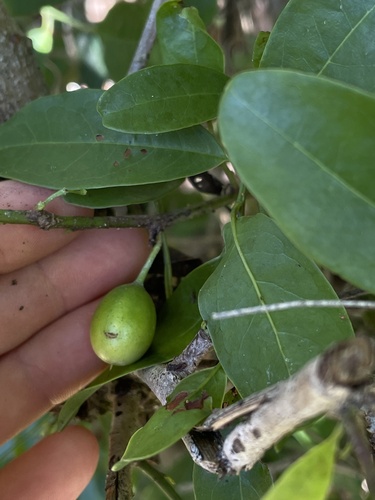
A tree. It grows 5-15 m tall. The trunks have grooves along them. They trunks are 25 cm across. The leaves are oblong to sword shaped. They are 9-11 cm long by 2.65-3 cm wide. There are 5-8 flowers in a group. The fruit is about 2 cm long by 1.5 cm wide and starts green and changes to pink and then purple-black.
Edible Uses
No edible uses are known.
Traditional Uses
The wood of the stem and the root are used as an appetite stimulant and food tonic.
This uses section is brief — help expand it
Medicinal Uses
Muira puama has a long history of use among indigenous Amazonian peoples, many of whose applications were later adopted by Europeans and have since been supported by modern research. Key plant chemicals include alpha-copaene, alpha-elemene, alpha-guaiene, alpha-humulene, alpha-muurolene, alpha-pinene, alpha-resinic acid, alpha-terpinene, arachidic acid, allo-aromadendren, behenic acid, beta-bisabolene, beta-caryophyllene, beta-pinene, beta-resinic acid, beta-sitosterol, beta-transfarnesene, borneol, campesterols, camphene, camphor, car-3-ene, caryophyllene, cerotic acid, chromium, coumarin, cubebene, delta-cadinene, dotriacontanoic acid, elixene, ergosterols, eugenol, essential oils, gamma-muurolene, hentriacontanoic acid, heptacosanoic acid, lignoceric acid, limonene, linalool, lupeol, melissic acid, montanic acid, muirapuamine, myrcene, nonacosanoic acid, para-cymene, pentacosanoic acid, phlobaphene, stigmasterols, trichosanic acid, and uncosanic acid. Early research demonstrated effectiveness in treating nervous system disorders and sexual impotence, with noted benefits in cases of locomotor ataxia, long-standing neuralgias, chronic rheumatism, and partial paralysis. Two human clinical trials conducted in France found muira puama effective at improving libido and treating erectile dysfunction. Further studies have reported adaptogenic, antifatigue, and antistress effects, along with a positive influence on the central nervous system. Research in Brazil confirmed a central nervous system effect from the bark, and also demonstrated a mild, short-lived hypotensive action. Root extracts were found to inhibit stress-induced ulcers, and the leaf has shown analgesic activity. A 2003 Brazilian study found that an alcohol extract facilitated memory retrieval, suggesting potential benefit for Alzheimer's patients. A follow-up 2004 study reported that the same extract protected brain cells and increased their viability — partly via an antioxidant mechanism — which may be beneficial for stroke patients. Traditionally, stems and roots from young plants are used as a tonic for neuromuscular problems; root decoctions are used in baths and massages for paralysis and beriberi; and a root-and-bark tea is taken for sexual debility, rheumatism, influenza, and cardiac and gastrointestinal weakness. The plant is also valued as a preventive for baldness. In modern herbalism it is regarded as a powerful aphrodisiac and neuromuscular tonic, used to address weakness, paralysis, dyspepsia, menstrual disturbances, sexual impotency, influenza, and central nervous system disorders, and applied externally for chronic rheumatism. Importantly, the active constituents responsible for potency and libido effects are not water-soluble — taking bark or root powder in capsules or tablets will be ineffective as these compounds cannot be digested or absorbed in that form. High heat for at least 20 minutes with alcohol is required to release the volatile and essential oils, terpenes, gums, and resins linked to these effects.
Distribution
A tropical plant.
Where It Grows
Brazil, South America,
Cultivation
Closely related to Ptychopetalum uncinatum, it can be used interchangeably with that species.
Propagation
Seed.
Other Uses
No other uses are known.
Synonyms
Also Known As
marapuama, muira puama, muira-puama, muirapuama, potency wood, potenzholz, ptychopetali lignum.
References (2)
- Facciola, S., 1998, Cornucopia 2: a Source Book of Edible Plants. Kampong Publications, p 162
- London J. Bot. 2:377. 1843