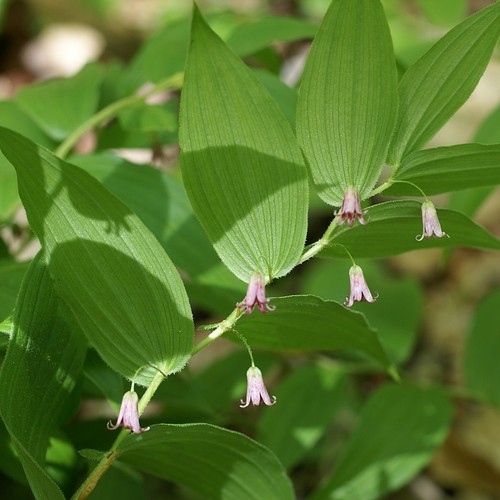
Streptopus streptopoides
(Ledeb.) A. Nelson & J. F. Macbr.
Northern Twistedstalk, Small Twistedstalk
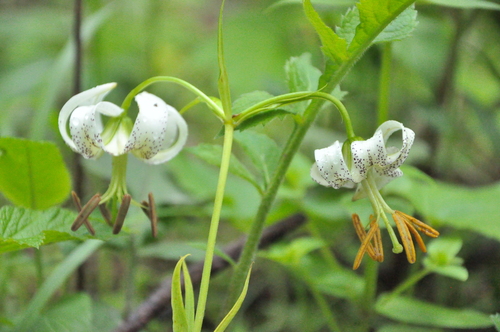
iNaturalist· cc-by-nc-sa
(c) M. Goff, some rights reserved (CC BY-NC-SA), uploaded by M. Goff
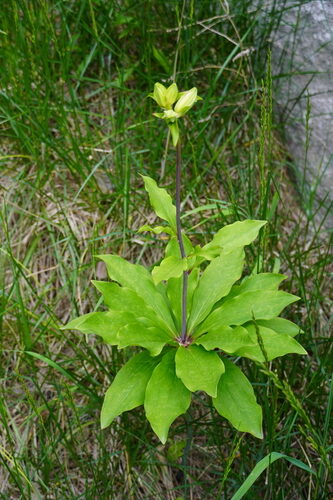
iNaturalist· cc-by-nc
(c) Steve Ansell, some rights reserved (CC BY-NC)
iNaturalist· cc-by-nc
(c) Steve Ansell, some rights reserved (CC BY-NC)
Summary
Streptopus streptopoides is a compact perennial reaching 0.3 m tall, hardy to UK zone 3. It flowers July to August and is hermaphroditic. The plant grows in light sandy and medium loamy soils with mildly acidic, neutral, or mildly alkaline pH. It tolerates full shade (deep woodland) or semi-shade and requires moist soil conditions.
Description
Streptopus streptopoides is a compact perennial reaching 0.3 m tall, hardy to UK zone 3. It flowers July to August and is hermaphroditic. The plant grows in light sandy and medium loamy soils with mildly acidic, neutral, or mildly alkaline pH. It tolerates full shade (deep woodland) or semi-shade and requires moist soil conditions.
Edible Uses
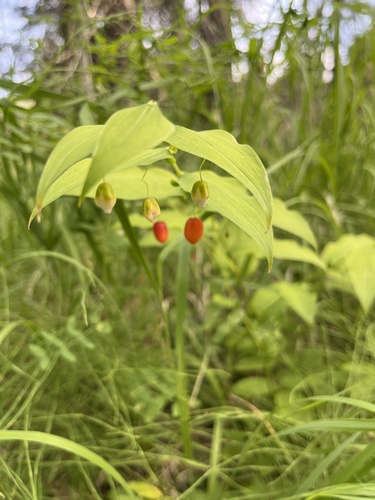
Young leaves and shoots can be eaten raw or cooked and have a cucumber flavour. The fruit is edible raw or cooked and has a watermelon flavour. The orange-red berries are approximately 6mm in diameter.
Medicinal Uses
None known.
Distribution
It is a temperate plant.
Where It Grows
Asia, China, Japan, Korea, North America, USA,
Propagation
Sow seed in a cold frame as soon as it is ripe in summer. Stored seed should be sown in a cold frame as soon as received, though it can be very slow to germinate, sometimes taking 18 months or more. Prick out seedlings into individual pots once large enough to handle and grow on in a shaded greenhouse or cold frame. Plants typically need 2 or more growing seasons before the roots are large enough to plant out, ideally when dormant in autumn. Divide as the plant comes into growth in early spring. Larger divisions can be planted directly into permanent positions, while smaller ones do best potted and grown on in light shade for their first year before planting out the following spring.
Other Uses
None known.
Notes
There are about 10 Streptopus species. Also put in the family Convallariaceae.
References (2)
- Bot. Gaz. 61:30. 1916
- Plants for a Future database, The Field, Penpol, Lostwithiel, Cornwall, PL22 0NG, UK. http://www.scs.leeds.ac.uk/pfaf/