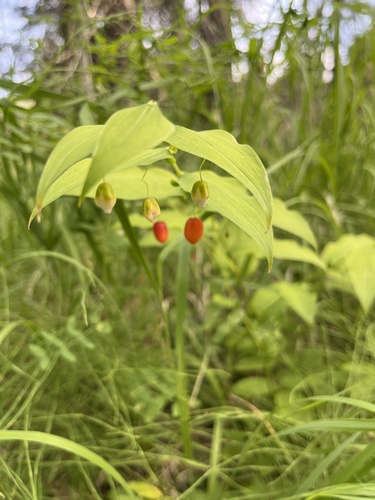
Tulipa armena
DC.
Wild tulip
wikimedia· cc-by-sa
Ziegler175 (via Wikimedia Commons)
iNaturalist· cc-by-nc-sa
(c) AnneTanne, some rights reserved (CC BY-NC-SA)
iNaturalist· cc-by-sa
(c) Aissa Djamel Filali, some rights reserved (CC BY-SA), uploaded by Aissa Djamel Filali
Description
A bulbous plant in the Liliaceae family native to the Armenian Highlands and surrounding regions including Armenia, Turkey, Iran, the South Caucasus, and Azerbaijan. It grows 8–25 cm tall with 3–6 broad, scimitar-shaped, grey-green leaves with red overlay, and solitary cup- or bowl-shaped flowers that are highly variable in color, ranging from red with dark markings to yellow.
Edible Uses
The corms are eaten raw or roasted.
Traditional Uses
The corms are eaten raw or roasted.
This uses section is brief — help expand it
Distribution
It grows in a Mediterranean climate.
Where It Grows
Jordan, Middle East,
Also Known As
Kern el ghazal
References (1)
- Al-Qura'n, S. A., 2010, Ethnobotanical and Ecological Studies of Wild Edible Plants in Jordan. Libyan Agriculture Research Center Journal International 1(4):231-243