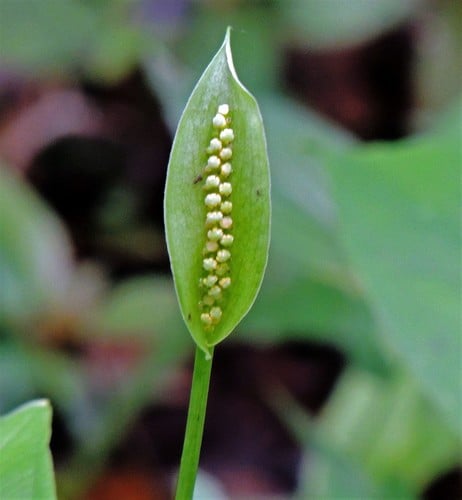
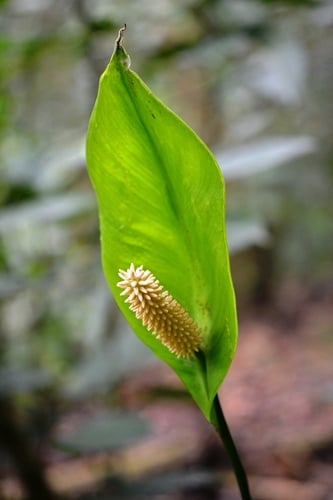
Philodendron squamiferum
Poepp.
Red bristle philodendron
iNaturalist· cc-by-nc-sa
(c) R.E.Llanos, some rights reserved (CC BY-NC-SA), uploaded by R.E.Llanos
iNaturalist· cc-by
(c) Guillaume Delaitre, some rights reserved (CC BY)
Summary
Source: WikipediaPhilodendron squamiferum, known as Squamiferum for short, is a rare species of plant in the family Araceae, native to French Guiana, Suriname, and northern Brazil. This climbing plant has leaves with five lobes and has a climbing growth habit. It is well known among Philodendron species for its distinctive reddish stalks, which are covered in small bristles that give it a hairy appearance.
Description
A root climber. It grows up small tree trunks. The leaf stalk is reddish and 10-15 cm long. It has small dense scales. The leaves have 5 lobes. The middle lobe is the longest. The flowering stalks are red and scaly. The fruit are pink berries.
Edible Uses
The pink berries are eaten fresh and have a sharp, peppery taste.
Traditional Uses
The berries have a sharp, peppery taste.
This uses section is brief — help expand it
Known Hazards
Philodendron squamiferum is toxic because of the presence of calcium oxalate crystals. Oxalate crystals can cause pain and swelling upon contact with the skin or mouth, and pain, swelling, hoarseness and difficulty swallowing if ingested.
Distribution
It is a tropical plant. It grows in primary forests in open places and on flood plains. It can be on the banks of small creeks.
Where It Grows
Asia, Brazil, Guiana, Guianas, Guyana, Indonesia, Marshall Islands, Micronesia, Pacific, SE Asia, Suriname, South America*,
Cultivation
Plants can be grown from seeds or stem cuttings.
Synonyms
Also Known As
Filodendron bulu merah, Guiambe
References (4)
- http://www.b-and-t-world-seeds.com/Aroideth.htm
- Kermath, B. M., et al, 2014, Food Plants in the Americas: A survey of the domesticated, cultivated and wild plants used for Human food in North, Central and South America and the Caribbean. On line draft. p 640
- Sukarya, D. G., (Ed.) 2013, 3,500 Plant Species of the Botanic Gardens of Indonesia. LIPI p 952
- Vander Velde, N, 2003, The Vascular Plants of Majuro Atoll, Republic of the Marshall Islands. Atoll research Bulletin. No. 503. Smithsonian Institute. p 29