Hibiscus articulatus
Hochst. ex A. Rich.
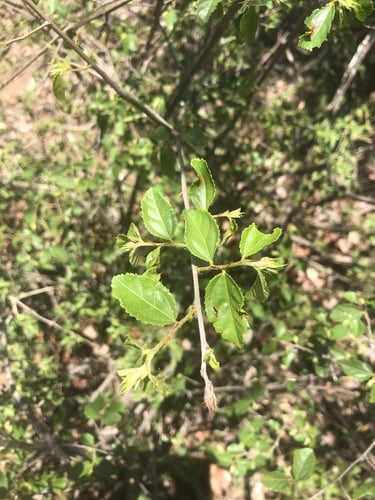
iNaturalist· cc-by
(c) i_c_riddell, some rights reserved (CC BY), uploaded by i_c_riddell
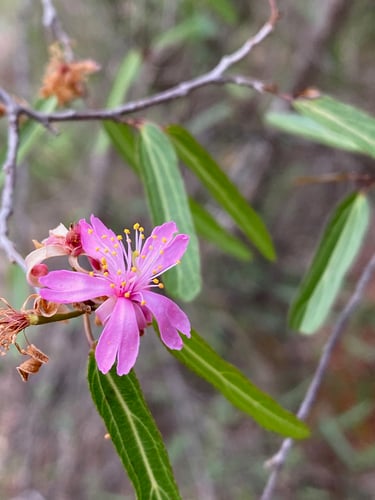
iNaturalist· cc-by
(c) i_c_riddell, some rights reserved (CC BY), uploaded by i_c_riddell
Description
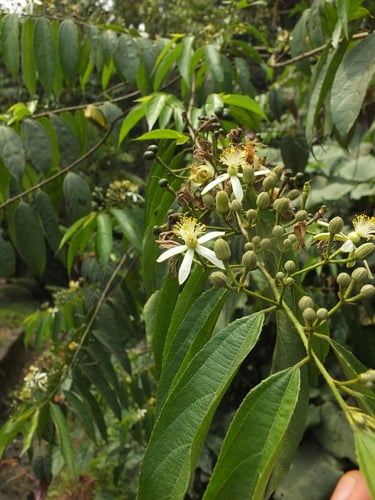
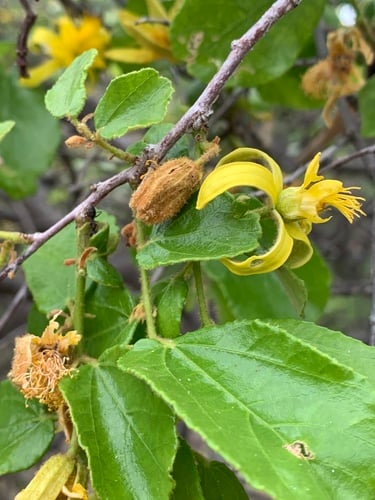
A herb. It has a woody rootstock. It produces new shoots from this each year. The leaves are 10 cm long by 6 cm wide. The leaves are oval. The flowers are white or pale yellow. They are 5-10 cm across. The flowers occur singly in the axils of leaves. The fruit is a capsule 18 mm long by 12 mm wide. The seeds are 2.5 mm long by 2 mm wide.
Edible Uses
The leaves are cooked as a vegetable. The seeds are also edible.
Traditional Uses
The leaves are cooked as a vegetable.
This uses section is brief — help expand it
Distribution
A tropical plant. It grows in woodland from sea level to 1,500 m altitude.
Where It Grows
Africa, Botswana, Burkina Faso, Cameroon, Central Africa, Congo, East Africa, Ethiopia, Malawi, Mozambique, South Africa, Southern Africa, Togo, West Africa, Zambia, Zimbabwe,
Notes
There are about 220 Hibiscus species.
Synonyms
Also Known As
Chamakande, Derere hambakachere, Tchamande, Therere
References (10)
- Batawila, K., et al, 2007, Diversite et gestion des legumes de cueillete au Togo. African Journal of Food, Agriculture, Nutrition and Development 7( 3& 4): 66
- Flora Zambesiaca. http://apps.kew.org/efloras
- Fowler, D. G., 2007, Zambian Plants: Their Vernacular Names and Uses. Kew. p 45
- Jardin, C., 1970, List of Foods Used In Africa, FAO Nutrition Information Document Series No 2.p 81
- Maroyi, A., 2013, Use of weeds as traditional vegetables in Shurugwi District, Zimbabwe. Journal of Ethnobiology and Ethnomedicine 9:60
Show all 10 references Hide references
- Martin, F.W. & Ruberte, R.M., 1979, Edible Leaves of the Tropics. Antillian College Press, Mayaguez, Puerto Rico. p 203
- Peters, C. R., O'Brien, E. M., and Drummond, R.B., 1992, Edible Wild plants of Sub-saharan Africa. Kew. p 144
- Pickering, H., & Roe, E., 2009, Wild Flowers of the Victoria Falls Area. Helen Pickering, London. p 80
- Terra, G.J.A., 1973, Tropical Vegetables. Communication 54e Royal Tropical Institute, Amsterdam, p 50
- Williamson, J., 2005, Useful Plants of Malawi. 3rd. Edition. Mdadzi Book Trust. p 130