Herrania purpurea
(Pittier) R. E. Schult.
Purple herrania
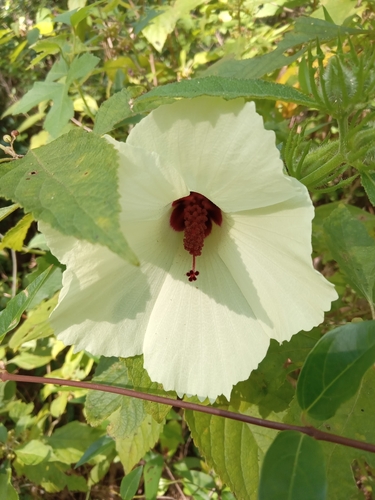
iNaturalist· cc-by-nc
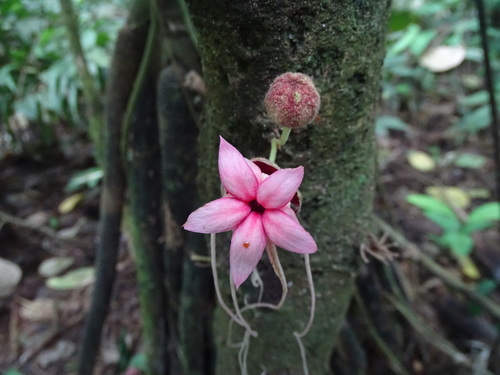
(c) Jorge Bogantes Montero, some rights reserved (CC BY-NC), uploaded by Jorge Bogantes Montero
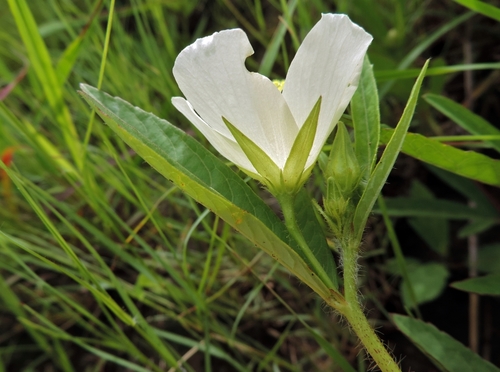
iNaturalist· cc-by-nc
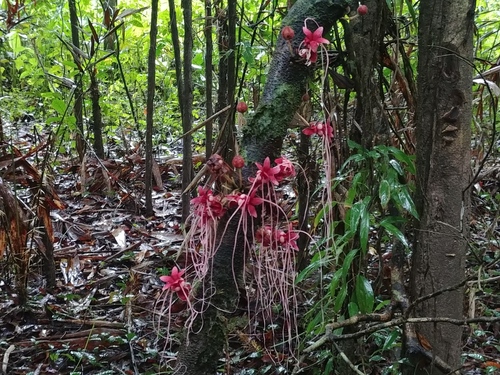
(c) Paul Foster, some rights reserved (CC BY-NC), uploaded by Paul Foster
iNaturalist· cc-by-nc
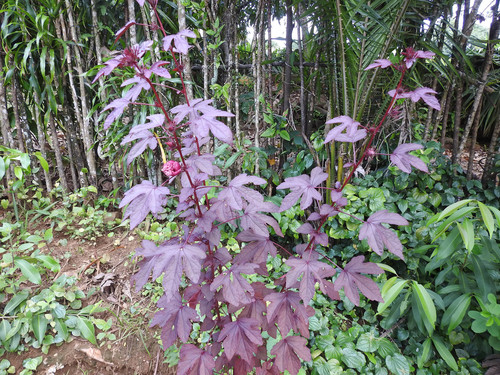
(c) Jorge Bogantes Montero, some rights reserved (CC BY-NC), uploaded by Jorge Bogantes Montero
Description
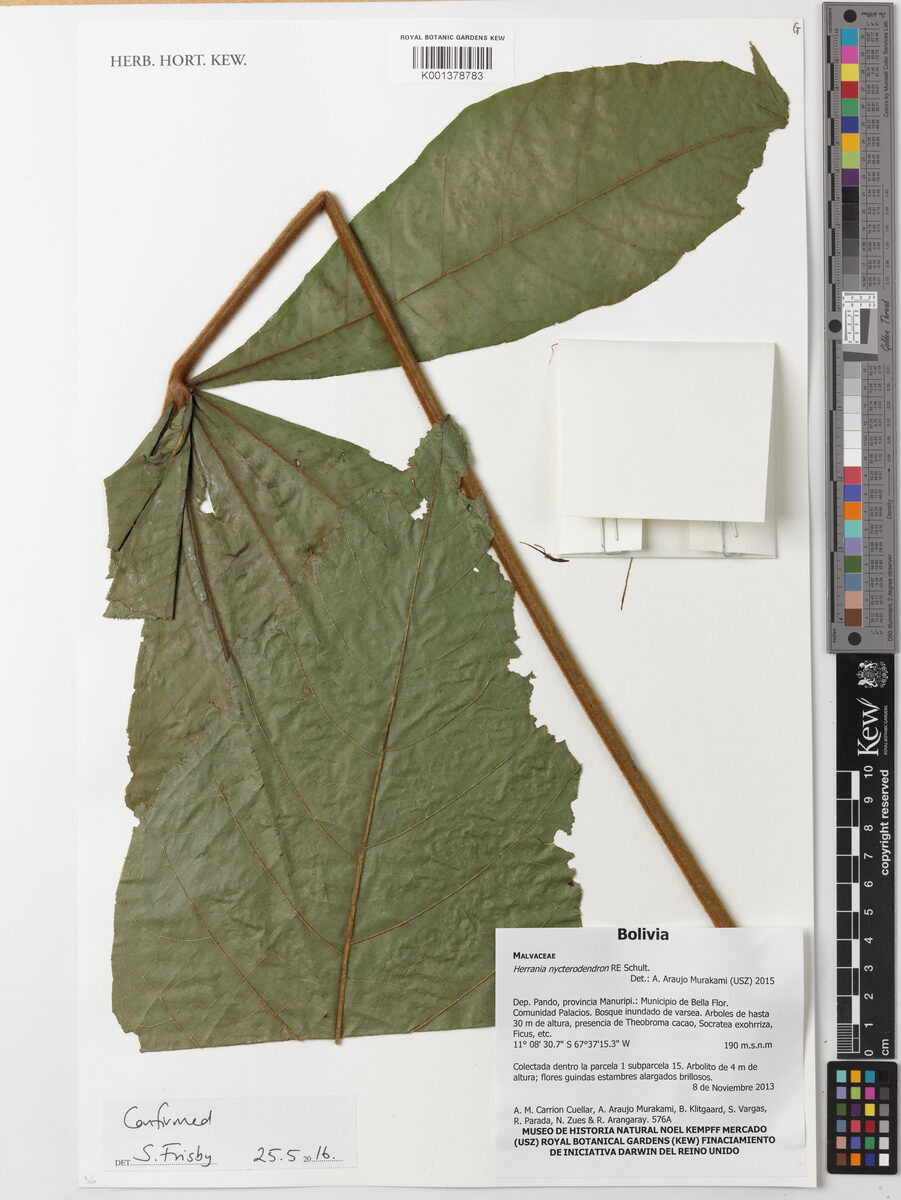
A small tree. It grows 2-5 m tall. The young branches are hairy. The leaves are simple and alternate. They have lobes like fingers on a hand. The leaves are 46 cm long by 17 cm wide. They are pointed at the top and wedge shaped at the base. The fruit are 8-10 cm long by 4-6 cm wide. They are narrowly oval and have 10 long ridges along them. They are pale green at maturity.
Edible Uses
A bitter tasting beverage is made from the seeds. The following report is based mainly on the seeds of H. Nitida, but the seed of this species is likely to be very similar. The seed contains up to 66% oil. It is solid at room temperature, turning liquid at 25 - 29°c. The oil comprises 18 - 26% linoleic acid, 2 - 7% oleic acid and 74 - 76% saturated acids. Fruit - raw. The pulp (aril) surrounding the seeds is delicious and refreshing. This white, acidulous pulp is eaten raw and is most delicious just before the complete ripening of the fruit.
Traditional Uses
The white aril or layer around the seeds is eaten.
This uses section is brief — help expand it
Known Hazards
The fruits of many members of this genus have some or many stinging hairs on them.
Distribution
It is a tropical plant. In Central America it grows between 50-400 m altitude. It grows in lowland forests. It grows in moist to dry sites.
Where It Grows
Andes, Central America, Colombia, Costa Rica, Ecuador, Nicaragua, Panama, South America, Venezuela,
Cultivation
Plants can be grown from seeds.
Other Uses
The following description of the wood is for H. Nitida. The wood of this species is likely to be very similar. The heartwood is pinkish brown, the sapwood pale pink. The wood has no distinctive odour or taste; it is straight- or wavy-grained; coarse-textured. It is light in weight; soft; not durable. It requires sharp tools in order to cut smoothly across the grain.
Notes
Also as Sterculiaceae and Byttneriaceae family.
Synonyms
Also Known As
Cacao de monte, Cacahuillo, Cacao milo, Lis-ub, Tino, Tusiro, Uis-ub, Wesob
References (7)
- Chizmar Fernandez, C., et al, 2009, Plantas comestibles de Centroamerica. Instituto de Biodiversidad, Costa Rica. p 312
- Condit, R., et al, 2011, Trees of Panama and Costa Rica. Princeton Field Guides. p 282
- Garcia-Serrano, C. R., & Del Monte, J. P., 2004, The Use of Tropical Forest (Agroecosystems and wild Plant harvesting) as a Source of Food in the Bribri and Cabecar Cultures in the Caribbean Coast of Costa Rica. Economic Botany 58(1) pp 58-71 (As Theobroma purpureum)
- Grandtner, M. M., 2008, World Dictionary of Trees. Wood and Forest Science Department. Laval University, Quebec, Qc Canada. (Internet database http://www.wdt.qc.ca)
- Grandtner, M. M. & Chevrette, J., 2013, Dictionary of Trees, Volume 2: South America: Nomenclature, Taxonomy and Ecology. Academic Press p 298
Show all 7 references Hide references
- Lopez-Diago, D. & Garcia, N., 2021, Wild edible fruits of Colombia. Biota ColomBiana 22 (2) p 41
- Roa, J. A. G. & Boada, D. S. G., 2018, Fundación para el Fortalecimiento de la Fruticultura y Plantas Alimenticias no Convencionales en Colombia.