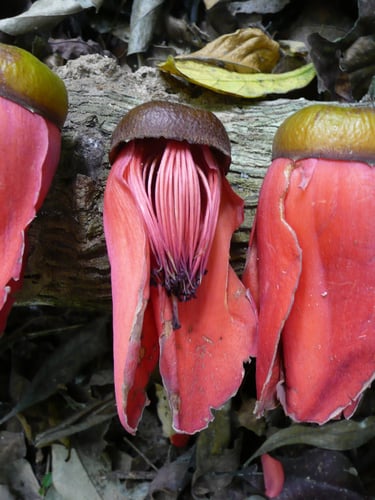
Sterculia monosperma
Ventenat
China chestnut, Seven sister's fruit
iNaturalist· cc0
no rights reserved, uploaded by 葉子
iNaturalist· cc-by-nc
(c) Liu JimFood, some rights reserved (CC BY-NC), uploaded by Liu JimFood
iNaturalist· cc-by-nc
(c) kallima, some rights reserved (CC BY-NC)
Summary
Source: WikipediaSterculia monosperma, also known as Chinese chestnut, Thai chestnut, seven sisters' fruit, and phoenix eye fruit, is a deciduous tropical nut-bearing tree of genus Sterculia.
Description
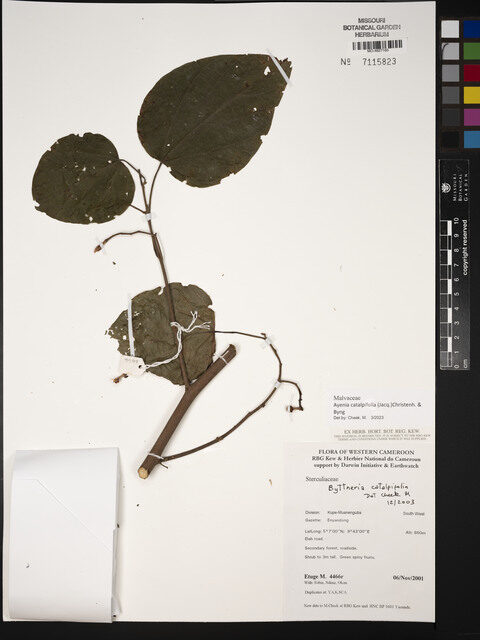
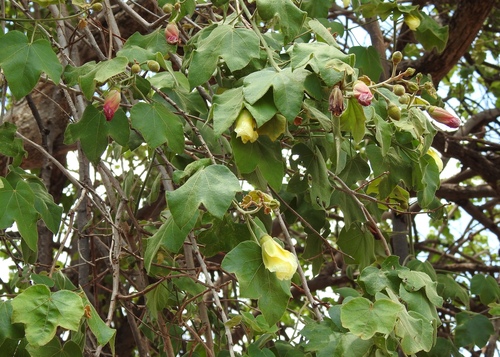
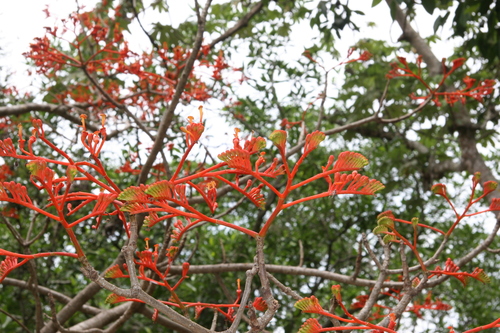
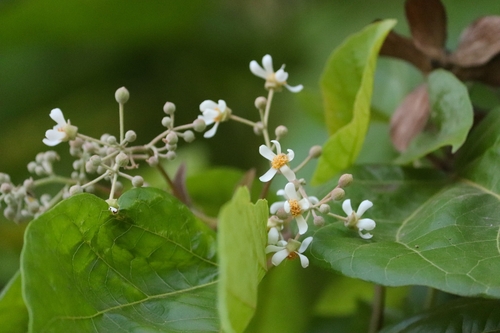
A small tree. It is in the same family as cocoa. The tree is always green. It grows to 10-30 m tall. The main stem is short but with many branches. The young branches are hairy. The leaves are at the tips of the shoots. The leaves are large and leathery. They are 12.5-22.5 cm long by 7.5-12.5 cm wide. Both male and female flowers occur on the same tree. The flowers are pinkish and about 1.2 cm across. They are in drooping panicles. The flowers occur at the ends of branches. The fruit are pods that change from green to red as they ripen. There are usually 3-5 pods in a group. The pods are covered with fine soft hairs. The pods are 7.5-10 cm long and 5 cm wide. The pods split open showing the seeds. There are 1-3 seeds. The seeds are 2.5-5 cm long and 1.2-2.5 cm wide. The seeds are black, shiny and sticky.
Edible Uses
The starchy fruits are eaten raw or cooked. The red fruit is 9cm long and 5cm wide, borne in clusters of 12 or more. Seeds - cooked.
Traditional Uses
The seeds are boiled and eaten.
This uses section is brief — help expand it
Distribution
A tropical plant. It suits the hot, wet tropical lowlands. It is native to S China. The tree occurs mostly in the state of Perak in Malaysia.
Where It Grows
Asia, China, Indochina, Indonesia, Laos, Malaysia, SE Asia, Singapore, Taiwan, Thailand,
Cultivation
Plants are grown from seed.
Propagation
A physical dormancy caused by the hard seed coat of the mature seeds of many species in this genus can be overcome by scarifying the seed. This is carried out by cutting away or abrading some of the seed coat to allow the ingress of water, though great care must be taken not to damage the embryo. The aril surrounding the seed should also be removed - this is easiest when it has been softened through soaking in water. The seeds germinate optimally at temperatures between 20 - 30°c. They can be sown in a nursery seedbed or in containers. A germination rate of about 95%, occurring within about 2 weeks can be expected if the seed has been properly treated.
Production
In Thailand it flowers and fruits October to April.
Other Information
It is sometimes cultivated.
Notes
Also put in the family Sterculiaceae.
Nutrition
| Part | Moisture | kJ | kcal | Protein | Vit A | Vit C | Iron | Zinc |
|---|---|---|---|---|---|---|---|---|
| Fruit | 58.5 | 610 | 146 | 4.5 | — | — | 1.1 | — |
Synonyms
Also Known As
Pheng phok, Pingpo, Noble bottle tree
References (6)
- Chin, H.F., & Yong, H.S., 1996, Malaysian Fruits in Colour. Tropical press, Kuala Lumpur p 67
- Food Composition Tables for use in East Asia FAO http://www.fao.org/infoods/directory No. 977
- Hu, Shiu-ying, 2005, Food Plants of China. The Chinese University Press. p 546 (As Sterculia monosperma var. monosperma)
- Macmillan, H.F. (Revised Barlow, H.S., et al) 1991, Tropical Planting and Gardening. Sixth edition. Malayan Nature Society. Kuala Lumpur. p 309
- Milow, P., et al, 2013, Malaysian species of plants with edible fruits or seeds and their evaluation. International Journal of Fruit Science. 14:1, 1-27
Show all 6 references Hide references
- Thai Forestry Bulletin 23:62-108, 1995