Stenochlaena milnei
Underw.
Fern
iNaturalist· cc-by-nc
(c) Alison Pollack, some rights reserved (CC BY-NC), uploaded by Alison Pollack
iNaturalist· cc-by-nc-nd
(c) David Midgley, some rights reserved (CC BY-NC-ND)
iNaturalist· cc-by-sa
(c) graibeard, some rights reserved (CC BY-SA)
gbif· cc0
President and Fellows of Harvard College
gbif· cc0
President and Fellows of Harvard College
gbif· cc0
President and Fellows of Harvard College
Description
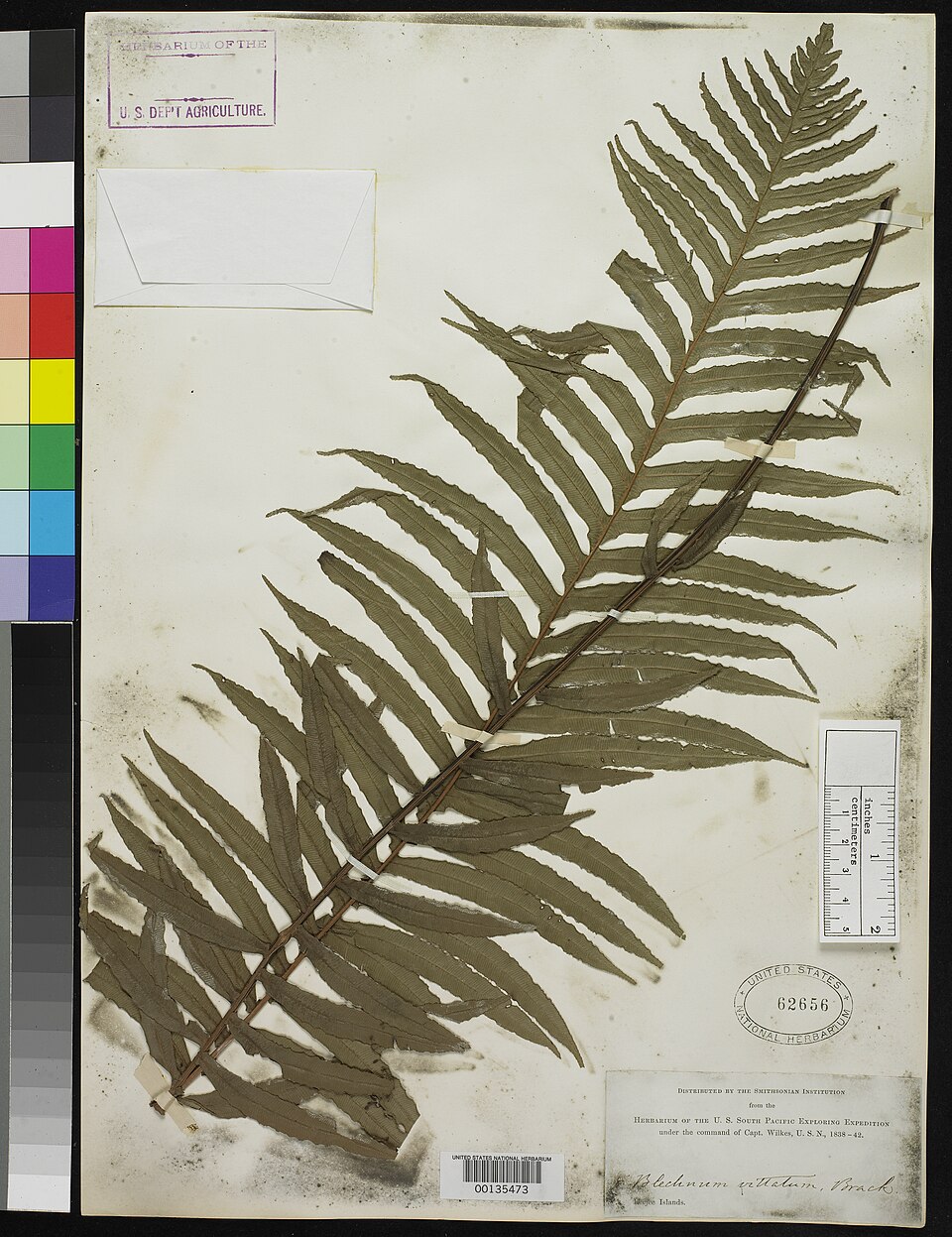
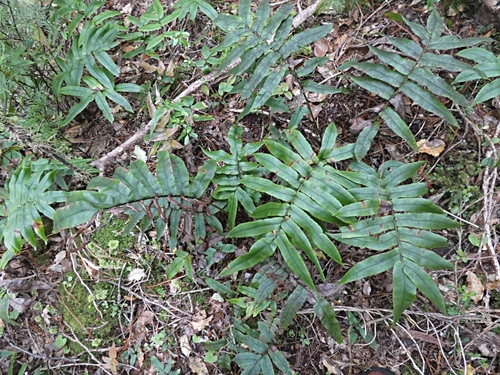
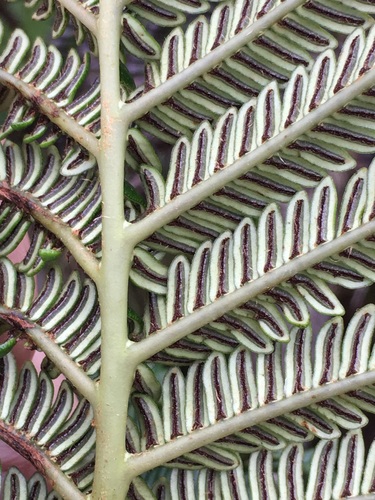
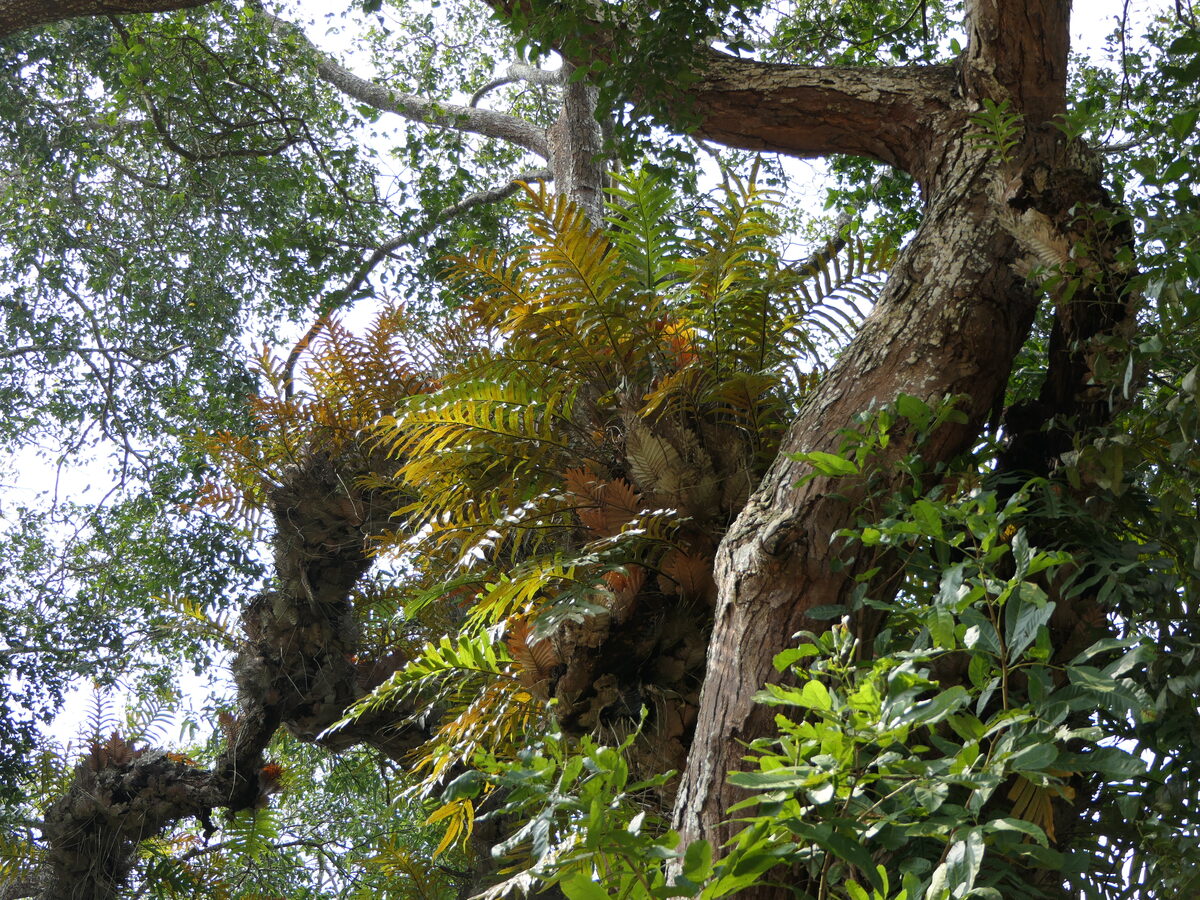
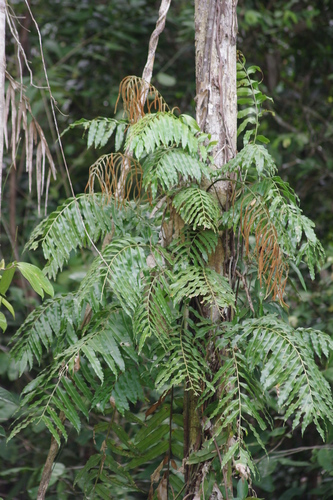
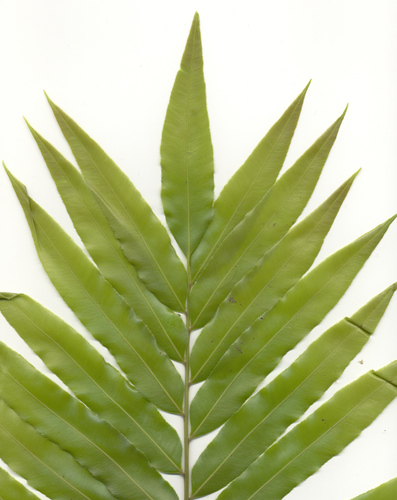
A scrambling creeping fern. It has its base rooted to the ground but climbs up trees. The fronds are widely spaced and come out horizontally but then hang down. The rhizome is 10-15 mm across and pale green. Sometimes it is covered with a bluish bloom. The rhizome is smooth but with dark small circular scales. The fronds are 100 - 150 cm long and 3-5 cm wide. The fertile segments of the divided fronds are 4-7 mm wide and 15-30 cm long. They occur higher on the plant.
Edible Uses
The young leaves are occasionally eaten.
Traditional Uses
The young leaves are probably occasionally eaten.
This uses section is brief — help expand it
Medicinal Uses
Traditional uses include consumption of young leaves.
Distribution
A tropical plant. They occur in well drained lowland rainforest. They can occur in sago swamps and near rivers. They occur between sea level and 300 m altitude. They occur in the Philippines, Papua New Guinea and the Solomon Islands. Often they occur with Stenochlaena palustris but tends to be more robust and in less swampy conditions.
Where It Grows
Asia, Pacific, Papua New Guinea, PNG, Philippines, SE Asia, Solomon Islands,
Notes
There are about 6 Stenochlaena species. They are swamp loving ferns of the tropics and subtropics.
Synonyms
References (3)
- French, B.R., 2010, Food Plants of Solomon Islands. A Compendium. Food Plants International Inc. p 114
- Leach, G.J., Osborne, P.L., 1985, Freshwater Plants of Papua New Guinea. UPNG Press, p 39
- World Checklist of Useful Plant Species 2020. Royal Botanic Gardens, Kew