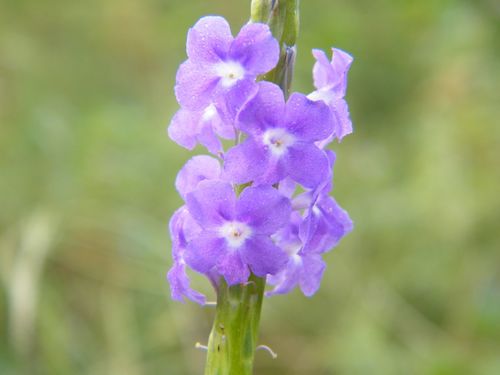
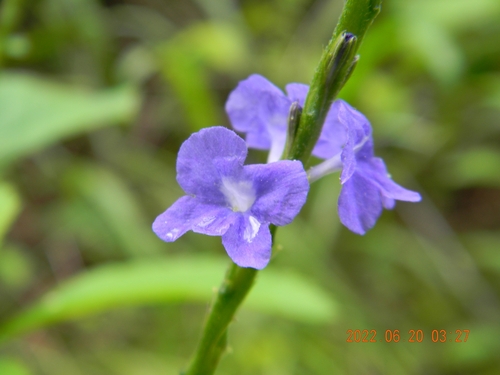
Stachytarpheta cayennensis
(L. C. Richard) Vahl
Nettle-leaved vervain, Snakeweed
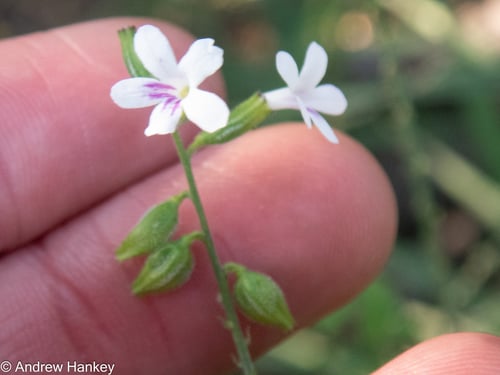
iNaturalist· cc-by-nc
(c) FreckLes, some rights reserved (CC BY-NC), uploaded by FreckLes
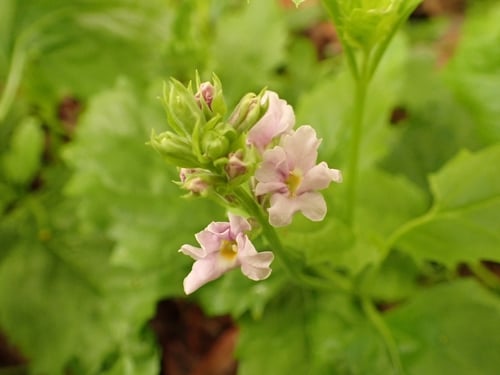
iNaturalist· cc-by
(c) David Anderson, some rights reserved (CC BY), uploaded by David Anderson
iNaturalist· cc-by-nc
(c) sarahm79, some rights reserved (CC BY-NC)
Summary
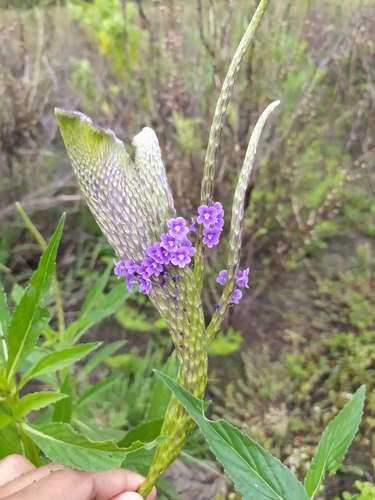
Source: WikipediaStachytarpheta cayennensis is a species of flowering plant in the verbena family known by many English language common names, including blue snakeweed, Cayenne snakeweed, dark-blue snakeweed, bluetop, nettle-leaf porterweed, rattail, rough-leaf false vervain, blue rat's tail, Brazilian tea, Cayenne vervain, false verbena, joee, nettleleaf velvetberry, and Cayenne porterweed. Names in other languages include honagasō (Japanese), gervão-urticante (Brazilian Portuguese), piche de gato, rabo de zorro (Spanish), herbe à chenille, herbe bleue, queue de rat (French), ōi or ōwī (Hawaiian), sakura or ouchung (Chuukese), and tiāki (Māori). It is native to the Americas, from Mexico south through Central and South America to Argentina, as well as many islands of the Caribbean. It is known in many other parts of the world as an introduced species, including regions in Africa, India, Indonesia, Australia, Florida in the United States, and many Pacific Islands. Its distribution is now considered pantropical. In many places, such as New Caledonia, it has become an invasive species. This plant is a perennial herb or shrub growing up to 2 or 2.5 meters tall. It has an upright, branching stem, sometimes with a woody base. The leaves are oppositely arranged. The blades are up to 8 to 10 centimeters long, oval in shape with sharply toothed edges, and rough-textured or wrinkly on the upper surfaces. The inflorescence is a very narrow spike up to 40 to 45 centimeters long covered in pointed bracts. Occasional flower corollas bloom from between the bracts. The flowers are deep purple-blue to lavender with pale centers, and white-flowered plants are known. The flowers last a single day before wilting. The plant was named for Cayenne, the capital of French Guiana. In some places this plant is simply naturalized. It may be a casual weed, a "garden thug", a crop pest, or an invasive species with effects on the local ecosystem. It is well-adapted to disturbed, cultivated, and wasted land. It grows in pastures, on cropland, and on roadsides. In grazed fields it propagates rapidly because livestock find it distasteful, avoid it, and selectively graze out the other vegetation. In rainy areas it can form thick beds, but it easily persists in dry areas. In Florida, this Stachytarpheta is often confused with a closely related native species, S. jamaicensis. It has appealing flower displays that attract butterflies; in its native range it was observed to attract 98 different species. It is mistakenly sold as the native ornamental, planted, and allowed to take hold. It then has the potential to become a noxious weed. Hybrids of the two species also occur when it is introduced. Intentional plantings for ornamental purposes are a common way that this plant spreads. It is also introduced when the seed is transported in garden waste, rainwater, fodder, and contaminated seed shipments, and on vehicles. Methods of control include keeping the plants cut down or pulling them up, taking care to remove the large roots. Herbicides such as glyphosate are used. This plant has some uses in traditional medicine. Several Latin American peoples recognize extracts of the plant as a treatment to ease the symptoms of malaria. The boiled juice or a tea made from the leaves or the whole plant is taken to relieve fever and other symptoms. It is also used for dysentery, pain, and liver disorders. A tea of the leaves is taken to help control diabetes in Peru and other areas. Laboratory tests indicate that the plant has anti-inflammatory properties.
Description
An erect woody herb or shrub. It keeps growing from year to year. It grows 1-2 m high. The leaves are opposite and have shallow teeth. They are 5-11 cm long by 3-5 cm wide. The flowers are in a group at the top of the plant. The flowers are blue. They are 2 mm across. The fruit are 3-4 mm long by 2 mm wide. They contain 2 nutlets.
Edible Uses
The stem tips are used as a spice and tea. The leaves are used for flavoring and as a vegetable, and the flower buds and stems are also edible.
Traditional Uses
The stem tips are used as a spice and also as a tea.
This uses section is brief — help expand it
Medicinal Uses
The stem tips are used as a traditional tea.
Distribution
It is a tropical plant. It grows on clay and loam soils and along the edges of creeks. In Africa it grows between 10-1,200 m above sea level. In Argentina it grows below 500 m above sea level.
Where It Grows
Africa, xAmerican Samoa, Angola, Argentina, Australia, Benin, Brazil, Caribbean, Central Africa, Central African Republic, CAR, Central America*, Christmas Island, Colombia, Cuba*, Dominican Republic, East Africa, Ecuador, Fiji, Gabon, Guatemala, Guiana, Guianas, Guyana, Haiti, Hawaii, Honduras, Indochina, Jamaica, Japan, Kiribati, Lesser Antilles*, Marquesas, Mexico, Micronesia, Mozambique, New Caledonia, Nicaragua, Nigeria, North America, Pacific, Palau, Papua New Guinea, PNG, Paraguay, Peru, Puerto Rico, Samoa, SE Asia, Sierra Leone, Singapore, Solomon Islands, South America*, Suriname, Thailand, Tonga, Tuvalu, Uruguay, USA, Venezuela, Virgin Islands, West Africa, West Indies*, Zimbabwe,
Other Uses
The plant yields a latex that is used medicinally.
Synonyms
Also Known As
Alacran, Baren tokantsa, Binawe, Erva-do-sumidouro, Gervao, Gervao-roxo, Hierba de playa, Katip ujuk, Playa kiwa, Rabo de raton, Rincao, Runa llama, Seka rawa
References (18)
- Burkill, H. M., 1985, The useful plants of west tropical Africa, Vol. 5. Kew.
- Enum. pl. 1:208. 1804 "cajanensis"
- Franklin, J., Keppel, G., & Whistler, W., 2008, The vegetation and flora of Lakeba, Nayau and Aiwa Islands, Central Lau Group, Fiji. Micronesica 40(1/2): 169–225, 2008
- Hussey, B.M.J., Keighery, G.J., Cousens, R.D., Dodd, J., Lloyd, S.G., 1997, Western Weeds. A guide to the weeds of Western Australia. Plant Protection Society of Western Australia. p 228
- Kermath, B. M., et al, 2014, Food Plants in the Americas: A survey of the domesticated, cultivated and wild plants used for Human food in North, Central and South America and the Caribbean. On line draft. p 836
Show all 18 references Hide references
- Kinupp, V. F., 2007, Plantas alimenticias nao-convencionais da regiao metropolitana de Porto Alegre, RS, Brazil p 107
- Lautenschläger, T., et al, 2018, First large-scale ethnobotanical survey in the province of Uíge, northern Angola. Journal of Ethnobiology and Ethnomedicine (2018) 14:51
- Lazarides, M. & Hince, B., 1993, Handbook of Economic Plants of Australia, CSIRO. p 228
- Paczkowska, G . & Chapman, A.R., 2000, The Western Australian Flora. A Descriptive Calatogue. Western Australian Herbarium. p 567
- Plants of Haiti Smithsonian Institute http://botany.si.edu/antilles/West Indies
- Roa, J. A. G. & Boada, D. S. G., 2018, Fundación para el Fortalecimiento de la Fruticultura y Plantas Alimenticias no Convencionales en Colombia.
- Smith, N., Mori, S.A., et al, 2004, Flowering Plants of the Neotropics. Princeton. p 388
- Staples, G.W. and Herbst, D.R., 2005, A tropical Garden Flora. Bishop Museum Press, Honolulu, Hawaii. p 569
- Thaman, R. R, 2016, The flora of Tuvalu. Atoll Research Bulletin No. 611. Smithsonian Institute p 118
- Torre, de la, L., et al, 2008, Enciclopedia de las Plantas Útiles del Ecuador. Herbario QCA. Pontificia Universidad Católica del Ecuador. p 618
- Wheeler, J.R.(ed.), 1992, Flora of the Kimberley Region. CALM, Western Australian Herbarium, p 792
- World Checklist of Useful Plant Species 2020. Royal Botanic Gardens, Kew
- Zon, A.P.M. van der, Grubben, G.J.H., 1976, Les legumes-feuilles spontanes et cultives du Sud-Dahomey, Communication 65, Royal Tropical Institute, Amsterdam, p 94