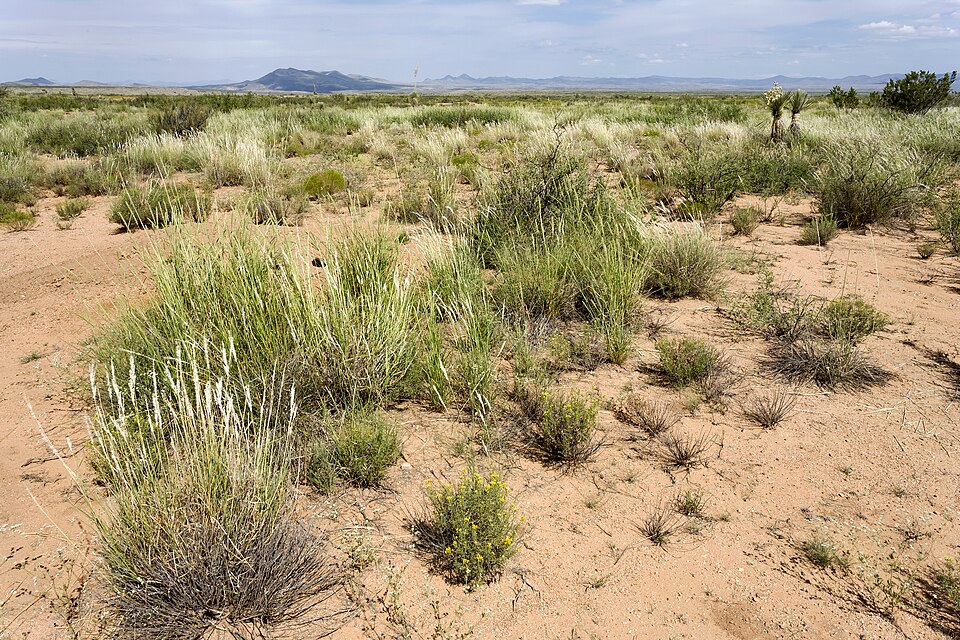
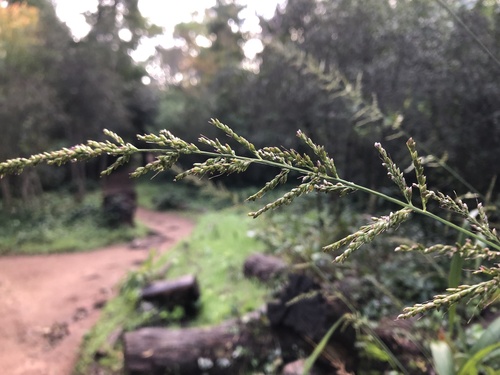
Sporobolus spicatus
(Vahl) Kunth
Drop seed grass, Salt grass
iNaturalist· cc-by-nc
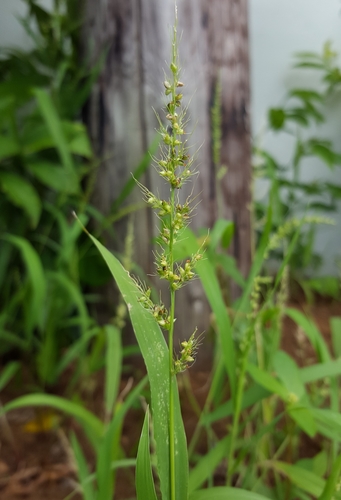
(c) a-young, some rights reserved (CC BY-NC), uploaded by a-young
iNaturalist· cc-by-nc
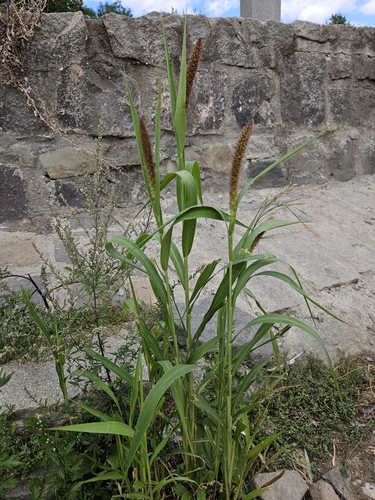
(c) Terra, Expo City Dubai, some rights reserved (CC BY-NC)
Summary
Source: WikipediaSporobolus spicatus, also known as salt grass, is a halophyte.
Description
A herb. It is a spiny grass. It keeps growing from year to year. It grows 20-30 cm high. It forms short tufts. It has runners and forms mats. The leaves are pale green and narrow. The flowers are in a cylinder shaped group. This can be 8.5 cm long and is pale yellow.
Edible Uses
The seeds are used as a cereal grain and serve as a famine food.
Distribution
In Bahrain it grows in sandy or gravelly soils. It can tolerate alkaline soils. It can tolerate salty soils. It grows in the drier parts of Africa. It can fix sand dunes. It grows from sea level to 2,600 m above sea level. It can grow in arid places.
Where It Grows
Africa, Algeria, Angola, Bahrain, Botswana, Burundi, Cape Verde, Central Africa, Chad, Congo, Djibouti, East Africa, Egypt, Ethiopia, India, Kenya, Libya, Madagascar, Malawi, Mali, Mauritania, Mediterranean, Middle East, Morocco, Namibia, Niger, Nigeria, North Africa, Oman, Qatar, Saudi Arabia, Senegal, Socotra, Somalia, South Africa, Southern Africa, Sudan, Tanzania, Tunisia, Uganda, United Arab Emirates, UAE, West Africa, Yemen, Zambia, Zimbabwe,
Other Information
It is a famine food.
Notes
There are about 160 Sporobolus species. They are mainly in the tropics and subtropics. It has a C4 pathway.
Also Known As
Akrich, Beurgu, Defera, Halfa, Izigzig, Ramaas
References (10)
- Burkill, H. M., 1985, The useful plants of west tropical Africa, Vol. 2. Kew.
- Herb, E. A., 1981,
- Jardin, C., 1970, List of Foods Used In Africa, FAO Nutrition Information Document Series No 2. p 8
- Karim, F. M. & Dakheel, A, J., 2006, Salt-tolerant plants of the United Arab Emirates. 2006. International Center for Biosaline Agriculture, Dubai, UAE. p 98
- Monod, T., (On wild edible plants of Mauritania)
Show all 10 references Hide references
- Peters, C. R., O'Brien, E. M., and Drummond, R.B., 1992, Edible Wild plants of Sub-saharan Africa. Kew. p 28
- Phillips, D.C., 1988, Wild Flowers of Bahrain. A Field Guide to Herbs, Shrubs, and Trees. Privately published. p 120
- Revis. gramin. 67. 1829
- Royal Botanic Gardens, Kew (1999). Survey of Economic Plants for Arid and Semi-Arid Lands (SEPASAL) database. Published on the Internet; http://www.rbgkew.org.uk/ceb/sepasal/internet [Accessed 4th June 2011]
- World Checklist of Useful Plant Species 2020. Royal Botanic Gardens, Kew