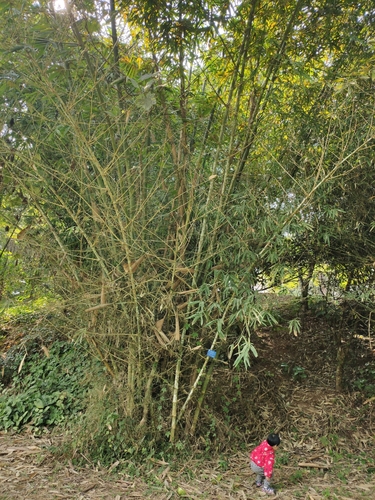
Bambusa pallida
Munro
iNaturalist· cc-by
(c) Yi CHEN, some rights reserved (CC BY), uploaded by Yi CHEN
wikimedia· cc-by-sa
Wikimedia Commons - Dvellakat
wikimedia· cc-by-sa
Wikimedia Commons - Yercaud-elango
Description
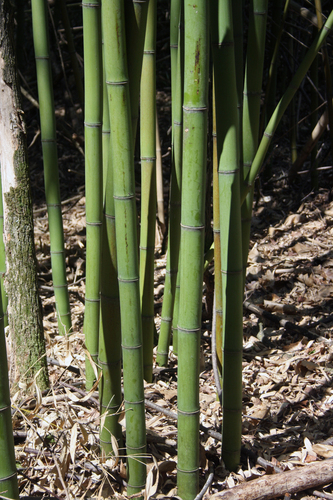
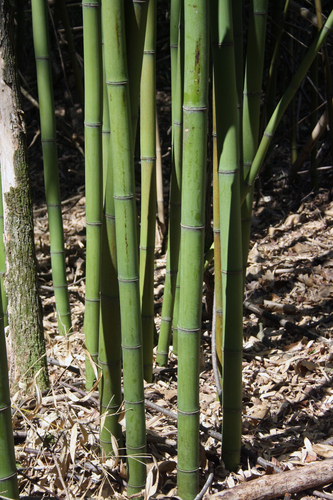
A large bamboo. It grows in thick clumps. It grows 15 m tall. The stems are olive green. They are 6-8 cm across. The sheath on the stem is broad and straight. The leaves are narrow and 10-20 cm long by 1-2 cm wide. It occasionally flowers with a very large flower cluster.
Edible Uses
The young shoots are cooked and eaten as a vegetable. The young rhizome is processed, then cooked and eaten as a vegetable.
Traditional Uses
The young rhizome is processed then cooked and eaten as a vegetable. The young shoots are cooked and eaten.
This uses section is brief — help expand it
Distribution
It is a subtropical plant. It grows in open areas between 100-2,000 m above sea level.
Where It Grows
Asia, Bangladesh, Bhutan, China, India, Indochina, Laos, Myanmar, Northeastern India, SE Asia, Sikkim, Thailand,
Synonyms
Also Known As
Bakhal, Bijli, Burwal, Gya-wa, Homeng, Jowa, Kharra, Karil, Loto, Mai phiu, Makal, Mokal bah, Pashipo, Phai phio, Phai song kham, Pshi, Pushee, Seskien, Skhen, Tesero, Tneng, Usken, Walkthai, Watoi
References (7)
- Bandyopadhyay, S. et al, 2009, Wild edible plants of Koch Bihar district, West Bengal. Natural Products Radiance 8(1) 64-72
- Kumari, P, 2019, Bambusoideae in India: An Updated Enumeration. Plantae Scientia : Volume 01, Issue 06, March 2019
- Lim, T. K., 2015, Edible Medicinal and Non Medicinal Plants. Volume 9, Modified Stems, Roots, Bulbs. Springer p 15
- Marandi, R. R. & Britto, S. J., 2015, Medicinal Properties of Edible Weeds of Crop Fields and Wild plants Eaten by Oraon Tribals of Latehar District, Jharkhand. International Journal of Life Science and Pharma Research. Vo. 5. (2) April 2015
- Patiri, B. & Borah, A., 2007, Wild Edible Plants of Assam. Geethaki Publishers. p 160
Show all 7 references Hide references
- Singh, P., et al, 2019 Plants of Indian Himalayan region. Part 1 Botanical Surbey of India. p 32
- Upreti, T.C. and Sundriyal, R. C., 2001, Bamboo and cane resources of Arunachal Pradesh: Utilization pattern and implications for management. Bamboo Science and Culture: The Journal of the American Bamboo Society 15(1):20-34