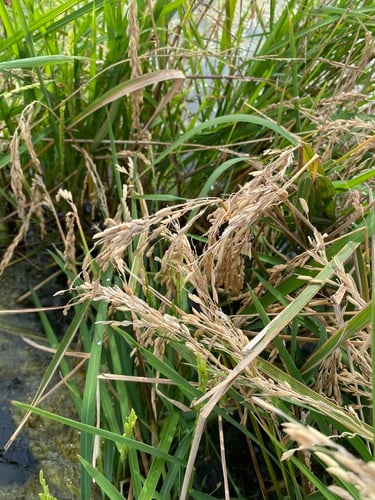
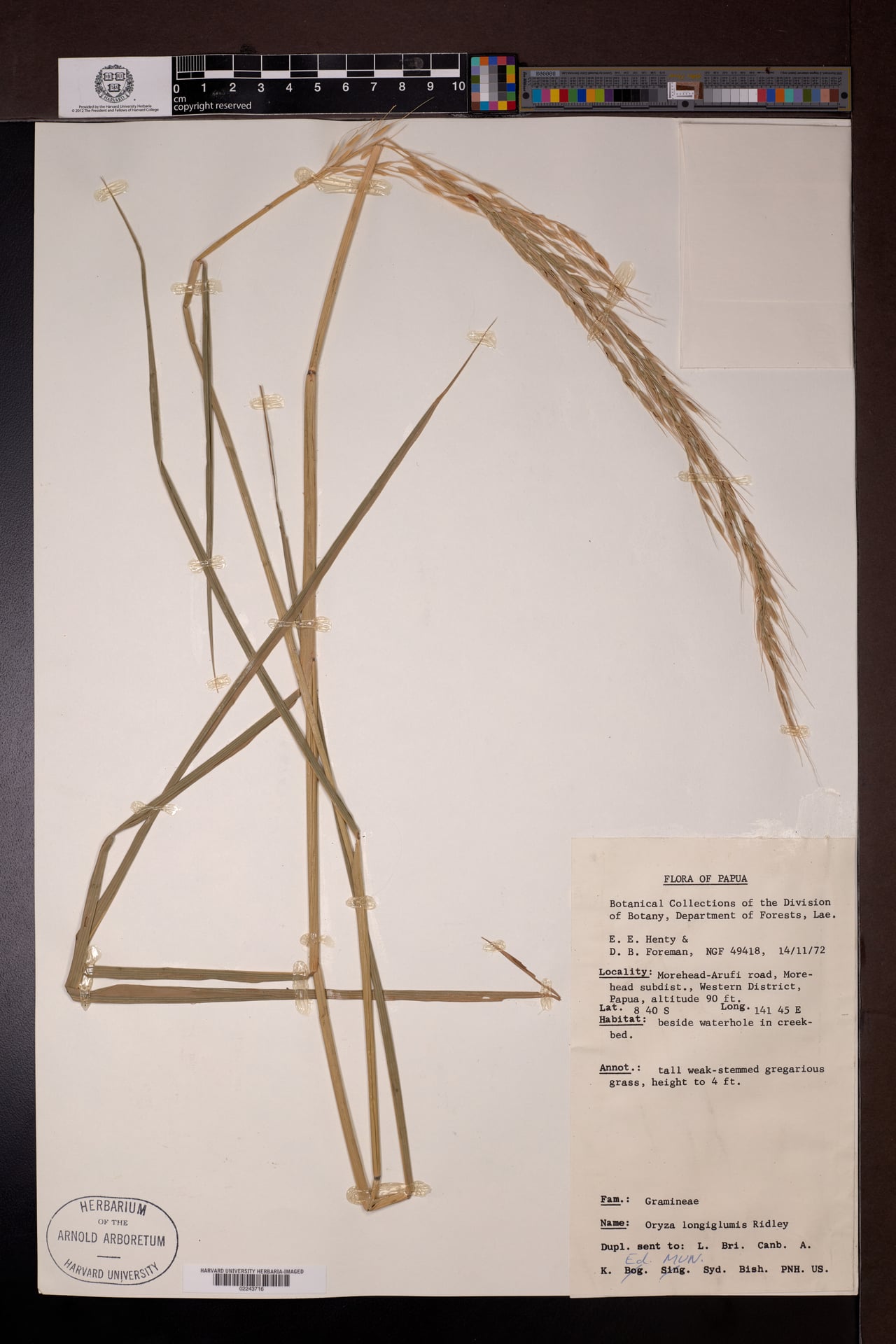
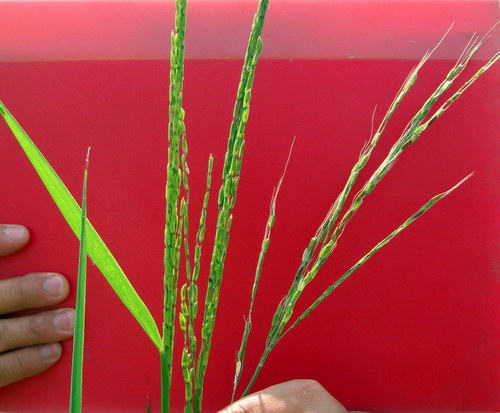
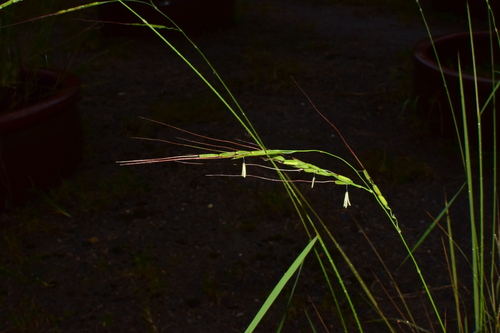
Sporobolus giganteus
Nash
Giant Dropseed
iNaturalist· cc-by-nc
(c) James Bailey, some rights reserved (CC BY-NC), uploaded by James Bailey
iNaturalist· cc-by-nc
(c) Nathan Taylor, some rights reserved (CC BY-NC)
iNaturalist· cc0
no rights reserved
Summary
Source: WikipediaSporobolus giganteus is a perennial bunchgrass reaching 2 m (6ft 7in) tall. Hermaphroditic and wind-pollinated, it grows in light sandy and medium loamy soils with good drainage. It thrives in mildly acid to basic pH conditions and requires full sun. The plant tolerates both dry and moist soils and is drought-resistant.
Description
Sporobolus giganteus is a perennial bunchgrass reaching 2 m (6ft 7in) tall. Hermaphroditic and wind-pollinated, it grows in light sandy and medium loamy soils with good drainage. It thrives in mildly acid to basic pH conditions and requires full sun. The plant tolerates both dry and moist soils and is drought-resistant.
Edible Uses
The seed can be eaten raw or cooked — ground into flour for porridge, or used as a cereal substitute in bread, cakes, and similar baked goods. Although the seed is relatively easy to harvest, it is very small, and its use as a food source has largely fallen out of practice.
Traditional Uses
The seeds are threshed and ground with corn into a fine flour then used to make a porridge. They add flavour to the cornmeal.
This uses section is brief — help expand it
Medicinal Uses
None known
Distribution
It is a subtropical plant.
Where It Grows
Central America, Mexico, North America, USA,
Cultivation
We have very little information on this species and do not know if it will be hardy in Britain. The following notes are based on the general needs of the genus. Succeeds in any well drained soil in a sunny position.
Propagation
Sow seed in spring in a greenhouse, barely covering it; germination should occur within two weeks. Prick seedlings into individual pots once large enough to handle and plant out during summer if sufficiently developed, otherwise overwinter them in the greenhouse and plant out in late spring the following year. For division in spring, larger clumps can go directly into permanent positions, while smaller divisions do best potted up and grown on in a lightly shaded cold frame until well established, then planted out in summer.
Other Uses
None known Special Uses
Notes
There are about 160 Sporobolus species. They are mainly in the tropics and subtropics.
References (4)
- Bull. Torrey Bot. Club 25:88. 1898
- Moerman, D. F., 2010, Native American Ethnobotany. Timber Press. p 542
- Plants for a Future database, The Field, Penpol, Lostwithiel, Cornwall, PL22 0NG, UK. http://www.scs.leeds.ac.uk/pfaf/
- World Checklist of Useful Plant Species 2020. Royal Botanic Gardens, Kew