Bambusa vulgaris
Schrader ex Wendl.
Common bamboo
iNaturalist· cc-by-nc
(c) darilismelendez84, some rights reserved (CC BY-NC), uploaded by darilismelendez84
iNaturalist· cc-by-nc
(c) Maria Andrea A, some rights reserved (CC BY-NC), uploaded by Maria Andrea A
iNaturalist· cc-by-nc
(c) David Bree, some rights reserved (CC BY-NC), uploaded by David Bree
Summary
Source: WikipediaBambusa vulgaris, common bamboo, is an open-clump type bamboo species. It is native to Bangladesh, India, Sri Lanka, Southeast Asia, and to the province of Yunnan in southern China, but it has been widely cultivated in many other places and has become naturalized in several regions. Among bamboo species, it is one of the largest and most easily recognized.
Description
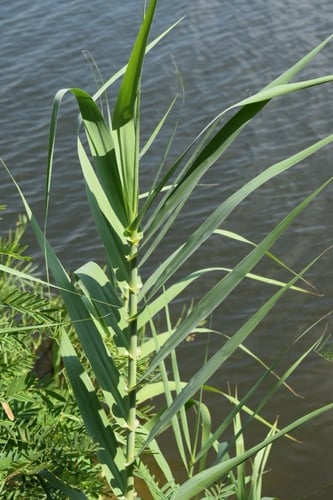
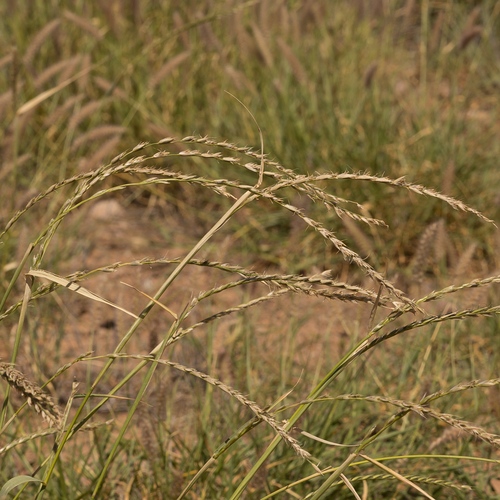
An erect clump forming spineless bamboo. It is a large bamboo with strong stalks used for buildings. The stalks can be 20 m tall and 5-10 cm across at the base. They are often not straight. The stalks can be green and glossy or yellow or yellow with green stripes. It very rarely flowers. The distinctive culm sheath (top of the leaf that is wrapped around the stalk) helps identify the plant. The culm sheath is triangular and 15-45 cm long by 20 cm wide. The edges are hairy. The leaf blade is 6-30 cm long by 1-4 cm wide. The stems are smooth and usually yellow green and smaller than Kauayan-tinik of the Philippines and with a thinner wall.
Edible Uses
Edible Parts: Shoots Edible Uses: Drink Tea Edible portion: Shoots. Young shoots - cooked. They can be eaten with rice. The shoots are 5 - 9cm in diameter. A decoction of the growing point of the plant, mixed with the roots of Job's tears (Coix lacryma-jobi) gives a refreshing drink. The shoots remain buttercup yellow after cooking. Chemical composition of young shoots per 100 g edible portion: Water 88-90 g, Protein 1.8-2.6 g, Fat 4.1-7.2 g, Carbohydrates 0-0.4 g, Fibre 1.1-1.2 g, Ash 0.8-0.9 g, Ca 22.8-28.6 mg, P 27.5-37 mg, Fe 1.1-1.4 mg, Vitamin C 0-3.1 mg.
Traditional Uses
The very young shoots are cooked and eaten. The shoots are bitter. They are cooked, or added to soups and made into pickles.
This uses section is brief — help expand it
Medicinal Uses
Antirheumatic Astringent Emmenagogue Febrifuge Malaria The stems are used as a remedy for rheumatism. The shoots are used to treat abscesses and malaria. The bark is astringent and emmenagogue. The leaves are used to treat heart problems and malaria. They are boiled and used in a bath to ease fevers. A decoction of boiled leaves is used by women as a 'clean-out' for dilation and curettage, and also to aid the expulsion of the afterbirth. The leaves are boiled as a hot tea , which induces profuse perspiration in treating a fever. The sap is used to treat fever and haematuria.
Known Hazards
Among all bamboos, only shoots of B. vulgaris contains taxiphyllin (a cyanogenic glycoside) that functions as an enzyme inhibitor in the human body when released, but degrades readily in boiling water. It is highly toxic, and the lethal dose for humans is about 50–60 mg. A dose of 25 mg cyanogenic glycoside fed to rats (100–120 g body weight) caused clinical signs of toxicity, including apnoea, ataxia, and paresis. Horses in Pará, Brazil, were diagnosed with clinical signs of somnolence and severe ataxia after ingesting B. vulgaris. Farmers in Africa sometimes prefer to buy it rather than plant it, as they believe it harms the soil.
Distribution
A tropical plant. It grows throughout the tropics and subtropics. It grows up to 1,200 m altitude. It does best at low altitudes. It can stand frost down to -3°C. It has been introduced to PNG and is common in the lowlands. (A different large bamboo is grown and eaten in the highlands of Papua New Guinea.) In the Cairns Botanical Gardens. In XTBG Yunnan. It suits hardiness zones 9-12.
Where It Grows
Africa, America, Asia, Australia, Bangladesh, British Indian Ocean Terr., BIOT, Burkina Faso, Cambodia, Cameroon, Canada, Central Africa, Central African Republic, CAR, Central America, China, Congo DR, Costa Rica, Côte d'Ivoire, Dominican Republic, East Africa, East Timor, Fiji, Gabon, Ghana, Grenada, Guam, Guinea, Guinée, Guinea-Bissau, Guyana, Haiti, Hawaii, Himalayas, India, Indochina, Indonesia, Ivory Coast, Kenya, Kiribati, Laos, Madagascar, Malawi, Malaysia, Marquesas, Micronesia, Mozambique, Myanmar, Nauru, Nepal, Nigeria, Northeastern India, Pacific, Palau, Papua New Guinea, PNG, Philippines, Rotuma, Samoa, SE Asia, Senegal, Sierra Leone, Southern Africa, South America, Sri Lanka, St. Kitts and Nevis, Sudan, Tanzania, Thailand, Timor-Leste, Tonga, Uganda, USA, Vanuatu, Vietnam, West Africa, West Indies, Yap, Zambia,
Cultivation
It grows best in areas where annual daytime temperatures are within the range 22 - 28c, but can tolerate 9 - 32c. The stems die back to the ground if exposed to frost, but if the frost was not too severe the plant may resprout from the rhizomes. It prefers a mean annual rainfall in the range 1,200 - 2,500mm, but tolerates 700 - 4,500mm. Requires a moist, fertile, humus rich soil in full sun or dappled shade in warm humid conditions. Prefers a pH in the range 5 - 6, tolerating 4.5 - 6.5. Widely grown throughout the tropics for its many uses and as an ornamental, the plant sometimes escapes from cultivation and becomes naturalized. It forms extensive monospecific stands, excluding other plant species. It is classified as 'Invasive' in some Pacific Islands. Harvesting normally starts 3 years after planting with full production being reached after 6 - 8 years. Selective cutting of stems 2-year-old or older is recommended. In tropical Africa it has been recommended to selectively harvest one half to two-thirds of the adult stems on a clump every 3 - 4 years. Young shoots for consumption should be harvested in the first week of their emergence. Annual yields of up to 20 tonnes (dry weight) of the canes per hectare have been achieved. Bamboos have an interesting method of growth. Each plant produces a number of new stems annually - these stems grow to their maximum height in their first year of growth, subsequent growth in the stem being limited to the production of new side branches and leaves. In the case of some mature tropical species the new stem could be as much as 30 metres tall, with daily increases in height of 30cm or more during their peak growth time. This makes them some of the fastest-growing species in the world. Bamboos in general are usually monocarpic, living for many years before flowering, then flowering and seeding profusely for a period of 1 - 3 years before usually dying. Flowering is uncommon in Bambusa vulgaris. When a stem flowers, it produces a large number of flowers, but no fruits. Low pollen viability due to irregular meiosis seems to be one of the reasons for the absence of fruiting. Eventually the stem dies, but the clump usually survives. Production: Offsets can produce mature clumps in 7 years. They grow very quickly. Haulms can grow 4 m high in 2 weeks. Bambusa vulgaris 'Wamin' - Dwarf Buddha Belly Bamboo is a dwarf bamboo perfect by a pond but will fit just about any landscape. Swollen attractive internodes to 3m. USDA zone 9-12. Common Bamboo can be harvested for shoots in spring, usually from late spring to early summer, around April to June. The culms are typically harvested in late summer to autumn, around August to October. Common Bamboo can flower every 30 to 100 years, with flowering typically occurring in late summer. The exact timing may vary based on environmental conditions.
Propagation
Seed - surface sow in containers as soon as it is ripe, preferably at a temperature around 20c. Do not allow the compost to dry out. Germination usually takes place fairly quickly so long as the seed is of good quality, though it can take 3 - 6 months. Prick out the seedlings into containers when they are large enough to handle and grow on in a lightly shaded place until large enough to plant out. Plants only flower at intervals of many years and so seed is rarely available. Division as new growth commences. Take divisions with at least three canes in the clump, trying to cause as little root disturbance to the main plant as possible. Grow them on in light shade in pots of a high fertility sandy medium. Mist the foliage regularly until plants are established. Plant them out into their permanent positions when a good root system has developed, which can take a year or more.
Other Uses
Basketry Biomass Broom Fencing Fuel Furniture Insecticide Paper Pipes Plant support Roofing Shelterbelt Soil stabilization Wood Other uses rating: High (4/5). Common Bamboo is used for erosion control, as a windbreak, and as a sustainable source of timber for construction, furniture, and crafts. It can also provide shade and habitat for wildlife. The split stems are used for making brooms, fences, roofs, roof tiles, baskets etc. The acrid smoke produced from burning the stem is used as a mosquito repellent.The stems serve as poles to support banana plants.The working and machining properties of the stems are poor. The stems are not straight, not easy to split, and inflexible, but they are thick-walled and initially strong. The canes have a high starch content, making them more susceptible to powder post beetle and dry wood termite than many other bamboos (such as Dendrocalamus giganteus), therefore they are not normally used for long term constructions. They are used for light construction, fences, tool handles, handicrafts, irrigation pipes, lattices, bridges, housing, furniture, boat masts etc. They are a good source of pulp for making paper.The canes are used for fuel. Agroforestry Uses: Used for shelterbelts and erosion control on sloping ground and stream banks. Planted as a barrier and marker along boundaries. Special Uses Carbon Farming Food Forest
Production
Offsets can produce mature clumps in 7 years. They grow very quickly. Haulms can grow 4 m high in 2 weeks.
Other Information
The plant is widespread in Papua New Guinea and is important for building. As a food plant it is only of minor importance. It is a cultivated plant. It is sold in local markets.
Notes
There are about 120 Bambusa species. They are tropical and subtropical in Asia. Chemical composition of young shoots per 100 g edible portion: Water 88-90 g, Protein 1.8-2.6 g, Fat 4.1-7.2 g, Carbohydrates 0-0.4 g, Fibre 1.1-1.2 g, Ash 0.8-0.9 g, Ca 22.8-28.6 mg, P 27.5-37 mg, Fe 1.1-1.4 mg, Vitamin C 0-3.1 mg,
Nutrition
| Part | Moisture | kJ | kcal | Protein | Vit A | Vit C | Iron | Zinc |
|---|---|---|---|---|---|---|---|---|
| Shoots | 72 | 17 | 2.5 | — | — | — | — | — |
Synonyms
Also Known As
Aundmi, Awi ampel, Bachiabas, Bakal, Bamboo, Bambu kuning, Basini bans, Boh, Buera bueta, Buloh kuning, Buloh minyak, Daisan-chiku, Domar, Hatu mad, Ibia, Jaibaru wa, Jajang ampel, Jajang gading, Kabaloan, Kamaundmi, Kauayan-kiling, Murangi, Obros kunbuntol, Pai mai, Pau, Phai-bongkham, Phai-luang, Po-o, Pring ampel, Pring legi, Pring tutul, Rabuang, Ranai-shilot, Robung, Russei kaew, S'ang kh'am, Shwe-wa, Sunderkania bans, Tamelang, Tatem, Tumpuamng, Tutu, Uasur, Vadud, Vairua, Wanet
References (61)
- Ambasta S.P. (Ed.), 2000, The Useful Plants of India. CSIR India. p 67
- Anderson, E. F., 1993, Plants and people of the Golden Triangle. Dioscorides Press. p 203
- Ashton, M. S., et al 1997, A Field Guide to the Common Trees and Shrubs of Sri Lanka. WHT Publications Ltd. p 72
- Bandyopadhyay, S. et al, 2009, Wild edible plants of Koch Bihar district, West Bengal. Natural Products Radiance 8(1) 64-72
- Bircher, A. G. & Bircher, W. H., 2000, Encyclopedia of Fruit Trees and Edible Flowering Plants in Egypt and the Subtropics. AUC Press. p 53
Show all 61 references Hide references
- Borrell, O.W., 1989, An Annotated Checklist of the Flora of Kairiru Island, New Guinea. Marcellin College, Victoria Australia. p 22
- Brink, M., 2008. Bambusa vulgaris Schrad. ex J.C.Wendl. [Internet] Record from Protabase. Louppe, D., Oteng-Amoako, A.A. & Brink, M. (Editors). PROTA (Plant Resources of Tropical Africa / Ressources végétales de l’Afrique tropicale), Wageningen, Netherlands. < http://database.prota.org/search.htm>. Accessed 14 October 2009.
- Burkill, H. M., 1985, The useful plants of west tropical Africa, Vol. 2. Kew.
- Burkill, I.H., 1966, A Dictionary of the Economic Products of the Malay Peninsula. Ministry of Agriculture and Cooperatives, Kuala Lumpur, Malaysia. Vol 1 (A-H) p 302
- Cabalion, P. and Morat, P., 1983, Introduction le vegetation, la flore et aux noms vernaculaires de l'ile de Pentcoste (Vanuatu), In: Journal d'agriculture traditionnelle et de botanique appliquee JATBA Vol. 30, 3-4
- Chandrakumar, P., et al, 2015, Ethnobotanical studies of wild edible plants of Gond, Halba and Kawar tribes of Salekasa Taluka, Gondia District, Maharashtra State, India. International Research Journal of Pharmacy 6(8)
- Coll. pl. 2:26, t. 47. 1808
- Cowie, I, 2006, A Survey of Flora and vegetation of the proposed Jaco-Tutuala-Lore National Park. Timor-Lests (East Timor) www.territorystories.nt/gov.au p 52
- Crouzet, I., Starosta, P., 1998, Bamboos. Evergreen. p 20
- Cundall, P., (ed.), 2004, Gardening Australia: flora: the gardener's bible. ABC Books. p 217
- D'Ambrosio, U., & Puri, R. K., 2016, Foodways in transition: food plants, diet and local perceptions of change in a Costa Rican Ngäbe community. Journal of Ethnobiology and Ethnomedicine (2016) 12:3 p 27
- Dey, A. & Mukhererjee, A., 2015, Living and Survival Amidst Hunger: Wild Edible Botanicals as a Prime Forest Productivity in the Rural Purulia District, West Bengal, India from Colonial to Present. Research Journal of Forestry 9(3): 71-86
- Dharani, N., 2002, Field Guide to common Trees & Shrubs of East Africa. Struik. p 198
- Diarra, N. et al, 2016, Etude ethnobotanique des plantes alimentaires utilisées en période de soudure dans les régions Sud du Mali. Int. J. Biol. Chem. Sci. 10(1): 184-197
- Dransfield, S. & Widjaja, EA., 1995, Plant Resources of South East Asia. PROSEA No. 7 Bamboos. Leiden. p 75
- Etherington, K., & Imwold, D., (Eds), 2001, Botanica's Trees & Shrubs. The illustrated A-Z of over 8500 trees and shrubs. Random House, Australia. p 114
- Facciola, S., 1998, Cornucopia 2: a Source Book of Edible Plants. Kampong Publications, p 46 (As Leleba vulgaris)
- Fowler, D. G., 2007, Zambian Plants: Their Vernacular Names and Uses. Kew. p 87
- Franklin, J., Keppel, G., & Whistler, W., 2008, The vegetation and flora of Lakeba, Nayau and Aiwa Islands, Central Lau Group, Fiji. Micronesica 40(1/2): 169–225, 2008
- French, B.R., 1986, Food Plants of Papua New Guinea, Asia Pacific Science Foundation p 133
- Friday, J. B., 2005, Forestry and Agroforestry Trees of East Timor. http://www.ctahr.hawaii.edu/forestry/data/Timor/Timor trees.html (var. vittata)
- Haberle, S., 2005, Ethnobotany of the Tari basin, Southern Highlands Province, Papua New Guinea. Palaeoworks Technical Paper 6.
- Hani Medicine of Xishuangbanna, 1999, p 431
- Hu, Shiu-ying, 2005, Food Plants of China. The Chinese University Press. p 286
- Kumar, R. & Saikia, P., 2020, Wild edible plants of Jharkhand and their utilitarian perspectives. Indian Journal of Traditional Knowledge Vol 19 (2), April 2020, pp 237-250
- Latham, P., 2004, Useful Plants of Bas-Congo province. Latham & DFID p 47
- Latham, P. & Mbuta, A. K., 2014, Useful Plants of Bas-Congo Province, Democratic Republic of Congo. Volume 1. Salvation Army. p 69
- Latham, P. & Mbuta, A. K., 2017, Plants of Kongo Central Province, Democratic Republic of Congo. Volume 1. 3rd ed p 75
- Leach, G. J., 1988, Bush Food Plants of the Blackwater and Karawari Rivers Area, East Sepik Province, Papua New Guinea. Science in New Guinea 14(2). p 9
- Martin, F.W. & Ruberte, R.M., 1979, Edible Leaves of the Tropics. Antillian College Press, Mayaguez, Puerto Rico. p 194, 25
- Monsalud, M.R., Tongacan, A.L., Lopez, F.R., & Lagrimas, M.Q., 1966, Edible Wild Plants in Philippine Forests. Philippine Journal of Science. p 476
- Norrington, L., & Campbell, C., 2001, Tropical Food Gardens. Bloomings Books. p
- Ochse, J.J. et al, 1931, Vegetables of the Dutch East Indies. Asher reprint. p 305
- Omawale, 1973, Guyana's edible plants. Guyana University, Georgetown p 81
- Pawera, L., et al, 2020, Wild Food Plants and Trends in Their Use: From Knowledge and Perceptions to Drivers of Change in West Sumatra, Indonesia, Foods. 2020, 9, 1240
- Peekel, P.G., 1984, (Translation E.E.Henty), Flora of the Bismarck Archipelago for Naturalists, Division of Botany, Lae, PNG. p 55,
- Phon, P., 2000, Plants used in Cambodia. © Pauline Dy Phon, Phnom Penh, Cambodia. p 87
- Plants of Haiti Smithsonian Institute http://botany.si.edu/antilles/West Indies
- Premlata, T., et al, 2020, Edible bamboo resources of Manipur: consumption pattern of young shoots, processing techniques and their commercial status in the local market. Indian Journal of Traditional Knowledge Vol. 19(1) pp 73-82
- Purseglove, J.W., 1972, Tropical Crops. Monocotyledons. Longmans p 132
- Singh, P., et al, 2019 Plants of Indian Himalayan region. Part 1 Botanical Surbey of India. p 32
- Smith, A.C., 1979, Flora Vitiensis Nova, Lawaii, Kuai, Hawaii, Volume 1 p 295
- Solomon, C., 2001, Encyclopedia of Asian Food. New Holland. p 17
- Staples, G.W. and Herbst, D.R., 2005, A tropical Garden Flora. Bishop Museum Press, Honolulu, Hawaii. p 743 (Drawing)
- Sukarya, D. G., (Ed.) 2013, 3,500 Plant Species of the Botanic Gardens of Indonesia. LIPI p 839
- Tanaka, Y & Van Ke, N., 2007, Edible Wild Plants of Vietnam. Orchid Press. p 118
- Thorng, R., et al, 2015, Roles of Wild Food Plants in Ethnic Group Communities in Mondulkiri Province, Northeastern Cambodia. Journal of Mekong Societies Vol.11 No.2 May-August 2015 pp. 1-17
- Topp, J. M. W., 1988, An Annotated Check List of the Flora of Diego Garcia, British Ocean Territory. Atoll Research Bulletin No. 313 (Rare)
- Ulian, T., et al, 2020, Unlocking plant resources to support food security and promote sustainable agriculture. Plants, People, Planet. 2020;2:421–445.
- van Wyk, B., 2005, Food Plants of the World. An illustrated guide. Timber press. p 174
- Williamson, J., 2005, Useful Plants of Malawi. 3rd. Edition. Mdadzi Book Trust. p 34
- Woodward, P., 2000, Asian Herbs and Vegetables. Hyland House. p 27
- World Checklist of Useful Plant Species 2020. Royal Botanic Gardens, Kew
- Yuncker, T.G., 1959, Plants of Tonga, Bernice P. Bishop Museum, Hawaii, Bulletin 220. p 52
- Zeven, A. C. & de West, J. M. J., 1982, Dictionary of cultivated plants and their regions of diversity. Wageningen. p 53
- Zuchowski W., 2007, Tropical Plants of Costa Rica. A Zona Tropical Publication, Comstock Publishing. p 147