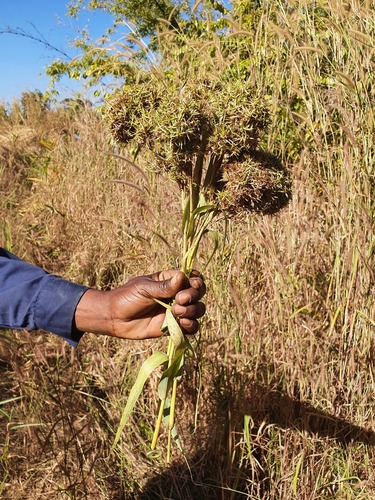
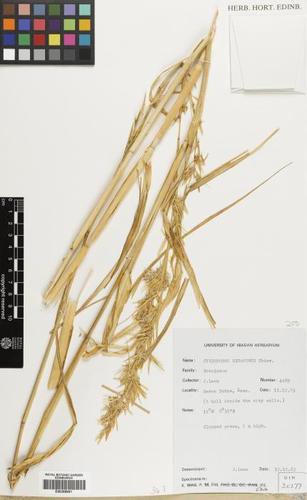
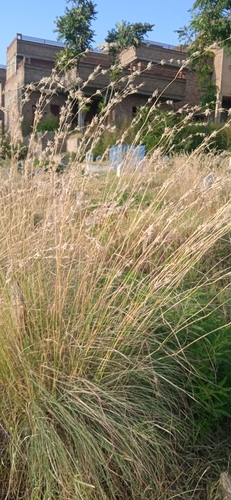
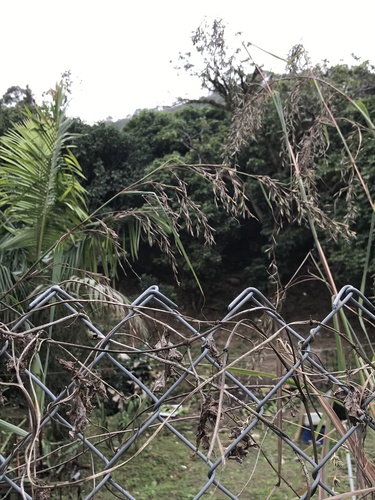
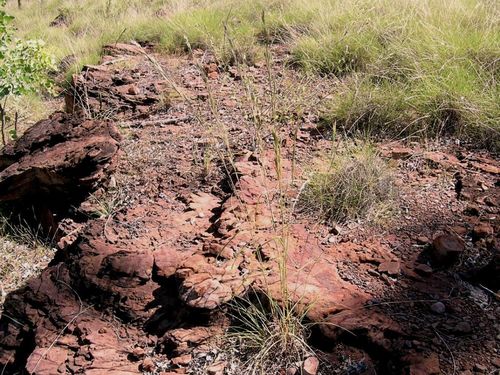
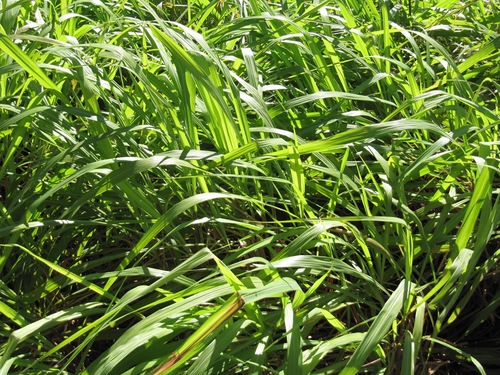
Bouteloua gracilis
(Kunth) Griffiths
Blue grama
iNaturalist· cc-by
(c) Matt Berger, some rights reserved (CC BY), uploaded by Matt Berger
iNaturalist· cc-by
(c) Thomas Koffel, some rights reserved (CC BY), uploaded by Thomas Koffel
iNaturalist· cc-by-nc
(c) phurleyplacitas, some rights reserved (CC BY-NC), uploaded by phurleyplacitas
Summary
Source: WikipediaBouteloua gracilis, the blue grama, is a long-lived, warm-season (C4) perennial grass, native to North America. It is most commonly found from Alberta, Canada, east to Manitoba and south across the Rocky Mountains, Great Plains, and U.S. Midwest states, onto the northern Mexican Plateau in Mexico. Blue grama accounts for most of the net primary productivity in the shortgrass prairie of the central and southern Great Plains. It is a green or greyish, low-growing, drought-tolerant grass with limited maintenance.
Description
An annual or perennial grass. It forms dense tufts. It is erect and grows 15-60 cm tall. The leaves are 3-10 cm long and 1-2 mm wide. There are 1 or 2 flowering stalks. These are 3-5 cm long.
Edible Uses
Seed - raw or cooked. It can be ground into a powder, mixed with water and eaten as a mush, often with corn meal. It is also used to make bread. Edible Uses & Rating: The grains are edible and were traditionally parched and made into porridge or meal. Flavor is notably pleasant for a wild grass—rounded, cereal-sweet, without swampy overtones. Yield per plant is modest and de-chaffing is tedious, so it’s a “quality over speed” grain [2-3]. Edibility rating: 3.5/5 for flavor, 3/5 overall (processing effort and low per-plant yield keep it from being a staple). Taste, Processing & Kitchen Notes: Freshly harvested grains are delicate; toasting takes seconds—listen for the light crackle and pull before scorching. Toasted grains smell nutty and taste barley-like. For hot cereal, boil 5–10 minutes; the cooked texture is pleasantly soft with a mild chew. Chaff removal is the challenge: parch (light dry toast), rub, then winnow repeatedly on a calm day. A coarse sieve followed by a final winnow improves cleanliness. If you don’t want to battle chaff, make a grain beverage: pound whole spikelets, simmer 20–30 minutes, then filter through fine cloth; reduce for a sweeter, thicker drink [2-3]. Seasonality (Phenology: A warm-season grass that initiates growth with rising soil temperatures in late spring. Flowering and grain fill track summer rains; in good years you may see two flushes. Primary harvest runs August–November at most elevations; at low, hot sites the first crop can mature earlier. Harvest & Processing Workflow: Hand-strip or clip straw-colored, fully dry seedheads into a breathable sack. Air-dry a few days. Parch lightly, then rub between hands or on a coarse screen to free grains. Winnow in light, steady air. For meal, toast a second time and grind; for porridge, simmer 5–10 minutes with 4–6 parts water. For a beverage, pound whole spikelets, simmer, and filter through fine cloth; reduce to taste. Cultivar/Selection Notes: Widely used selections include range-type sources such as ‘Hachita’, ‘Lovington’, and ‘Bad River’ for uniform, drought-hard turf and forage; ornamental forms like ‘Blonde Ambition’ are grown for tall, showy, long-lasting seedheads. Choose regional ecotypes for restoration fidelity and superior establishment. Look-Alikes & Confusion Risks: Six-weeks grama (Bouteloua barbata) is an annual with delicate plants and very small grains; sideoats grama (B. curtipendula) bears many dangling spikelets along one side of the stem rather than a few eyelash-like terminal combs. Buffalo grass (often placed apart as Buchloë dactyloides) forms a finer, stoloniferous sod with different flowering structures. If in doubt, look for the 1–3 terminal “eyelash” spikes and hairy ligule of blue grama. Traditional/Indigenous Use Summary: Across the Southwest and Plains, blue grama grains were gathered, parched, and ground for porridge or mixed with other meals. Harvest often followed summer rains when heads matured in waves; processing included parching, rubbing, and winnowing, with some communities brewing grain beverages when chaff separation was impractical.
Medicinal Uses
Salve Women's complaints The chewed roots have been applied to cuts. A decoction of the whole plant has been used as a post-partum medicine.
Distribution
It is a temperate plant. It grows in dry, shallow, rocky soils. It grows between 300-2,400 m above sea level. It grows in areas with an annual rainfall above 500 mm. It can tolerate drought. It can grow in arid places.
Where It Grows
Africa, Asia, Australia, Britain, Canada, China, Europe, Kenya, Mexico, Middle East, North America*, Saudi Arabia, Slovenia, USA,
Propagation
Seed - sow spring in a greenhouse. Only just cover the seed. Prick out the seedlings into individual pots when large enough to handle and grow on for at least the first winter in a greenhouse. Plant out in early summer. Division.
Other Uses
Basketry Broom Brush The grass is sometimes used in the fill of coiled basketry. The stems can be used as a comb and broom material. The blades can be bundled by a cord and the stiff end used as a hair comb whilst the other end can be used as a broom. Ecology & Wildlife: High wildlife value despite its small stature. It is prime forage for bison and ungulates, forms nesting and foraging structure for ground-nesting birds and invertebrates, and its dense fibrous roots stabilize soils and enhance infiltration. As a C4 grass it exhibits high water-use efficiency and strong heat tolerance. Special Uses
Production
The seeds are small and difficult to separate from the bracts.
Synonyms
Also Known As
Modra prerijska trava
References (2)
- Kermath, B. M., et al, 2014, Food Plants in the Americas: A survey of the domesticated, cultivated and wild plants used for Human food in North, Central and South America and the Caribbean. On line draft. p 139
- Royal Botanic Gardens, Kew (1999). Survey of Economic Plants for Arid and Semi-Arid Lands (SEPASAL) database. Published on the Internet; http://www.rbgkew.org.uk/ceb/sepasal/internet [Accessed 8th May 2011]