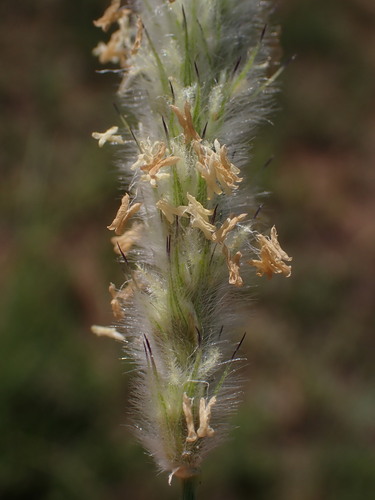
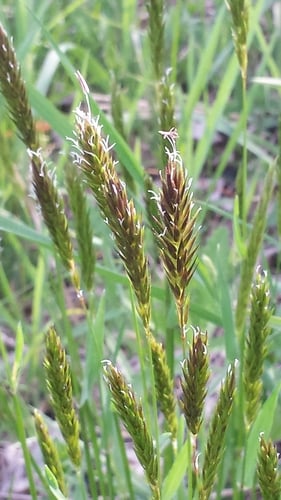
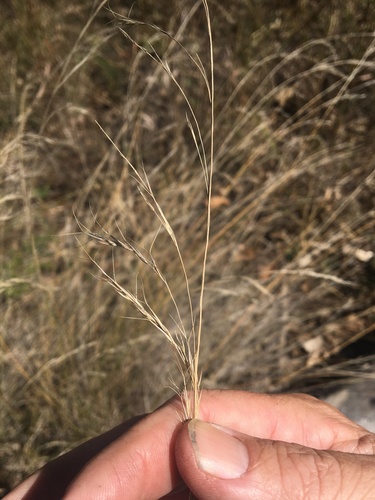
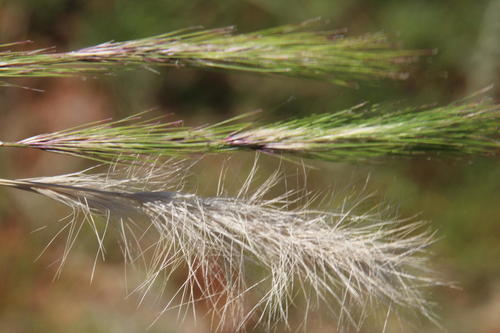
Sporobolus contractus
A. Hitchc.
Spike dropseed
iNaturalist· cc0
no rights reserved
iNaturalist· cc-by
(c) Matt Berger, some rights reserved (CC BY), uploaded by Matt Berger
iNaturalist· cc-by-nc
(c) nmso_botany, some rights reserved (CC BY-NC), uploaded by nmso_botany
Summary
Source: WikipediaSporobolus contractus is a species of grass known by the common name spike dropseed. It is native to western North America, including the southwestern United States and northern Mexico. It grows in desert and plateau habitat, in woodlands, scrub, and dry, sandy, open areas.
Description
Sporobolus contractus is a perennial grass growing to 0.8 m (2ft 7in). Wind-pollinated, hermaphroditic plant that thrives in light sandy or medium loamy, well-drained soil at any pH from mildly acidic to mildly alkaline. Requires full sun and prefers moist soil.
Edible Uses
The seed can be eaten raw or cooked. It can be ground into a flour and used to make gruel, bread, biscuits, and similar foods. The seed is small and fiddly to work with.
Traditional Uses
The seeds are ground and mixed with cornmeal and water and made into a porridge. They are also used to make bread.
This uses section is brief — help expand it
Medicinal Uses
None known
Distribution
It grows in warm temperate climates. It grows in dry sandy soils. It can grow in arid places.
Where It Grows
Africa, Kenya, Mexico, North America, USA,
Cultivation
We have very little information on this species and do not know if it will be hardy in Britain, though judging by its native range it should succeed outdoors in many parts of the country. The following notes are based on the general needs of the genus. Succeeds in any well drained soil in a sunny position.
Propagation
Sow seed in spring in a greenhouse, barely covering it. Germination should occur within 2 weeks. Prick seedlings into individual pots when large enough to handle and plant out in summer if sufficiently grown, otherwise overwinter in the greenhouse and plant out in late spring the following year. Divide in spring; larger divisions can go directly into permanent positions. Smaller divisions are best potted up and grown on in a lightly shaded cold frame, planted out once well established in summer.
Other Uses
Bunches of grass leaves fastened together have been used to make mats for covering doorways and similar household purposes.
Other Information
It has been an important staple of Hop Indians.
Notes
There are about 160 Sporobolus species. They are mainly in the tropics and subtropics.
Synonyms
References (6)
- Amer. J. Bot. 2:303. 1915
- Beckstrom-Sternberg, Stephen M., and James A. Duke. "The Foodplant Database." http://probe.nalusda.gov:8300/cgi-bin/browse/foodplantdb.(ACEDB version 4.0 - data version July 1994)
- Moerman, D. F., 2010, Native American Ethnobotany. Timber Press. p 542
- Plants for a Future database, The Field, Penpol, Lostwithiel, Cornwall, PL22 0NG, UK. http://www.scs.leeds.ac.uk/pfaf/
- Royal Botanic Gardens, Kew (1999). Survey of Economic Plants for Arid and Semi-Arid Lands (SEPASAL) database. Published on the Internet; http://www.rbgkew.org.uk/ceb/sepasal/internet [Accessed 4th June 2011]
Show all 6 references Hide references
- World Checklist of Useful Plant Species 2020. Royal Botanic Gardens, Kew