Lannea coromandelica
(Houtt.) Merr.
Indian ash tree, Wodier tree
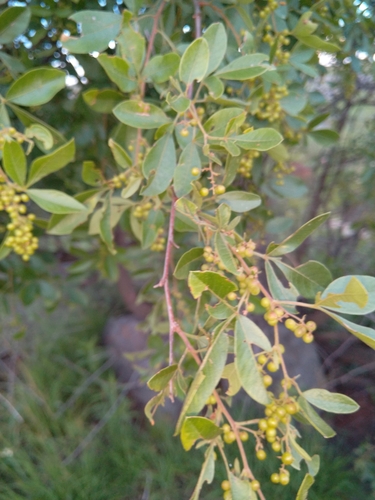
iNaturalist· cc-by-nc
(c) Elavarasan M, some rights reserved (CC BY-NC), uploaded by Elavarasan M
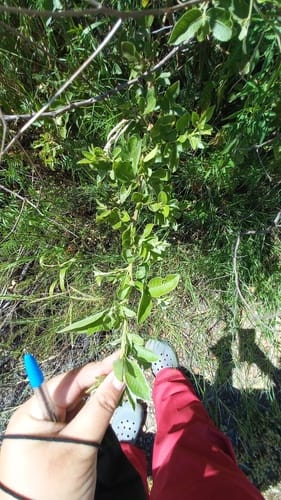
iNaturalist· cc-by-nc
(c) SONU KUMAR, some rights reserved (CC BY-NC)
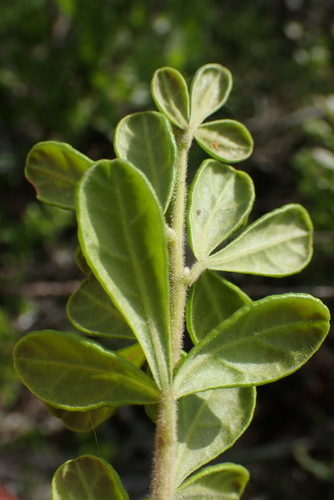
iNaturalist· cc-by-nc
(c) SONU KUMAR, some rights reserved (CC BY-NC)
Summary
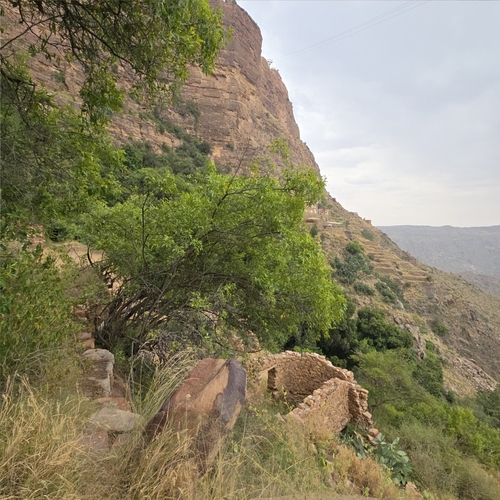
Source: WikipediaLannea coromandelica, also known as the Indian ash tree, is a species of tree in the family Anacardiaceae that grows in South and Southeast Asia, ranging from Sri Lanka to Southern China. Known also as the Mohin tree (Hindi: मोहिन) it is used in plywoods for its excellent termite resistance properties. It commonly grows in exposed dry woodland environments, where the tree is up to 10 meters tall and crooked. In more humid environments it is a larger spreading tree that can become 20 meters tall. In Sri Lanka Lannea coromandelica often grows on rock outcrops or inselbergs. In Nepal, commonly known as "Jhingat", it is grown in agroforestry as a multi-purpose tree, for both timber, but it can also be lopped 3 times a year to provide fodder.
Description
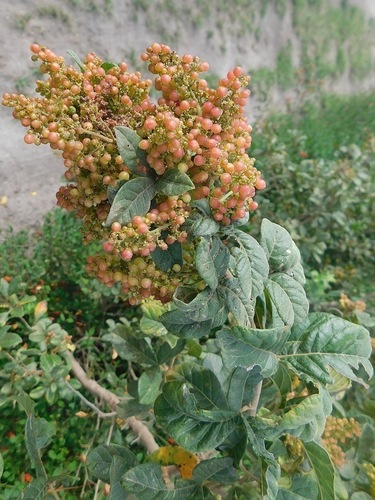
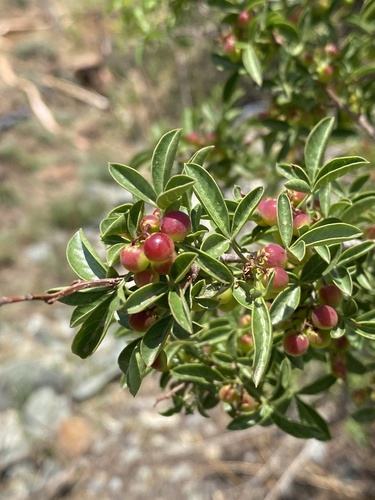
A shrub or medium sized deciduous tree. It grows 15-20 m tall. The bark is grey but red inside. It peels off in round plates. The leaves are 45 cm long and have 5-11 leaflets. These are egg shaped and pointed. They are 6-15 cm long by 3-8 cm wide. The leaves turn yellow before falling. The flowers are yellow-green. They are 0.5 cm wide. Male and female flowers are on separate branches. There are 4 sepals and petals. The fruit is fleshy and 1.5 cm wide with a dull red pitted stone.
Edible Uses
Young leaves and shoots are eaten raw, steamed, or in soup; powdered bark is used to flavor roasted fowl; ripe fruit are eaten raw or pickled; and a gum from the trunk is used in confectionery.
Traditional Uses
A gum from the trunk is used in confectionary. The young leaves and shoots are eaten uncooked or also steamed or used in soup. The powdered bark is used to flavour roast fowl. The ripe fruit are eaten raw. They are also pickled.
Medicinal Uses
The leaves are boiled and applied as a healing poultice to local swellings, sprains, bruises, elephantiasis and various pains of the body. The juice of the bark and the leaves is applied as a lotion in the treatment of ulcers. The bark is astringent and stimulant. It is used in the treatment of gout. The bark is applied topically in the treatment of boils, burns, impetigo, toothache and ulcers. A decoction of the bark is used as a treatment for aphthae of the mouth and for toothache. The dried and powdered bark is often used as a tooth powder. The bark contains tannins and is astringent. The inner bark is used as a poultice on festering wounds, sores or boils. A gum obtained from the stems is used in the treatment of asthma, and is given as a cordial to women during lactation. The gum is mixed with coconut milk and applied on sprains and bruises with beneficial results. The stem bark and the gum are used to treat gastric troubles.
Distribution
A tropical plant. It grows throughout the hotter parts of India. In Pakistan it grows up to 1,200 m above sea level. IN southern China it grows between 100-1,800 m above sea level. It is often on rocky limestone hill. In Yunnan.
Where It Grows
Andamans, Asia, Bangladesh, Bhutan, Cambodia, China, Himalayas, India, Indochina, Indonesia, Laos, Malaysia, Maldives, Myanmar, Nepal, Northeastern India, Pakistan, SE Asia, Sri Lanka, Thailand, Vietnam,
Cultivation
It can be grown easily from cuttings. It is used for fencing.
Propagation
Seed - it only has a short viability and so needs to be sown as soon as possible. Cuttings - very easy, even large branches usually root.
Other Uses
The bark contains tannins. It is used for the impregnation of fishnets. The stem bark and the gum act as a mosquito repellant. A soluble resin, called 'Jingan gum' is obtained from the stems. It is used for calico printing; as a size for paper; for mixing with lime when whitewashing; protecting nets etc. It is obtained by making shallow, short cuts all over the bark. Especially after injuries of the bark and trimmings, masses of glassy-white exudate of hardening gum appear - which may give leafless trees an eerie appearance. A good quality gum. The gum is of inferior quality. The bark yields a coarse cordage fibre. The heartwood is light red when freshly cut, turning reddish-brown on exposure. The wood is moderately hard, close-grained. It is used for spear shafts, scabbards, wheel-spokes, oil presses, grain pounders etc. The wood is used for fuel. The plant can be grown as a hedge. It is easily propagated by cuttings and so can be grown as a living fence.
Production
In India fruit are produced March to May.
Synonyms
Also Known As
Ajasringi, Appriyada, Bhadi, Bulha, Chaa koh, Chang nom, Dabdabe, Dang paguel-kung, Djaran, Gobi, Gojal, Halonre, Hik, Indramai, Jengra, Jeol, Jhingam, Jhingan, Jia, Jiyal, Kadjaran, Kaimil, Kalasan, Kayoo kooda, Kekedo, Kok khan, Kuk, Kuratige, Latang, Laupe, Mae yuu waai, Mai-hkam, Mangi, Mavedi, Mohin, Moi, Moin, Nabe, Nanum, Odiyam Maram, Oi chaang, Pechka, Pee-chiang, Pohon lanea India, Saa keh, Seng-luu-khai, Se-tho-kee, Shemat, Shimti, Ta khram, Taung-gwe, Tawi-taw-suak, Thulo dabdabe, Weet, Wodier, Zun-burr
References (27)
- Ambasta, S.P. (Ed.), 2000, The Useful Plants of India. CSIR India. p 315
- Ashton, M. S., et al 1997, A Field Guide to the Common Trees and Shrubs of Sri Lanka. WHT Publications Ltd. p 94
- Bhogaonkar, P. Y. & Devarkar, V. D., 2018, Inventory for ethnovegetable knowledge of the tribals of Satpura hill area-Melghat, Dist. Amravati (India), Plantae Scientia, 2018; Vol. 01 Issue 01: 01-08
- Dangol, D. R. et al, 2017, Wild Edible Plants in Nepal. Proceedings of 2nd National Workshop on CUAOGR, 2017.
- Datar, M. N. & Upadhye, A. S., 2015, Forest foods of Northern Western Ghats: Mode of Consumption, Nutrition, and Availability. Asian Agri-History Vol. 19, No. 4, 2015 (293–316)
Show all 27 references Hide references
- Datar, M. N. & Upadhye, A. S., 2016, Forest foods of northern region of Western Ghats. MACS - Agharkar Research Institute, Pune. Pp 1-160. ISBN: 978-93-85735-10-3 p 100
- Facciola, S., 1998, Cornucopia 2: a Source Book of Edible Plants. Kampong Publications, p 10 (As Lannea grandis)
- Gautam, R. S., et al, 2020, Wild Edible Fruits of Nepal. Int. J. Appl. Sci. Biotechnol. Vol 8(3): 289-304
- Gautam, R. S., et al, 2022, Ethnobotanical Review of Wild Edible Plants of Nepal. Journal of Natural History Museum Volume 32, 2021-22 p 101
- Jadhav, R., et al, 2015, Forest Foods of Northern Western Ghats: Mode of Consumption, Nutrition and Availability. Asian Agri-History Vol. 19, No. 4: 293-317
- Kachenchart, B., et al, 2008, Phenology of Edible Plants at Sakaerat Forest. In Proceedings of the FORTROP II: Tropical Forestry Change in a Changing World. Bangkok, Thailand.
- Kar, A., et al, 2013, Wild Edible Plant Resources used by the Mizos of Mizoram, India. Kathmandu University Journal of Science, Engineering and Technology. Vol. 9, No. 1, July, 2013, 106-126 (As Lannea grandis)
- Kiran, K. C., et al, 2019, Diversity and Seasonal Availability of Potential Wild Edible Plants from Vidarbha Region of Maharashtra State, India. Int.J.Curr.Microbiol.App.Sci (2019) 8(2): 1434-1446
- Kumar, P. D., et al, 2015, Ethnobotanical Knowledge and Usage of Wild Plants in Theog Forest Division, Himachal Pradesh, North Western Himalaya. The Journal of Ethnobiology and Traditional Medicine. Photon 124(2015) 922-935
- Martin, F.W. & Ruberte, R.M., 1979, Edible Leaves of the Tropics. Antillian College Press, Mayaguez, Puerto Rico. p 174 (As Lannea grandis)
- Ochse, J.J. et al, 1931, Vegetables of the Dutch East Indies. Asher reprint. p 37 (As Lannea grandis)
- Prabha, Y. P., et al, 2010, Documentation of Wild Edible Plants of Melghat Forest, Dist. Amravati, Maharashtra State, India. Ethnobotanical Leaflets 14: 751-58, 2010.
- Sahni, K.C., 2000, The Book of Indian Trees. Bombay Natural History Society. Oxford. p 69
- Singh, H.B., Arora R.K.,1978, Wild edible Plants of India. Indian Council of Agricultural Research, New Delhi. p 27
- Sujanapal, P., & Sankaran, K. V., 2016, Common Plants of Maldives. FAO & Kerala FRI, p 163
- Sukarya, D. G., (Ed.) 2013, 3,500 Plant Species of the Botanic Gardens of Indonesia. LIPI p 353
- Sukenti, K., et al, 2016, Ethnobotanical study on local cuisine of the Sasak tribe in Lombok Island, Indonesia. Journal of Ethnic Foods. 3 (2016) 189-200 p 198
- Terra, G.J.A., 1973, Tropical Vegetables. Communication 54e Royal Tropical Institute, Amsterdam, p 54 (As Lannea grandis)
- Upreti, K., et al, 2010, Diversity and Distribution of Wild Edible Fruit Plants of Uttarakhand. Bioversity Potentials of the Himalaya. p 174
- Uprety, Y., et al, 2010, Non-timber Forest Products in Bardiya District of Nepal: Indigenous Use, Trade and Conservation. J Hum Ecol, 30(3): 143-158
- Uprety, Y., et al, 2012, Diversity of use and local knowledge of wild edible plant resources in Nepal. Journal of Ethnobotany and Ethnomedicine 8:16
- World Checklist of Useful Plant Species 2020. Royal Botanic Gardens, Kew