Lannea humilis
(Oliv.) Engl.
Small-leaf lannea
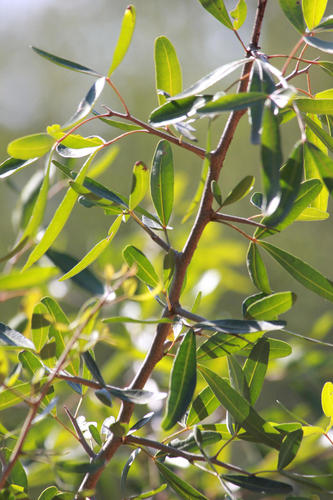
iNaturalist· cc-by-nc
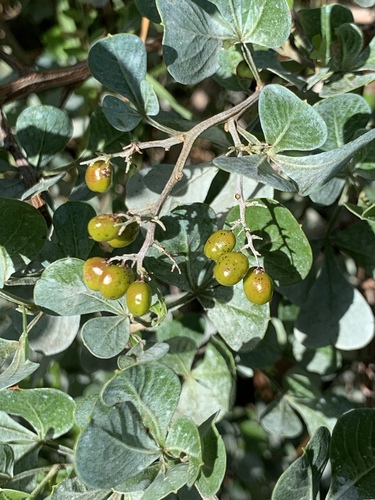
(c) marynvdlaarse, some rights reserved (CC BY-NC)
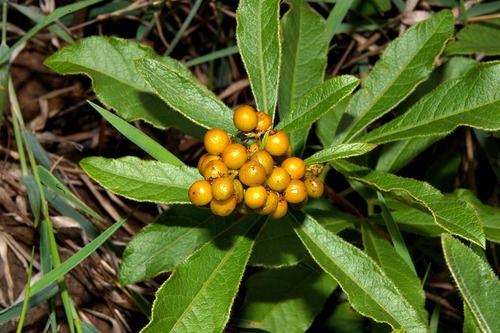
iNaturalist· cc-by-nc
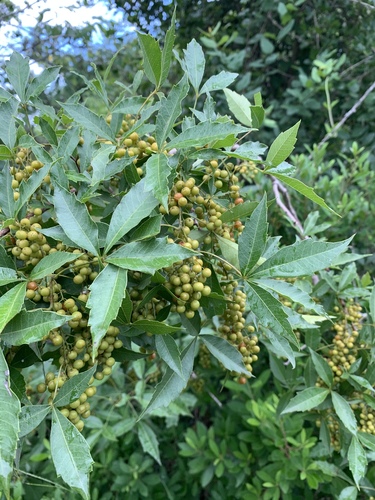
(c) Nick Helme, some rights reserved (CC BY-NC)
iNaturalist· cc-by-nc
(c) Nick Helme, some rights reserved (CC BY-NC)
Description
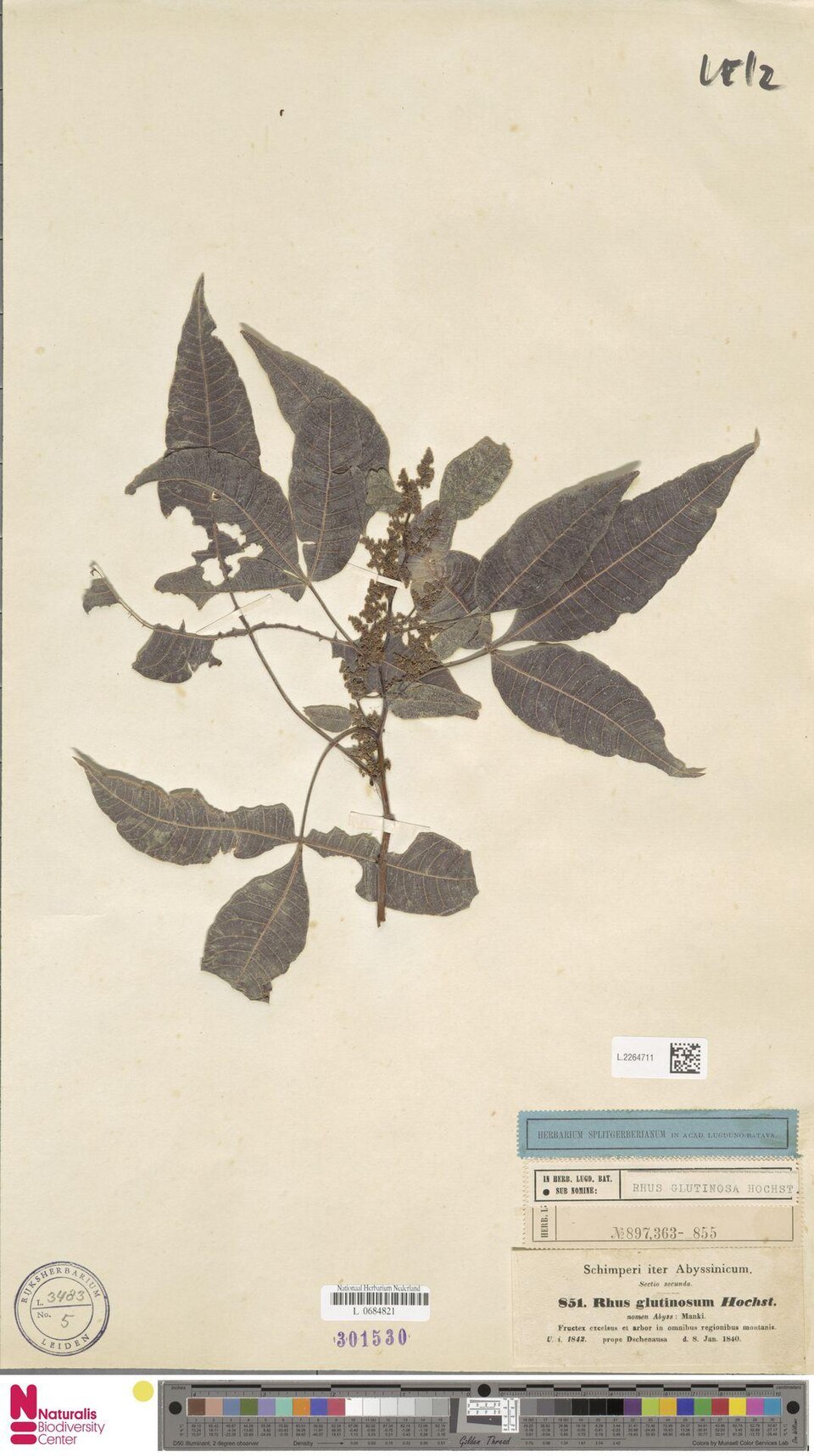
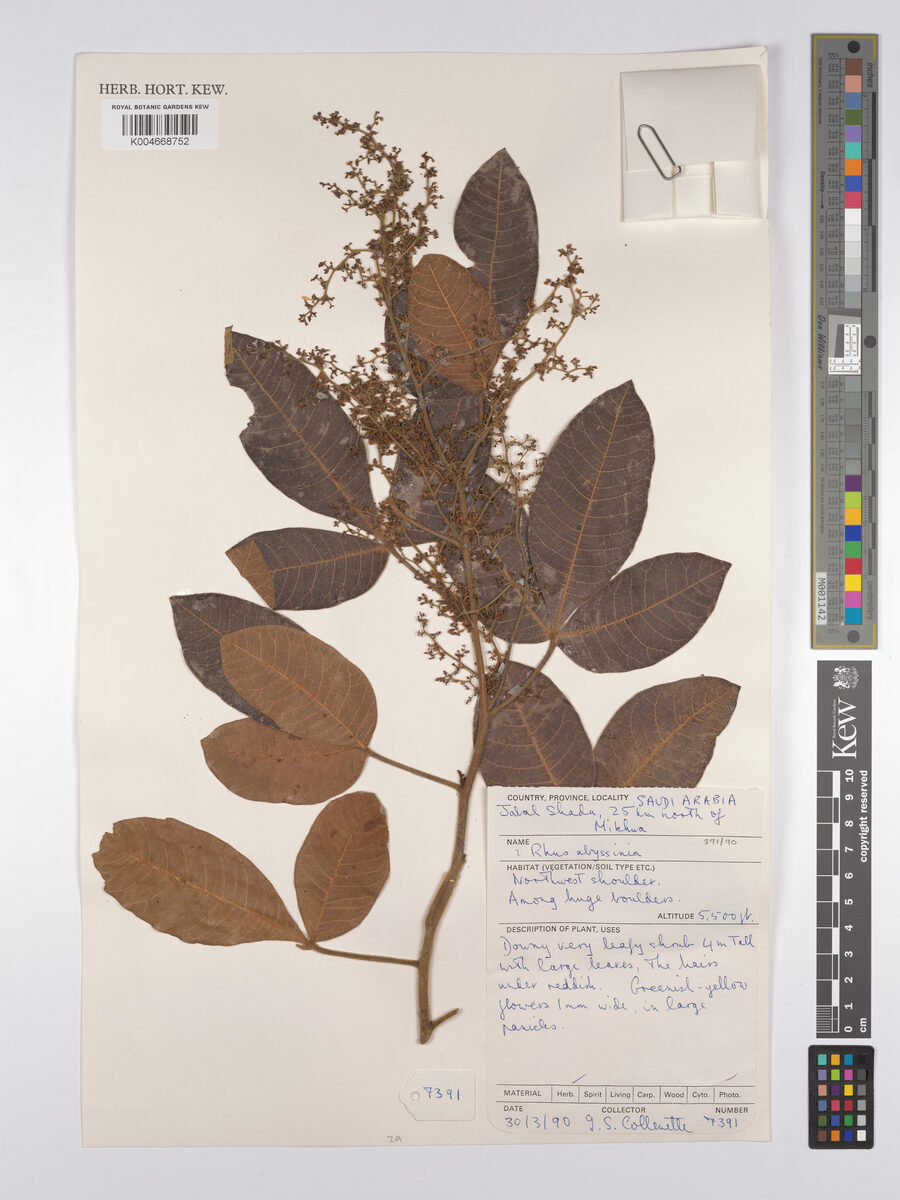
It is a shrub. It grows 3-6 m high. The crown is flat. The leaves have 5-21 leaflets. The leaves have white hairs underneath. The end leaflet is 2-3 cm long by 1-2 cm wide. The side leaflets are 1-3 cm long by about 1 cm wide. The flowers are in spike like groups. These are 2-5 cm long. The petals are yellow. The fruit is fleshy. It has a grey coating. The fruit are 9-13 mm long by 5-8 mm wide. The are oblong.
Edible Uses
The ripe fruit are eaten raw as a snack in moderate amounts. The inner portion of the root (after removing the skin) is eaten cooked or raw, and serves as a famine food.
Traditional Uses
The ripe fruit are eaten raw as a snack. The skin of the root is removed and the inner portion eaten cooked or raw.
This uses section is brief — help expand it
Medicinal Uses
The roots are powdered, mixed with warm water and taken to treat nausea, cough and generalized body pains. With milk added, it is used as a general tonic in weakness.
Known Hazards
The fruit should be eaten in moderate amounts only.
Distribution
It is a tropical plant. In Ethiopia it grows in semi-arid bushland. In West Africa it grows in dry woodland and savannah. It also grows in swamps. It grows in the lowlands. It grows between 700-1,700 m above sea level.
Where It Grows
Africa, Cameroon, Central Africa, East Africa, Ethiopia, Kenya, Malawi, Niger, Nigeria, Rwanda, Sahel, Senegal, South Africa, Southern Africa, South Sudan, Sudan, Tanzania, Uganda, West Africa, Zambia, Zimbabwe,
Cultivation
It can be grown from cuttings. The young tree can be cut back and allowed to re-grow.
Propagation
Seed - Cuttings root easily, even when large branches are used.
Other Uses
A fibre obtained from the bark is used for rope-making. The bark-slash exudes a colourless sticky liquid . No uses are recorded. The wood is said to be good for carpentry. Branches root easily, and the tree responds well to trimming, so it is used as a live fence.
Production
In Tanzania fruit are collected from November to January.
Other Information
The root is a famine food. The fruit are eaten in moderate amounts.
Synonyms
Also Known As
Arish, Athany, Athoin, Beluki, Gumedaa, Gumedaa, Heyyun, Kerwulu, Lilinga, Mgulumo, Mhondobogo, Mlinga, Mlingalinga, Mnghanangha, Mnyamaji, Mtinje, Ngaimirori, Paaruu, Umusharanyoota
References (9)
- Burkill, H. M., 1985, The useful plants of west tropical Africa, Vol. 1. Kew.
- Ethiopia: Famine Food Field Guide. http://www.africa.upenn.edu/faminefood/category1.htm
- Flora Zambesiaca. http://apps.kew.org/efloras
- Fowler, D. G., 2007, Zambian Plants: Their Vernacular Names and Uses. Kew. p 75
- Goode, P., 1989, Edible Plants of Uganda. FAO p 30
Show all 9 references Hide references
- Le Houerou, H. N., (Ed.), 1980, Browse in Africa. The current state of knowledge. International Livestock Centre for Africa, Ethiopia. p 161
- Lulekal, E., et al, 2011, Wild edible plants in Ethiopia: a review on their potential to combat food insecurity. Afrika Focus - Vol. 24, No 2. pp 71-121
- Ruffo, C. K., Birnie, A. & Tengnas, B., 2002, Edible Wild Plants of Tanzania. RELMA p 420
- World Checklist of Useful Plant Species 2020. Royal Botanic Gardens, Kew