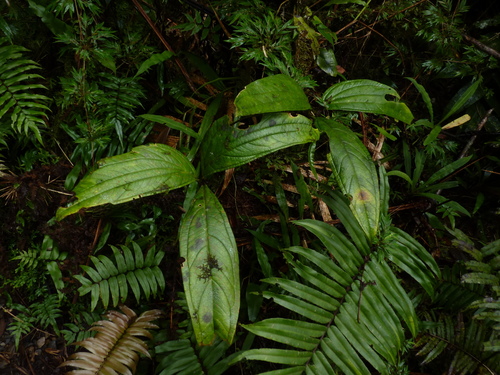
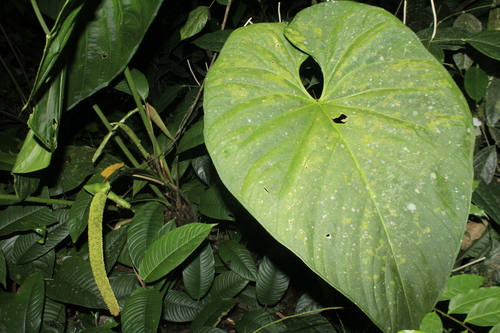
Spirodela polyrhiza
(L.) Schneiden
Great duckweed, Zi peng, Duckmeat
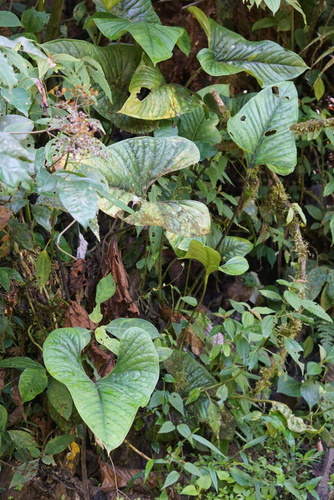
iNaturalist· cc-by-nc
(c) naturalisttt, some rights reserved (CC BY-NC)
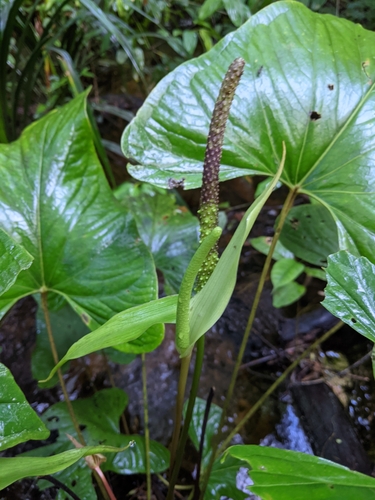
iNaturalist· cc-by-nc
(c) naturalisttt, some rights reserved (CC BY-NC)
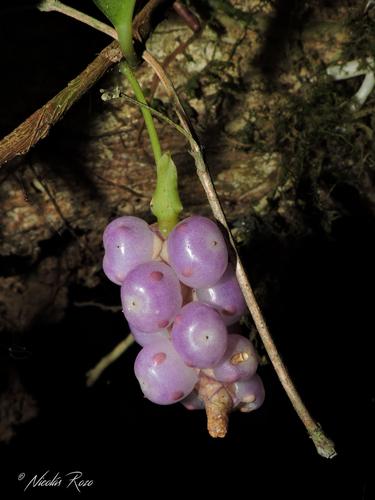
iNaturalist· cc-by-nc
(c) naturalisttt, some rights reserved (CC BY-NC)
Description
A herb. It grows in water. The fronds are free floating. 1-10 stick together. They are flat and green on the upper surface but often red underneath. They have pouches at the base. They produce daughter fronds and sometimes a flower. There is a small scale which covers the place where it is attached to the root.
Edible Uses
The plant is sometimes used as food, though no further details are recorded.
Medicinal Uses
The whole plant is antipruritic, antipyretic, cardiotonic, carminative, diaphoretic, and diuretic. It stimulates the appearance of the measles rash and is used in the treatment of colds, measles, oedema, and difficulty in urination.
Known Hazards
Spirodela polyrhiza can be used for bioremediation, removing toxic substances from aquatic environment as well as cleaning eutrophic waters, especially in wastewater treatment plants. Its uses as biofuel and animal feed are also gaining importance. It is hardly used for human nutrition.
Distribution
It is a tropical plant. It grows in ponds and lakes and rice fields in warm places. In China it occurs between sea level and 2900 m altitude. It occurs throughout the tropics. In Sichuan and Yunnan.
Where It Grows
Africa, Asia, Botswana, Britain, Central America*, China, Cuba*, Dominican Republic, East Africa, Europe, Guatemala, Haiti*, Hawaii, Himalayas, Iran, Jamaica*, Korea, Luxembourg, Madagascar, Mexico*, Middle East, Mongolia, Myanmar, Nepal, North America, Pacific, Pakistan, SE Asia, Taiwan, USA, Virgin Islands, West Indies*,
Propagation
The plant divides freely during the growing season and requires no assistance to propagate.
Other Uses
None known.
Notes
There are 3 Spirodela species. It is used in medicine. Also in the family Lemnaceae.
Synonyms
References (6)
- Li Heng, Landholt, E., Lemnaceae. Flora of china. p
- Linnaea 13:392. 1839
- Plants for a Future database, The Field, Penpol, Lostwithiel, Cornwall, PL22 0NG, UK. http://www.scs.leeds.ac.uk/pfaf/
- Plants of Haiti Smithsonian Institute http://botany.si.edu
- Staples, G.W. and Herbst, D.R., 2005, A tropical Garden Flora. Bishop Museum Press, Honolulu, Hawaii. p 675
Show all 6 references Hide references
- Urgamal, M., et al, 2014, Conspectus of the Vascular Plants of Mongolia. Mongolia Academy of Sciences Institute of Botany and National University of Mongolia Department of Biology. p 38