Spiranthes sinensis
(Persoon) Ames
Ladies’ tresses
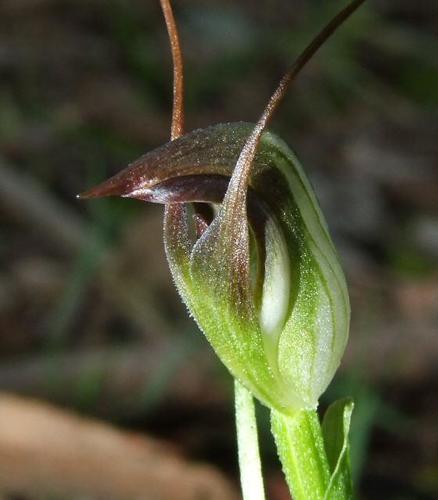
iNaturalist· cc-by-nc
(c) Nikolay V Dorofeev, some rights reserved (CC BY-NC), uploaded by Nikolay V Dorofeev
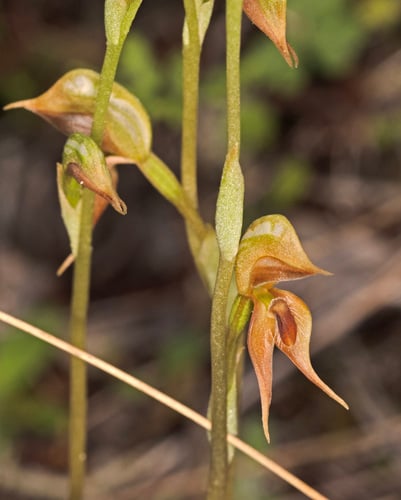
iNaturalist· cc0
no rights reserved, uploaded by 葉子
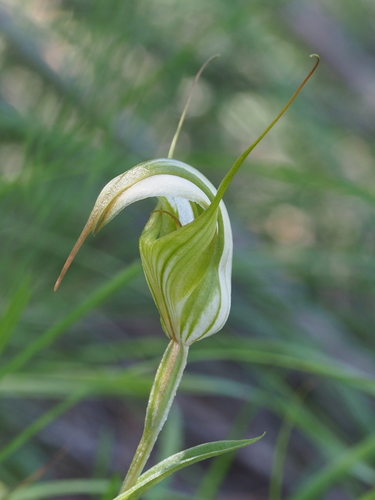
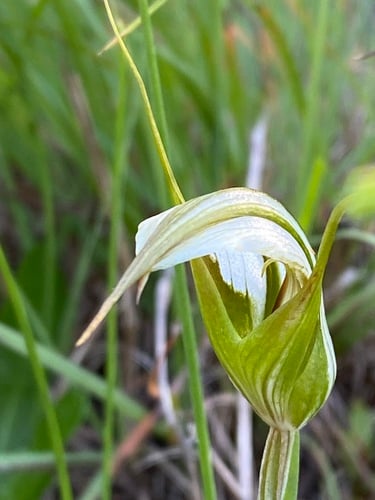
iNaturalist· cc-by-nc
(c) Reiner Richter, some rights reserved (CC BY-NC), uploaded by Reiner Richter
Summary
Source: WikipediaSpiranthes sinensis, commonly known as the Chinese spiranthes, is a species of orchid occurring in eastern and southeastern Asia. Spiranthes sinensis was long thought to be a species complex, and more than 30 names have been synonymized under it; recent molecular and morphological data found that the complex was composed of six distinct species. 'True' S. sinensis sensu stricto is glabrous, blooms in the spring, and has pale blush-pink flowers. This species had formerly been thought to occur throughout Asia and Australia, it is actually restricted to southeast Asia, eastern East Asia, and southern Japan. The other species to be recognized out of this species complex are Spiranthes australis, Spiranthes flexuosa, Spiranthes maokensis, Spiranthes sunii, and Spiranthes suishanensis.
Description
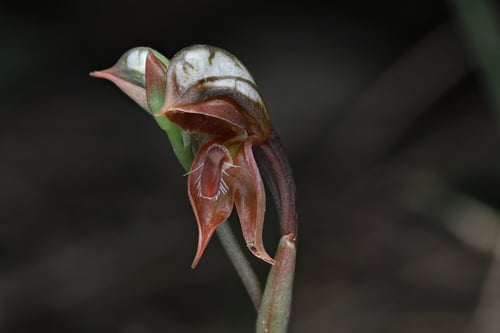
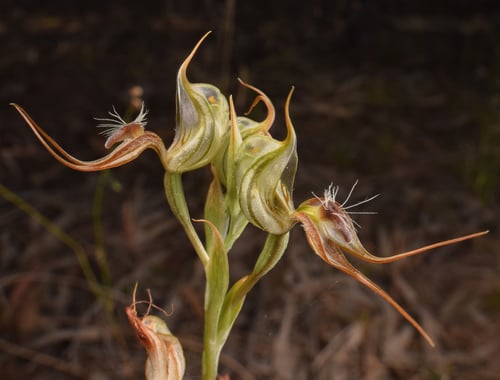
An orchid. It is 50 cm high. The roots are 2-3 mm across. It has a few leaves in a ring at the base. The flower stalk has numerous flowers arranged in a spiral on the upper part of the stalk. Each flower is 6 mm long. Only one third of the flowers open at one time. The colour can be white or with purple.
Edible Uses
The fleshy root is traditionally cooked with chicken or pork. The tuber, roots, bulbs, flowers, and leaves are edible portions.
Traditional Uses
The fleshy root is cooked with chicken or pork.
This uses section is brief — help expand it
Medicinal Uses
The fleshy root is used in traditional preparation cooked with chicken or pork.
Distribution
It is a temperate plant. It grows in grassland and open forest. It can grow on the edge of swamps and become a lawn weed. It grows from sea level to moderate altitudes in temperate regions and higher in the tropics. It grows in wet grasslands between 300-3,400 m above sea level in China.
Where It Grows
Afghanistan, Asia, Australia, Bhutan, China, East Timor, Himalayas, India, Indochina, Japan, Korea, Malaysia, Mongolia, Myanmar, Nepal, New Zealand, Pacific, Pakistan, Papua New Guinea, PNG, Philippines, Russia, SE Asia, Siberia, Tasmania, Thailand, Tibet, Timor-Leste, Tonga, Vietnam,
Cultivation
In Nepal this species is found in evergreen broadleaved forests, where the the rainfall is monsoonal, falling mainly from mid June to mid September. The climate of these forests ranges from sub-tropical to warm temperate at higher elevations, winters are warm to mild and frosts are generally few. Grows best in a sunny position.
Propagation
Seed - Division
Notes
There are 25 Spiranthes species. Spiranthes australis has now been separated off from Spiranthes sinensis.
Synonyms
Also Known As
Xiabaiji
References (15)
- Bodkin, F., 1991, Encyclopedia Botanica. Cornstalk publishing, p 944
- Caton, J.M. & Hardwick, R. J., 2016, Field Guide to Useful Native Plants from Temperate Australia. Harbour Publishing House. p 150 (As var. australis)
- Cherikoff V. & Isaacs, J., The Bush Food Handbook. How to gather, grow, process and cook Australian Wild Foods. Ti Tree Press, Australia p 196
- Dashorst, G.R.M., and Jessop, J.P., 1998, Plants of the Adelaide Plains & Hills. Botanic Gardens of Adelaide and State Herbarium. p 204
- Holliman, J., (Ed.), 2002, Orchids. Botanica's Pocket. Random House, Australia. p 543
Show all 15 references Hide references
- Hu, Shiu-ying, 2005, Food Plants of China. The Chinese University Press. p 331 (As Spiranthes lancea)
- Jones, D., Wapstra, H., Tonelli, P., and Harris S., 1999, The Orchids of Tasmania. Miegunyah Press, MUP, Victoria, Australia. p 254 (Spiranthes australis)
- Ju, Y., et al, 2013, Eating from the wild: diversity of wild edible plants used by Tibetans in Shangri-la region, Yunnan, China, Journal of Ethnobiology and Ethno medicine 9:28
- Lim, T. K., 2015, Edible Medicinal and Non Medicinal Plants. Volume 9, Modified Stems, Roots, Bulbs. Springer p 79
- Orchid 2:53. 1908
- Silveira, P. et al., 2008, The orchids of Timor: checklist and conservation status. Botanical Journal of the Linnean Society, 2008, 157, 197–215. With 4 figures
- Tasmanian Herbarium Vascular Plants list p 77 (Spiranthes australis)
- Urgamal, M., et al, 2014, Conspectus of the Vascular Plants of Mongolia. Mongolia Academy of Sciences Institute of Botany and National University of Mongolia Department of Biology. p 44
- Yonzone, R., et al, Orchids in Ethnobotany. Ethnobotany and Medicinal Plants. ISBN 978-93-5067-867-1
- Yuncker, T.G., 1959, Plants of Tonga, Bernice P. Bishop Museum, Hawaii, Bulletin 220. p 87