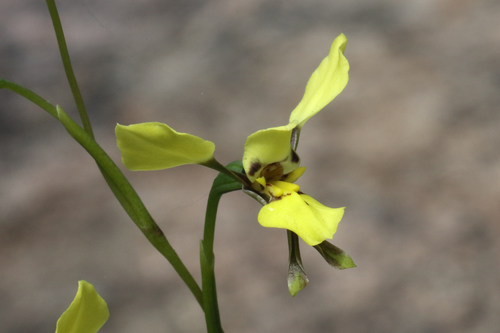
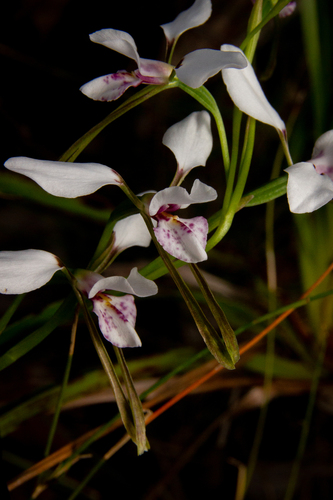
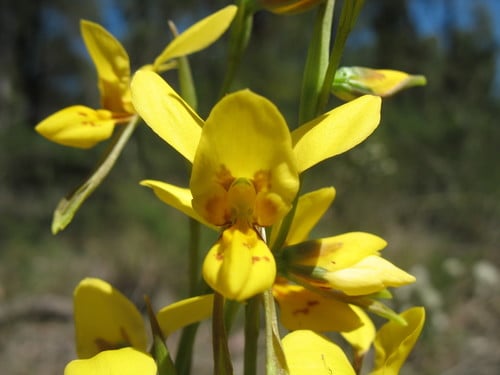
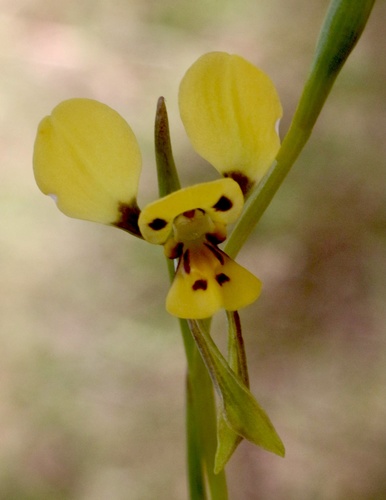
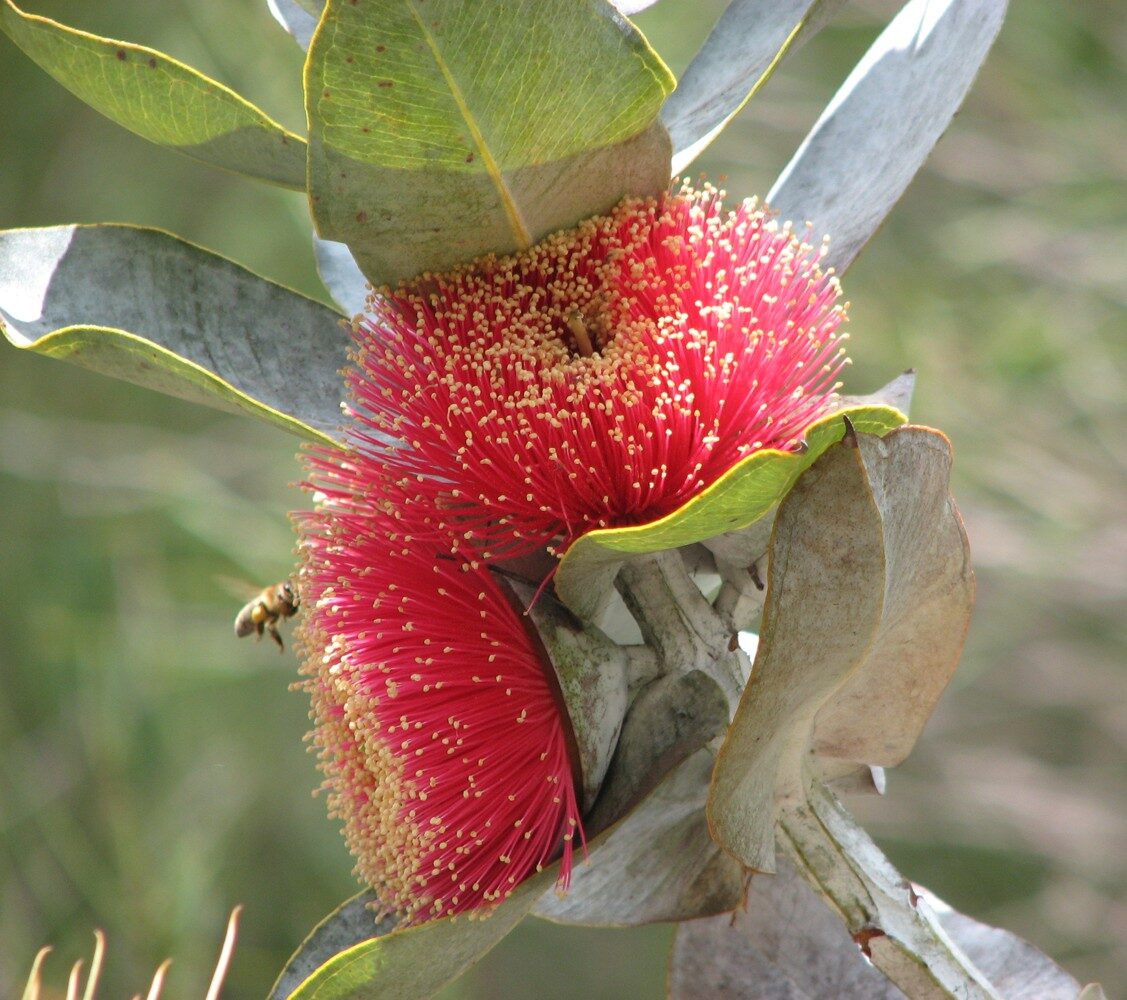
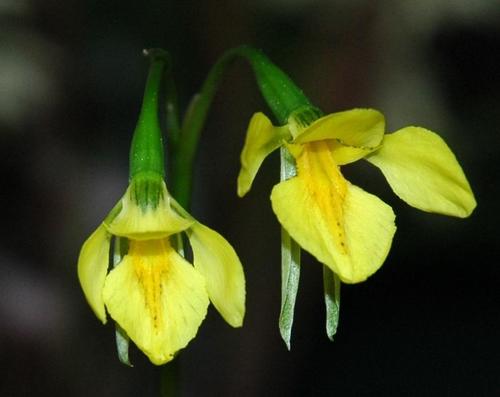
Gastrodia cunninghamii
Hook.f.
Perei, Peri-root, Potato orchid
iNaturalist· cc-by-nd
(c) harrylurling, some rights reserved (CC BY-ND), uploaded by harrylurling
iNaturalist· cc-by-nc
(c) reinderw, some rights reserved (CC BY-NC)
iNaturalist· cc-by-nc
(c) Pauline Singleton, some rights reserved (CC BY-NC), uploaded by Pauline Singleton
Summary
Source: WikipediaGastrodia cunninghamii, or black orchid, black potato orchid, or perei in Māori, is a species of parasitic orchid, endemic to New Zealand. It grows in the North Island, south of the Waikato, and in the South Island, Stewart Island, and the Chathams. It is not threatened, and is widespread in forested areas.
Description
An orchid. It grows on rotting plant material. It can be 90-100 cm high. The flowers are greyish white. It forms large tubers under the ground. These can be 45 cm long and 1 cm wide.
Edible Uses
The root is eaten roasted. It is sweet and mealy, up to 40cm long, as thick as an adult's finger, and full of starch.
Traditional Uses
The starchy roots are eaten.
This uses section is brief — help expand it
Medicinal Uses
None known.
Distribution
They grow in swamplands and on wet forest floors.
Where It Grows
New Zealand*,
Cultivation
We have very little information on this species and do not know if it will be hardy in Britain. A saprophytic herb, it is without green parts and is entirely dependant upon a fungus for its nutriment. This makes it very difficult to cultivate outside its native range. As well as its fungal host, it also requires a damp humus-rich soil in a sheltered woodland position. The freshly opened flowers have a refreshingly aromatic scent, though this becomes foetid and unpleasant as the flowers fade. Orchids are, in general, shallow-rooting plants of well-drained low-fertility soils. Their symbiotic relationship with a fungus in the soil allows them to obtain sufficient nutrients and be able to compete successfully with other plants. They are very sensitive to the addition of fertilizers or fungicides since these can harm the symbiotic fungus and thus kill the orchid.
Propagation
Surface sow seed, preferably as soon as it is ripe, either into the plant's natural habitat near existing colonies or onto a bed of Quercus wood inoculated with the fungus Armillaria mellea — introduce this fungus with extreme caution as it kills trees and there is no known preventative. The seed has a minute embryo surrounded by a single layer of protective cells with very little food reserve, and depends on a symbiotic relationship with a soil-dwelling fungus. Fungal hyphae invade the seed and enter the embryo cells; the orchid then digests the fungal tissue, which serves as its food supply. Division can be carried out in autumn, though the plant is very intolerant of root disturbance. When dividing or moving, keep a large ball of soil around the plant.
Other Uses
None known.
Notes
There are about 20 Gastrodia species.
Also Known As
Huperei
References (4)
- Crowe, A., 1997, A Field Guide to the Native Edible Plants of New Zealand. Penguin. p 97
- Hedrick, U.P., 1919, (Ed.), Sturtevant's edible plants of the world. p 325
- Plants for a Future database, The Field, Penpol, Lostwithiel, Cornwall, PL22 0NG, UK. http://www.scs.leeds.ac.uk/pfaf/
- Skinner, G. & Brown, 1981, C., Simply Living. A gatherer's guide to New Zealand's fields, forests and shores. Reed. p 17