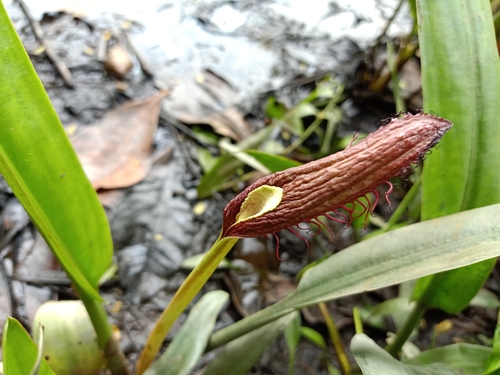
Spathiphyllum commutatum
Schott
Peace lily
iNaturalist· cc-by-sa
(c) 阿橋 HQ, some rights reserved (CC BY-SA)
wikimedia· cc0
Wikimedia Commons - F.A.Guil. Miquel?
Description
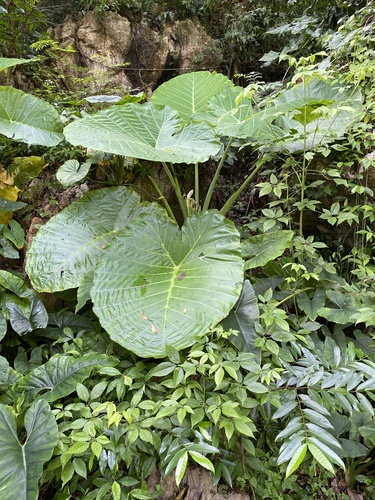
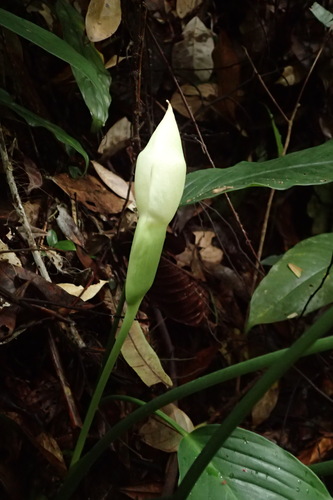
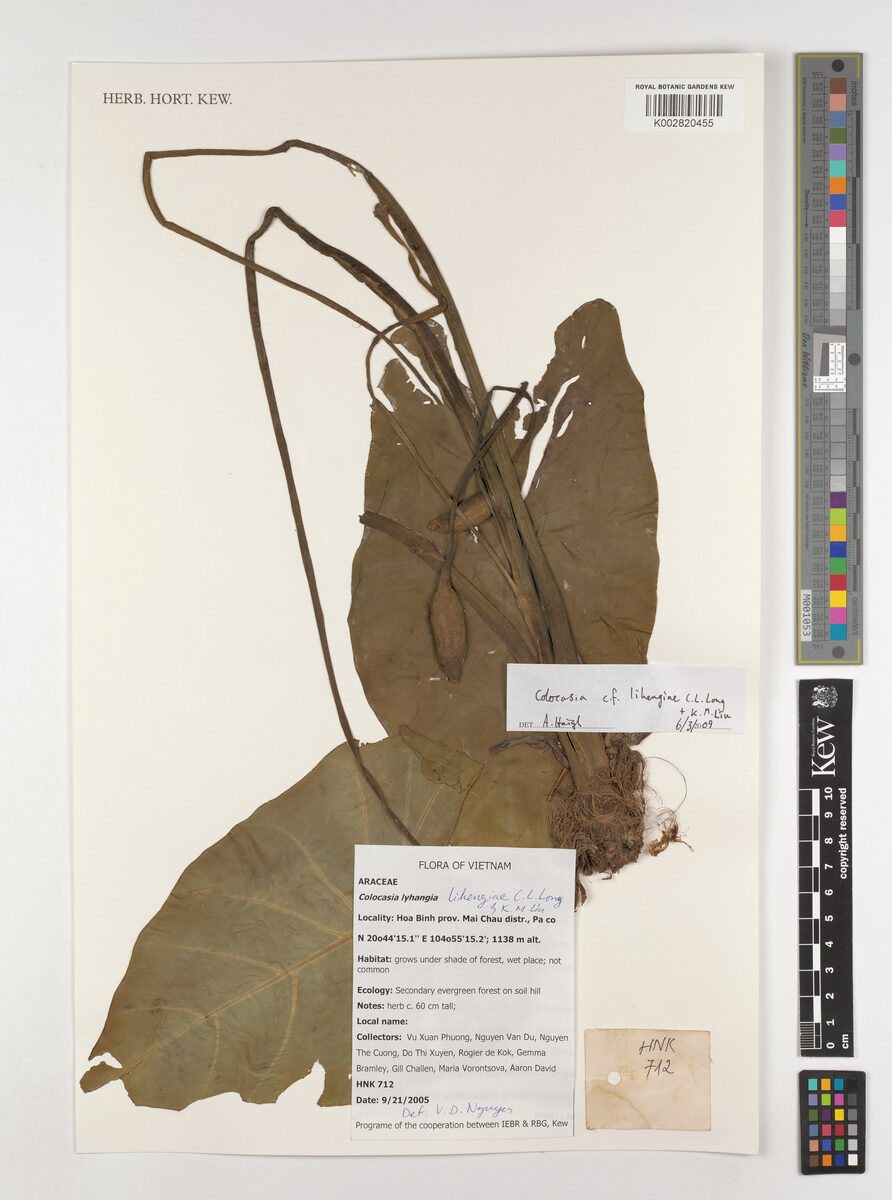
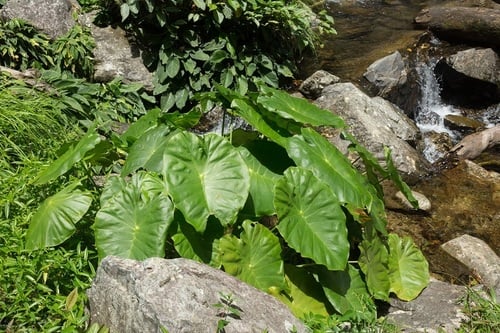
A herb about 1 m high. It has underground stems or rhizomes that produce a clump. The leaves are large and dark green. They are oval and taper towards both ends. The leaf stalk is long. Flowers are large and white. There is a large leaf like structure wrapped around the fleshy fruit stalk. The seeds are pink.
Edible Uses
The young leaves are cooked and eaten as a vegetable.
Traditional Uses
The young leaves are cooked and eaten as a vegetable.
This uses section is brief — help expand it
Distribution
A tropical plant. It grows in part shade and in rich, well-drained soil. It grows up to 1,400 m above sea level. It occurs from Luzon to Mindanao in the Philippines. It is very frost tender.
Where It Grows
Asia, Indonesia, Malaysia, Pacific, Papua New Guinea, PNG, Philippines, SE Asia,
Cultivation
Plants can be grown from seeds or by rhizomes.
Notes
There are about 60 Spathiphyllum species.
Also Known As
Halili, Lili damai, Tunak
References (11)
- Borrell, O.W., 1989, An Annotated Checklist of the Flora of Kairiru Island, New Guinea. Marcellin College, Victoria Australia. p 17
- Brown, W.H., 1920, Wild Food Plants of the Philippines. Bureau of Forestry Bulletin No. 21 Manila. p 34
- Burkill, I.H., 1966, A Dictionary of the Economic Products of the Malay Peninsula. Ministry of Agriculture and Cooperatives, Kuala Lumpur, Malaysia. Vol 2 (I-Z) p 2097
- Heyne, K., 1927, p 419
- Johns, R.J. & Hay, A., 1976, Monocotyledons of Papua New Guinea. Part 1 , Forestry College Bulolo, PNG p 78
Show all 11 references Hide references
- Hanelt, P., et al, (Eds.), 2001, Mansfield's encyclopedia of agricultural and horticultural crops. Springer p 2319
- Martin, F.W. & Ruberte, R.M., 1979, Edible Leaves of the Tropics. Antillian College Press, Mayaguez, Puerto Rico. p 176
- Monsalud, M.R., Tongacan, A.L., Lopez, F.R., & Lagrimas, M.Q., 1966, Edible Wild Plants in Philippine Forests. Philippine Journal of Science. p 442
- Siemonsma, J. S., & Piluek, K., (Eds.) 1994, Plant Resources of South-East Asia. (PROSEA) No. 8 Vegetables p 304
- Sukarya, D. G., (Ed.) 2013, 3,500 Plant Species of the Botanic Gardens of Indonesia. LIPI p 1136
- World Checklist of Useful Plant Species 2020. Royal Botanic Gardens, Kew