Anthurium triphyllum
(Willd. ex Schult.) Brogn. ex Schott
iNaturalist· cc-by-nc
(c) Nate Hartley, some rights reserved (CC BY-NC), uploaded by Nate Hartley
gbif· cc-by-nc
Andrew I. Gallardo : Field Museum of Natural History - Department of Zoology
Description
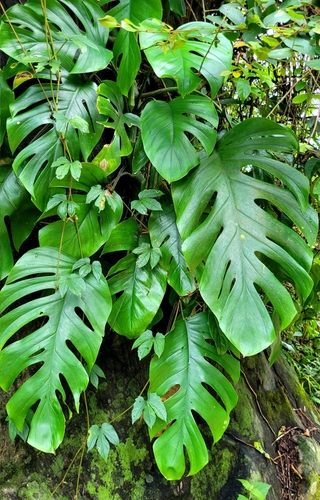
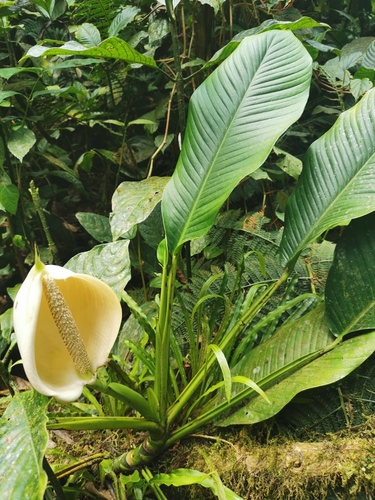
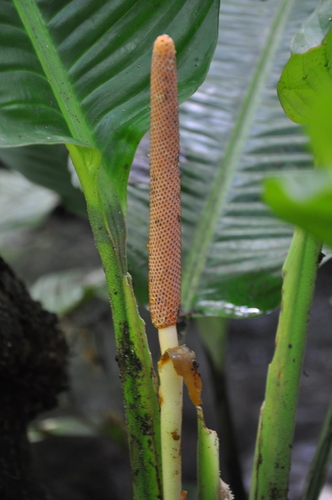
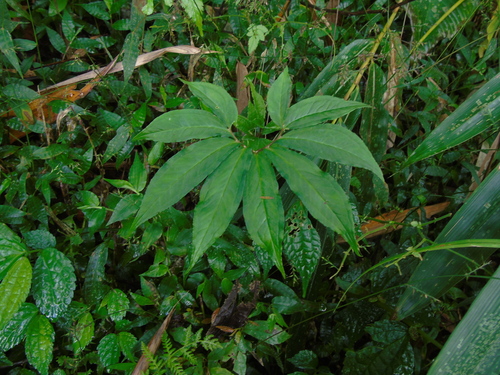
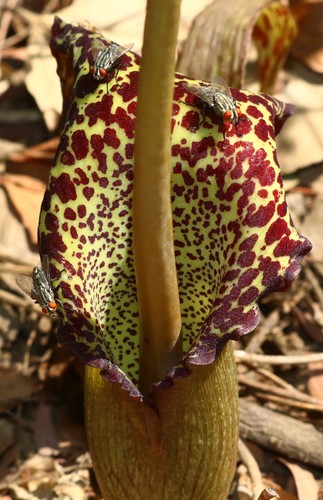
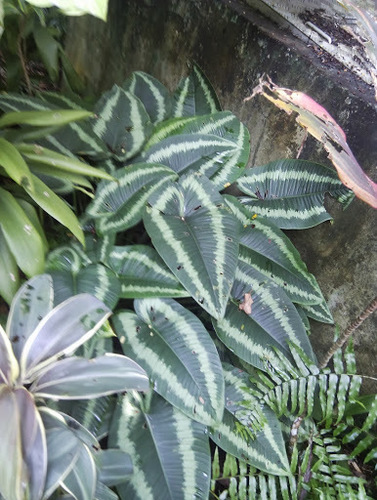
A taro family plant. It is a climber. The stems are 1 m long and 1.5-3 cm wide. The internodes are 10 cm long. The leaves are 30-80 cm long. The leaves have 3 separated lobes
Edible Uses
Young leaves are eaten in soups.
Traditional Uses
Young leaves are eaten in soups.
This uses section is brief — help expand it
Medicinal Uses
If the plant is cooked it can be eaten as a root vegetable. The calcium oxalate crystals produce a peppery flavor. If the plant is sliced then dried it can be eaten like potato chips or ground into a flour. A preparation of the root was reported to have been used by Native Americans as a treatment for sore eyes. Preparations were also made to treat rheumatism, bronchitis, and snakebites, as well as to induce sterility. One account from the Meskwaki people states that they would chop the herb's corm and mix it with meat and leave the meat out for their enemies to find. The taste of the oxalate would not be detectable because of the flavored meat, but consuming the meat reportedly caused their enemies pain and death. They have also reportedly used it to determine the fate of the sick by dropping a seed in a cup of stirred water; If the seed went around four times clockwise, the patient would recover, if it went around less than four times they would not. It is hardy to USDA plant hardiness zone 3.
Known Hazards
The oxalic acid in jack-in-the-pulpit is poisonous if ingested. The plant contains calcium oxalate crystals as raphides in all parts, and because of this, consumption of the raw plant material results in a powerful burning sensation. It can cause irritation of the mouth and digestive system and (on rare occasions) intense swelling of the mouth and throat, potentially being severe enough to affect breathing. Arisaemas are in the same plant family as the anthuriums, aglaonemas, alocasias, colocasias, dieffenbachias, monsteras and philodendrons (among numerous others)— all known as "dumb-canes"—and carry the shared side-effect of an inflamed upper respiratory/digestive system upon ingestion.
Distribution
It is a tropical plant.
Where It Grows
Amazon, Andes, Bolivia, Ecuador, South America, Venezuela,
Synonyms
Also Known As
Cola de montana, Eep guangat, Tsenke eep, Waankat
References (4)
- Kermath, B. M., et al, 2014, Food Plants in the Americas: A survey of the domesticated, cultivated and wild plants used for Human food in North, Central and South America and the Caribbean. On line draft. p 76
- Pohle, P. & Reinhardt, S., 2004, Indigenous knowledge of plants and their utilization among the Shuar of the lower tropical mountain forest in southern Ecuador. Lyonia 7(2)
- Torre, de la L., et al, 2008, Enciclopedia de las Plantas Útiles del Ecuador. Herbario QCA. Pontificia Universidad Católica del Ecuador. p 181
- Van den Eynden, V., et al, 2003, Wild Foods from South Ecuador. Economic Botany 57(4): 576-603 (As spp.)